


As I write this, the facts are still emerging from a horrific knife attack in Belfast.
Police have confirmed that a Sudanese man has been arrested on suspicion of attempted murder after a brutal assault that left another man seriously injured. The motive remains unknown and an investigation is ongoing.
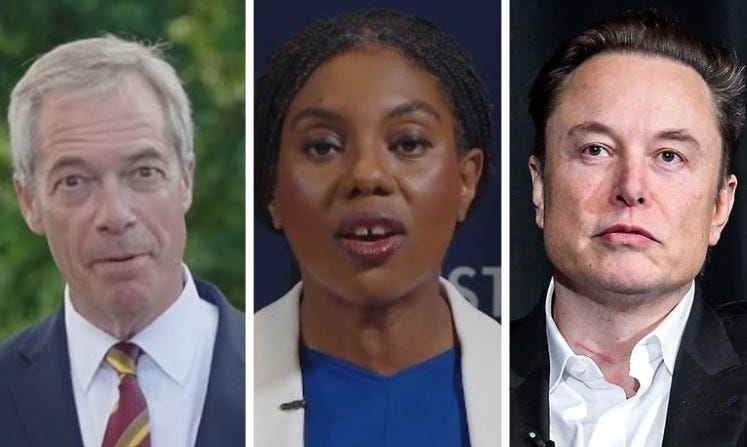
But on X, the verdict is already in. Within hours, social media accounts were circulating the graphic footage of the attack, demanding immigration crackdowns and sweeping policy changes. Reform Leader Nigel Farage demanded the authorities “reveal the identity and status of the attacker immediately”, stating: “The public are entitled to the truth”.
The attack itself is horrifying. The rush to transform it into a political weapon, however, is becoming depressingly inevitable.
As is customary with major criminal investigations, police initially withhold certain details while inquiries continue. This is neither unusual nor sinister, but standard procedure to prevent compromising investigations or prejudicing prosecutions.
But in an age of social media, institutions are increasingly expected to operate at the speed of outrage. Authorities now find themselves under pressure to release information faster and faster because they fear what will fill the void if they don’t. The Southport riots showed us just how social media can create a political crisis before the facts have been established.
Amid that pressure to release details quickly today, the suspect was initially identified as a different nationality, before later being confirmed as Sudanese. The very demand for instant answers helped produce inaccurate information, ricocheting the misinformation across social media, generating outrage and demands for policy change targeted at deporting Somalians.
It is an impossible bind for authorities. Baying crowds on X demand answers immediately, and if those answers are not forthcoming, they assume authorities must be hiding something. And as Farage’s intervention demonstrates, there is increasingly a baked-in suspicion – propagated by populist politicians – that institutions cannot be trusted and that every delay conceals a cover-up.
But it isn’t just the police being led by X, it is politicians too.
Today, the Conservative leader Kemi Badneoch announced her party’s plans to abolish the Public Sector Equality Duty, the legal requirement that public bodies consider the impact of their decisions on people with protected characteristics.
According to Badenoch, the law has become a bureaucratic obstacle and a vehicle for “dangerous and divisive agendas”. “We are going to scrap this duty altogether,” she said. “We do not need to replace it. We need to explain to people that they should do their jobs.”
One can only imagine the relief this announcement will bring to the millions of Britons struggling with soaring housing costs, stagnant wages and overstretched public services. At last, someone is taking on the real enemy: equality impact assessments.
Why produce a policy so detached from every day people’s struggles? The answer is right there. In the days following the abhorrent murder of 18-year-old Henry Nowak, sections of the right have once again sought to transform a tragedy into a wider argument about anti-racism, diversity policies and so-called “reverse discrimination”. Before all the facts had emerged, a familiar narrative about the overreach of diversity and inclusion was already taking shape. And such, parties felt compelled to respond. For the Conservatives, that has meant reaching for the comfort blanket of a culture war and proposing the dismantling of equality laws.
This is the real power of X. It does not merely host political debate; it shapes the incentives of political actors. As I have written before, the platform rewards outrage, conflict and grievance. Politicians spend their days swimming in this ecosystem, and increasingly mistake what is trending online for what matters to the country.
Since acquiring the platform, X owner Elon Musk has transformed himself into one of the world’s most influential political actors. With more than 200 million followers and an algorithm that heavily privileges his own posts, he has repeatedly intervened in British political discussions, amplifying claims about immigration, “two-tier policing”, anti-white discrimination and institutional failure to a global audience. Between late May and early June alone, Musk posted, replied to or reposted content about British politics more than one hundred times, many of those interventions focusing on the death of Nowak. In one post, Musk urged followers to share footage of the incident, accusing police of having “cravenly kowtowed” to his killer.
A healthy democracy requires space for facts to emerge, investigations to conclude and evidence to be weighed. X rewards the opposite: falsehoods, opinion and rage. And these interventions are no longer confined to the darker corners of the internet. Britain’s political agenda is increasingly set not by parliament or the newspapers, but by whatever is generating the strongest emotional reaction online.
The government cannot stop bad actors exploiting tragedy for political gain, but perhaps it can stop pretending this is a regretful but ultimately unavoidable product of modern life. If ministers are serious about social cohesion, democratic resilience and preventing another Southport-style explosion, they need to get a far firmer grip on the platforms that are profiting from division. Ban X. It has no place in a modern, functioning democracy.
And if the Conservatives want to be taken seriously as a government in waiting: they might consider shutting down their X accounts first. ■
About the author: Zoë Grünewald is Westminster Editor at The Lead and a freelance political journalist and broadcaster.
👫Agree with Zoë? Share this story with your friends, family and colleagues to help us reach more people with our independent journalism, always with a focus on people, policy and place.
As soon as I see a news story about a politician being outraged by an attack, especially with a bidding war for who can be most outraged, I know the perpetrator (or rumoured perpetrator) must have a brown skin. I need to do a check to see how often senior politicians are outraged when that's not the case?
It's amazing how many politicians can become outraged by a coloured man these days. Not so much refuk. That's standard for them. But if it was a white man who had done this, the silence would be deafening.