


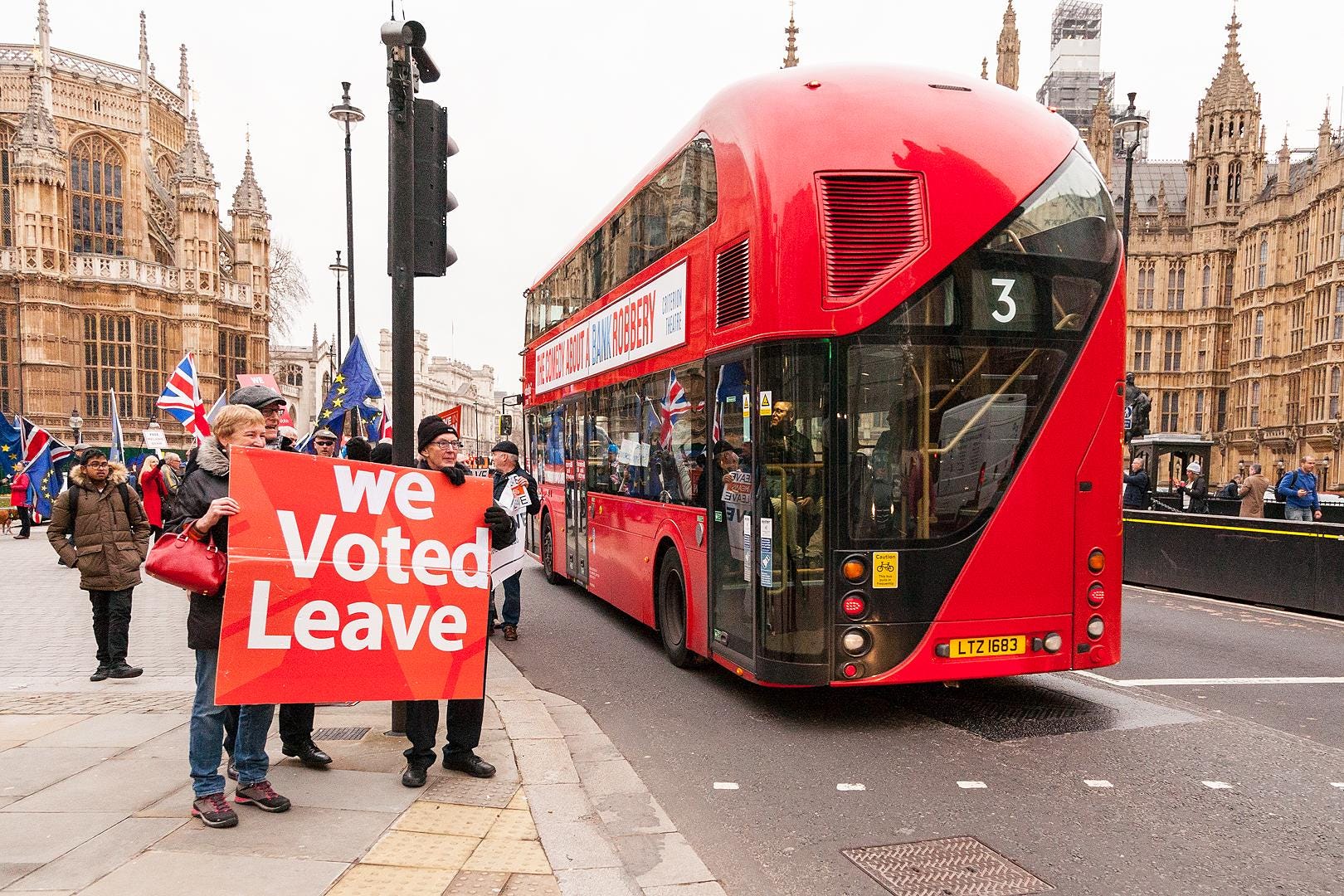
Back in June 2016, the Leave campaign made a bunch of promises, on migration, on red tape, and famously, on NHS funding (who can forget the bus?)
Ten years later, have any of their promises worked out?
We dug into the data for the first part in our series examining the impact of the EU Referendum a decade on…
Working out the economic impact of Brexit is hard.
Things like the pandemic and the war in Ukraine have also affected the economy. And we can’t know for certain what would have happened if we’d stayed.
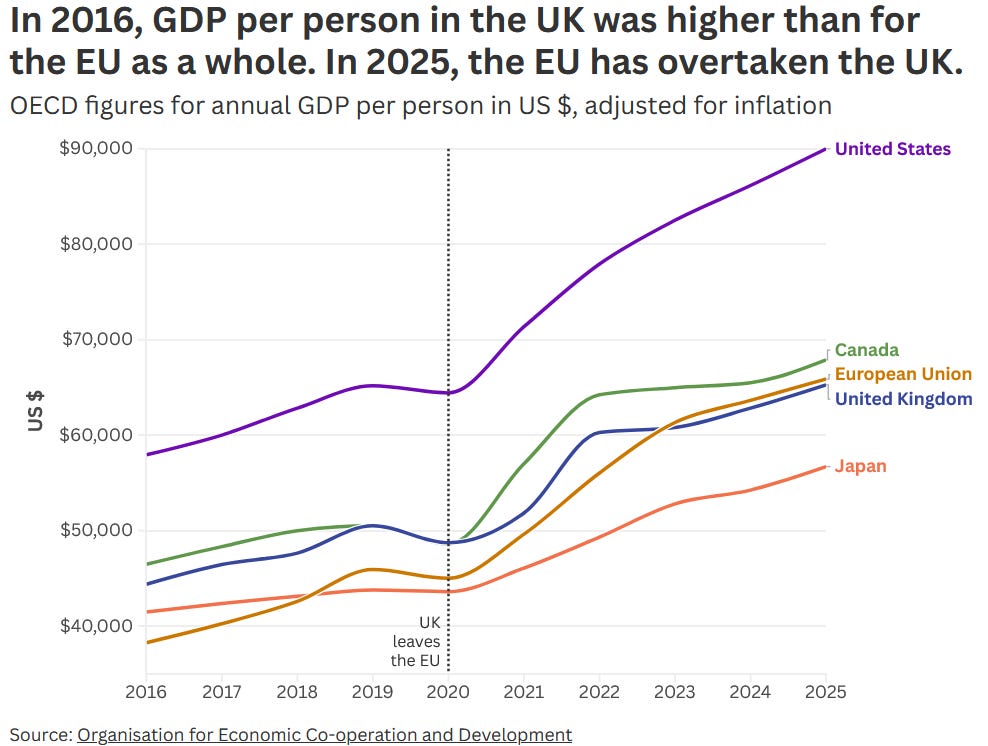
But the data suggests the UK’s economy hasn’t performed as well as others. Based on GDP per person, adjusted for inflation, the UK economy was growing at a similar speed to other G7 countries between 2016 and 2020 but much more slowly after.
GDP is the headline measure of the size and health of a country’s economy, usually based on the total value of goods and services (output) produced.
Researchers at King’s College London, Stanford University, the Bank of England and the University of Nottingham estimated by early 2025 UK GDP was between 6 per cent and 8 per cent below its pre-Brexit level. Business investment was down by between 12 per cent and 18 per cent and employment by 3 per cent to 4 per cent.
They compared growth over the decade to 33 comparable countries, finding the UK had underperformed. They used survey responses and accounts from firms to analyse what impact Brexit had on them, allowing the researchers to separate out the effect of things like the pandemic.
Trade is tougher, but maybe not quite as bad as it could have been
Mostly there was agreement on how Brexit would impact the economy. Voting to leave meant uncertainty leading to less investment. Actually leaving meant more trade barriers.
While the Withdrawal Agreement ((a legally binding treaty between the UK and the EU that set the formal terms of Brexit and was signed in January 2020) means no tariffs on goods, there are now border checks. For some services, there are now more regulations to navigate.
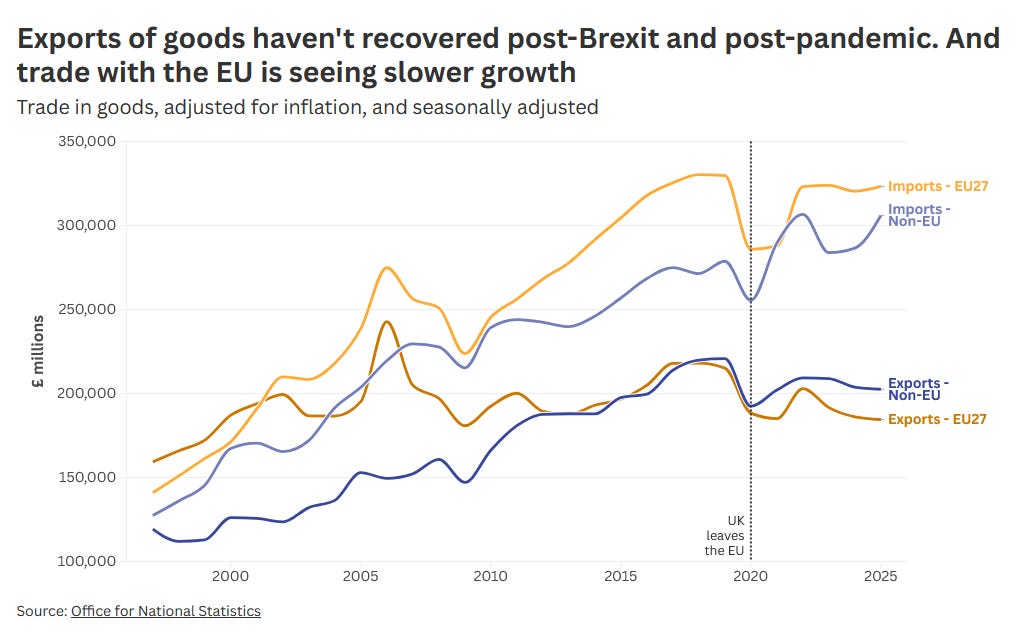
Goods exports to the EU exceeded £215 billion in 2017, 2018 and 2019 but have not done so in any calendar year since. They were £184 billion in 2025, 14 per cent below 2019.
For non-EU countries, goods exports exceeded £210 billion in 2017, 2018 and 2019. While they’ve remained below that since, the gap has been smaller. They were £202 billion in 2025, or 8 per cent below 2019.
Imports from the EU are 2 per cent below their 2019 level, but imports from the rest of the world are now 10 per cent higher.
Trade in services has performed better. In 2024, exports of services to the EU were 18 per cent above their pre-Brexit/pandemic peak. UK exports of services to non-EU countries were 23 per cent above their 2019 level in real terms in 2024.
The dirty water that’s come with ditching EU rules
Brexit would give us freedom from EU rules, the Leave campaign claimed.
However, we’ve mostly avoided scrapping the regulations from before Brexit. Doing things differently risks bigger trade barriers, so the Government is now seeking closer alignment.
And, as the public outcry over Britain’s dirty beaches shows, we might quite like some EU-style regulation.
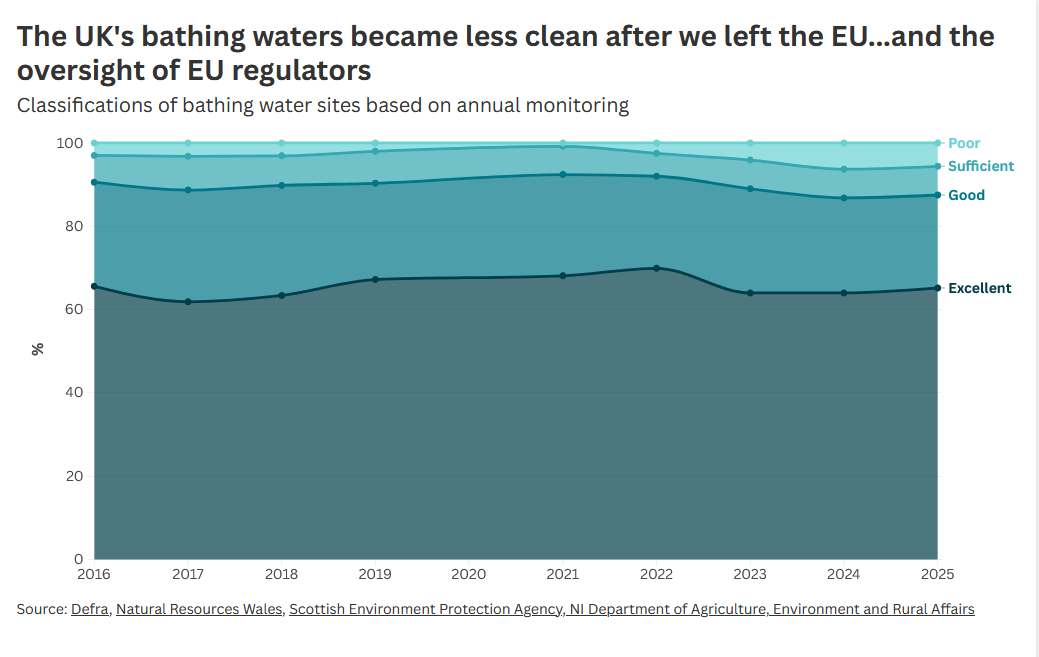
The EU’s Bathing Water Directive played a big part from the 1970s onwards in getting the UK to clean up its act. There were concerns standards could slip without EU oversight.
Post-Brexit figures on water quality suggest the cleanliness of UK bathing waters didn’t keep pace with the EU.
The Office for Environmental Protection, set up to replace EU oversight in England after Brexit, found regulations to protect rivers, lakes and coastal waters weren’t being implemented properly. No longer using the EU system left information gaps and EU evaluations of how water quality monitoring works hadn’t been replaced.
Public anger has pushed the Government to take action on water cleanliness. And while Brexit means the freedom to make regulations more UK specific, it’s possible we’ll still end up heading in a similar direction to the EU.
We got the immigration system promised, but not the reduction in net migration
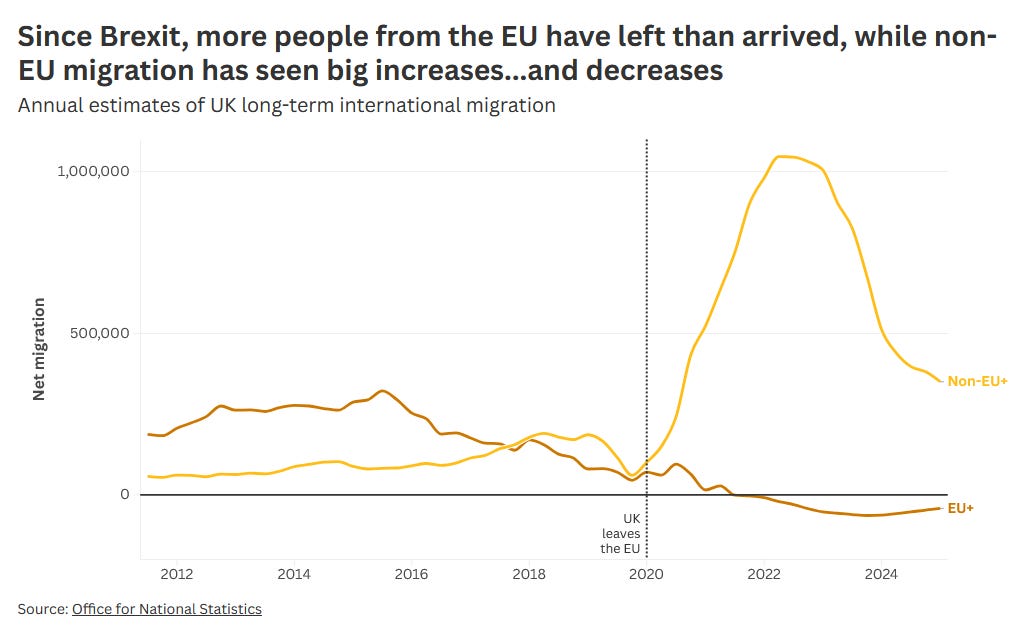
The Leave campaign pledged to ‘take back control’ by replacing EU Freedom of Movement with an Australian-style points-based system that treats EU and non-EU citizens equally.
Post-Brexit changes to immigration policy broadly reflected that. But Government choices didn’t always line up with their pledges to reduce net migration.
EU citizens now need a visa to live, work or study here, the same as non-EU citizens. But the new system made it easier for non-EU citizens.
The new Skilled Worker visa reduced the minimum education level and salary required to take up a job here. The Government also re-introduced a post-study work visa allowing overseas postgraduate students to stay for work after their course finished.
Government policy, such as a target to increase international student numbers or allowing care workers to be recruited using the Skilled Worker visa, combined with sector needs, leading to a sharp rise in migration.
UK universities were keen to recruit more overseas students paying higher fees to balance their books.
Social care had struggled to keep and recruit staff as the economy opened up post-pandemic. The Government chose not to follow a recommendation from the Migration Advisory Committee to fund higher wages to attract more British staff, so employers recruited abroad.
Then net migration hit 944,000 in the year ending March 2023. And the Government started to make it harder and less attractive for anyone to migrate here.
People from the EU are now more likely to leave the UK than arrive
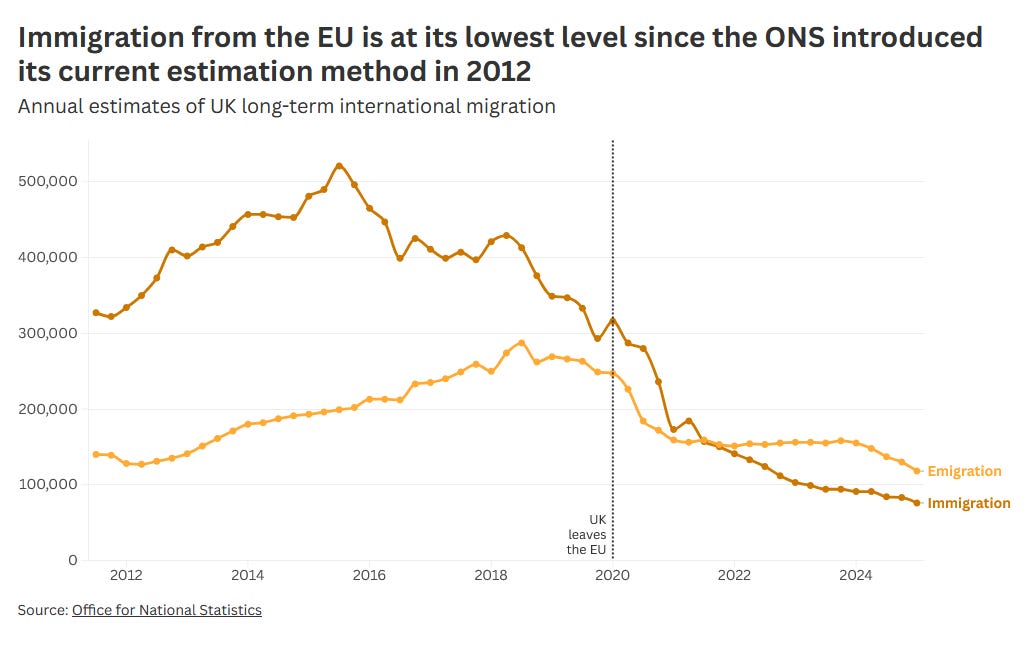
Just 76,000 people came from the EU to the UK in 2025, according to Office for National Statistics (ONS) figures. In 2016, it was more than half a million.
The rules on freedom of movement didn’t change immediately after the Referendum but fewer EU citizens arrived and more started to leave.
The Migration Observatory suggests political uncertainty and UK jobs becoming less attractive, as Brexit hit the value of the pound and southern European economies improved, may have influenced people’s choices.
The number leaving has broadly stabilised or even started to decline. But once freedom of movement ended on December 31, 2020, there was a sharp fall in the number of EU citizens willing to get a visa to move to the UK.
And some UK citizens decided to head for the EU too
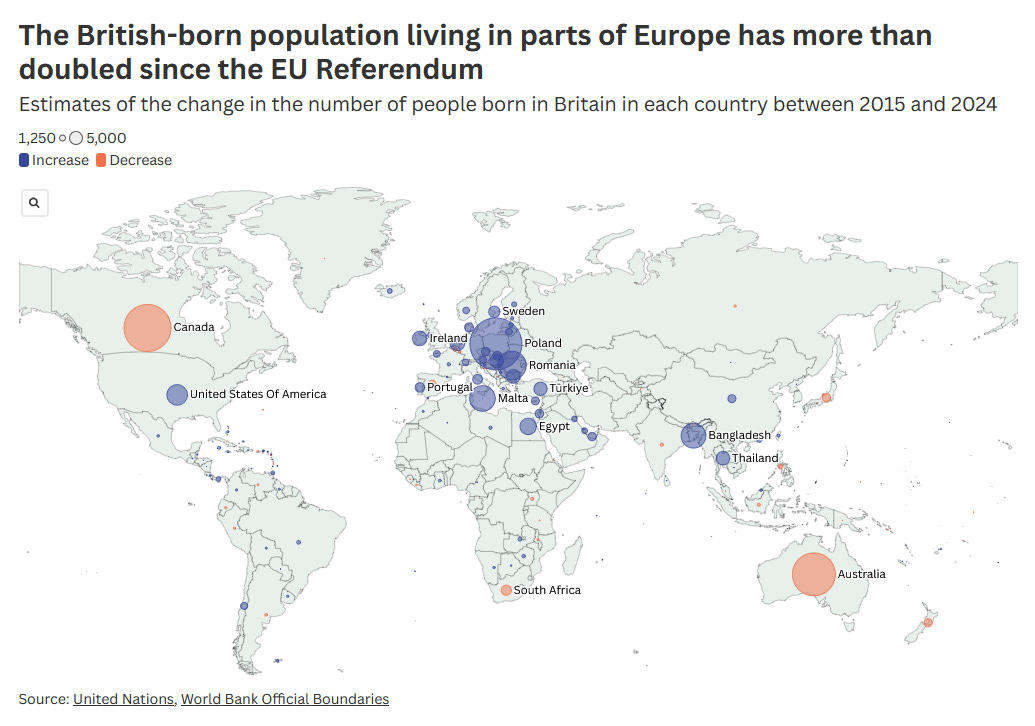
When EU citizens moved back to Europe, some British citizens seem to have gone with them.
Britain was the most common previous country of residence for people moving to Poland in 2019. As well as Polish people returning home, the numbers likely also included their children born in the UK, and around 300 British citizens, according to a 2020 report from Statistics Poland.
United Nations data shows the number of people living in Poland who had been born in Britain jumped by nearly 70,000 between 2015 and 2024. Romania saw its population of British-born people increase by 21,000 and Malta by 17,000.
British citizens abroad have also become less likely to move back or come to the UK. Since the ONS changed its methodology for estimating numbers in 2022, the number of people leaving the UK has stayed around 250,000 a year, but the number coming here has fallen from 166,00 to 110,000.
The NHS got more money but not as a result of Brexit savings
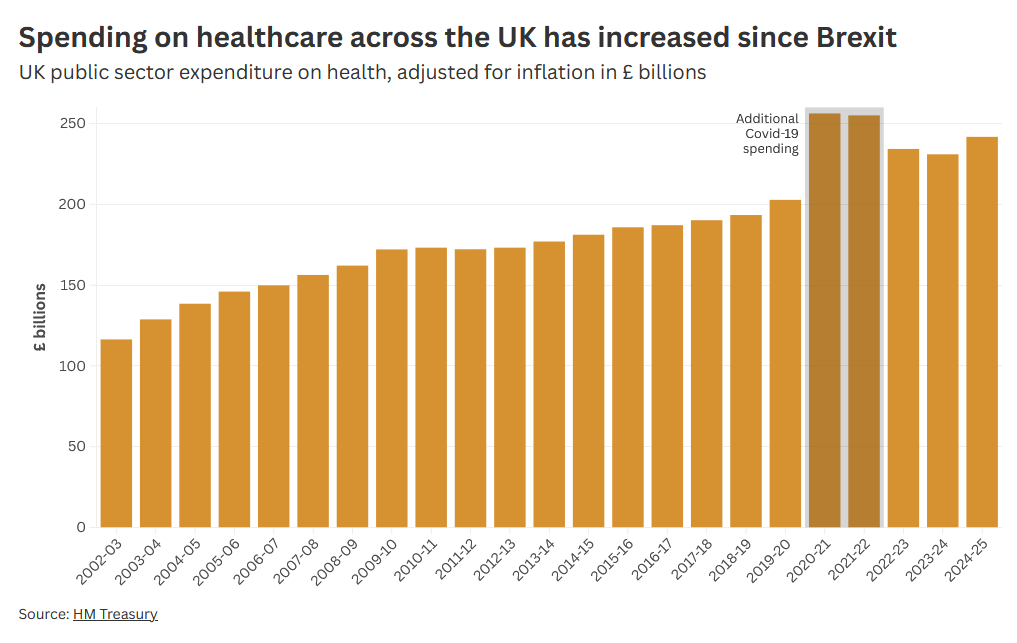
Ahead of the Referendum, Vote Leave said, on the side of a bus, “We send the EU £350 million a week, let’s fund our NHS instead”.
Ten years later, UK health spending is a lot higher. But it has little to do with a ‘Brexit dividend’.
For a start, there was no extra £350 million a week to spend. That figure, based on the UK’s gross EU contribution of £18.8 billion, failed to account for the rebate the country also received.
Once we’d settled the ‘divorce bill’ for EU commitments the UK had already agreed to, the Office for Budget Responsibility estimated direct savings from Brexit of £14.6 billion a year by 2024/25, or £281 million a week.
But this wouldn’t go very far. In March 2020, the Government planned an extra £55.5 billion in departmental spending by 2024/25, including more money for the NHS to keep up with demand and replacing EU funding for agriculture and regional economic development.
Slower economic growth post-Brexit means lower tax revenues than expected. Filling that gap and paying for the higher spending has mostly come from higher taxes, more borrowing, and cuts for some departments.
And the promised replacements for EU funding didn’t appear for everyone
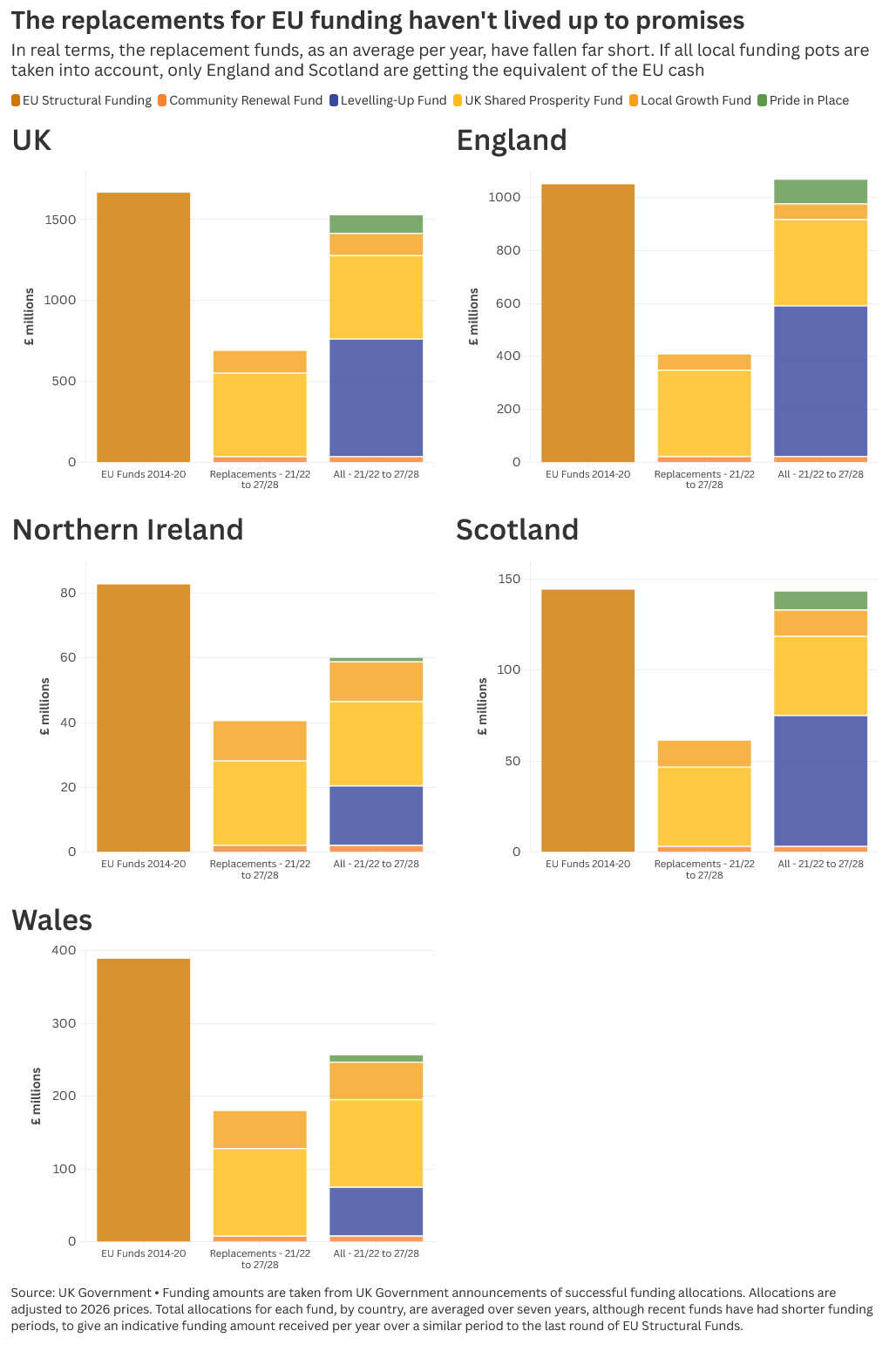
In their 2019 manifesto, the Conservatives promised to replace “overly bureaucratic” EU funding to support regional economic development. It said the UK Shared Prosperity Fund would, at a minimum, match previous funds in each UK nation.
Since we left the EU, local and regional funding has become much more complicated, and has been widely criticised for not matching EU funding.
Between 2014 and 2020, the UK received an average of £1.2 billion a year from the EU, or about £1.7 billion in today’s money.
Of the funds designed as replacements, there’s been:
the Community Renewal Fund - £220 million in 2021/22
the UK Shared Prosperity Fund - £3.4 billion between 2022/23 and 2025/26
the Local Growth Fund - £1.5 billion between 2026/27 to 2028/29
There’s also been:
the Levelling Up Fund - £4.8 billion between 2021/22 and 2024/25
the Pride in Place Programme - £5.6 billion over the next decade
Money from schemes directly aimed at replacing EU funding has only averaged £654 million a year (or £687 million in today’s money) over the seven years between 2021/22 and 2027/28.
If you add up all the local funding sources, it averages out as £1.4 billion a year. That’s a bit more in cash terms than the EU funding, but adjusted for inflation, falls short in comparison at £1.5 billion.
Governments in Northern Ireland, Wales, and Scotland have complained they’re getting less money. Allocations have been criticised for being based on flawed formulas or missing some areas entirely.
We’re no longer sure it was the right result
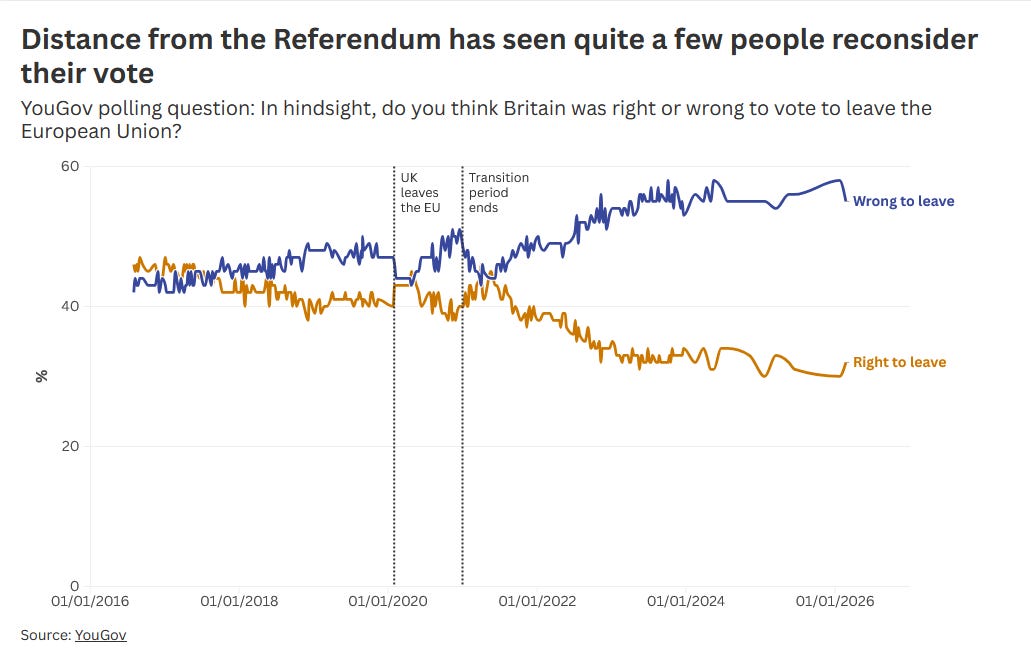
Just under a third of people (32 per cent) said, in hindsight, Britain was right to vote to leave the EU, according to YouGov polling in February 2026. In comparison, more than half (55 per cent) think Britain was wrong to vote to leave.
Mostly its Leave voters, particularly younger ones, who’ve changed their minds
Initially around 90 per cent of them said Britain was right to vote to leave. But that slowly fell to 80 per cent during Brexit negotiations and only two-thirds of Leave voters (67 per cent) thought it was the right choice in February this year.
But it’s still hard to agree on what we want
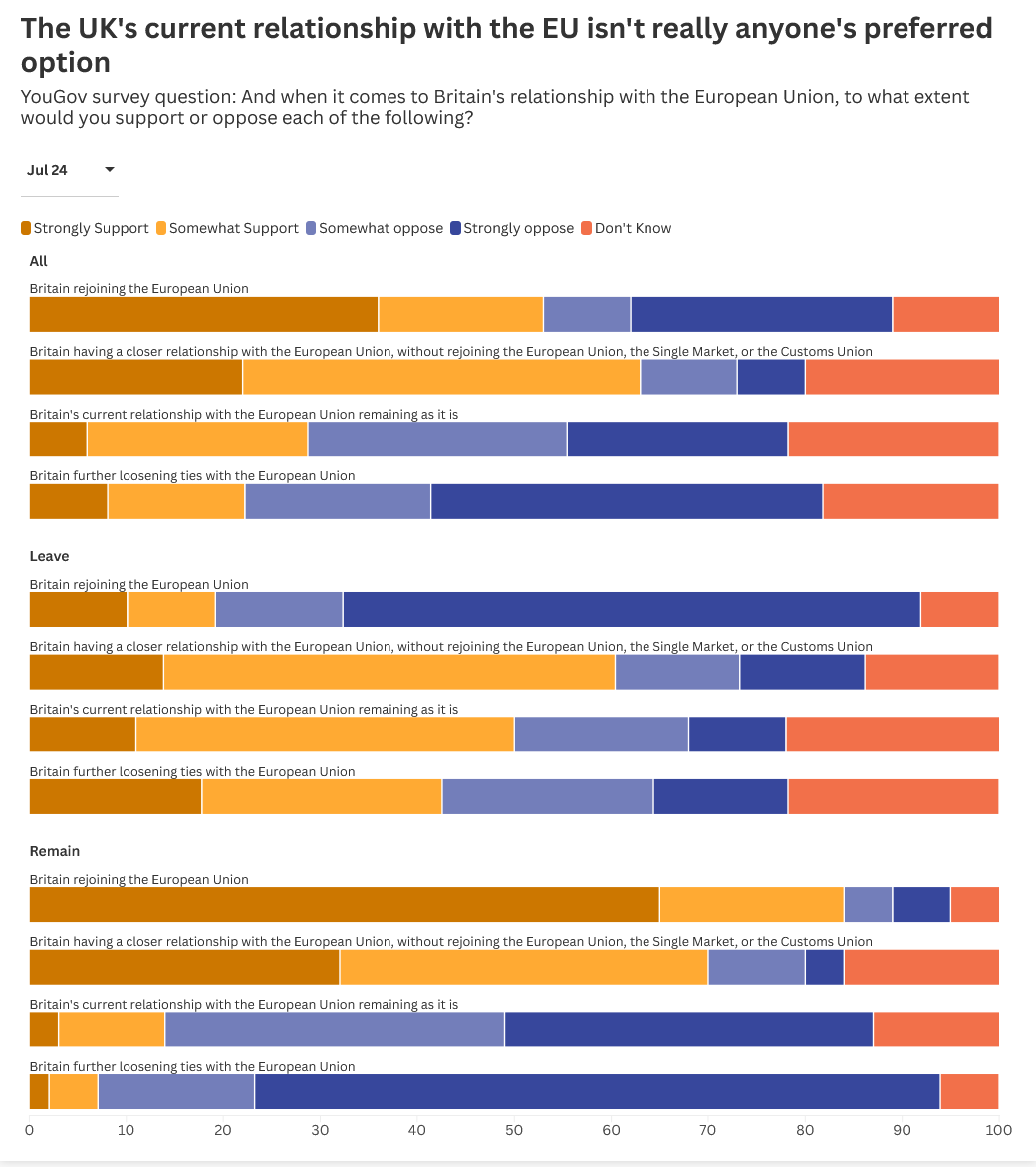
Given the Brexit delivered wasn’t the Brexit promised, and, in hindsight, we’re not sure it was the right choice, it’s not surprising there’s not much enthusiasm for the current UK-EU relationship.
Most Britons (70 per cent) would now support Britain having a closer relationship with the EU, without rejoining the European Union, the Single Market, or the Customs Union. And that includes 61 per cent of Leave voters.
But it’s not clear if there’s a way to do this that would actually work for everyone.
For Remain voters, closer is good, rejoining would be better. Leave voters would rather stick with what we have or get more distance than rejoin the EU.
Surveys have previously suggested, when it comes to a closer relationship, Leave voters are in favour of ending checks on goods or gaining access to the single market, but less keen to follow EU rules or accept freedom of movement.
And the EU would also get a say on what a closer relationship might look like. And it seems there’s only so close a relationship can get before the UK would need to rejoin something. ■
About the author: Claire Miller is a freelance journalist who specialises in using data and the Freedom of Information Act in her reporting. If you enjoyed this story then take a look at Claire’s feature on child poverty in numbers and also apathy in the UK too.
🇪🇺 This is the first part in our series examining the impact voting to Leave the European Union had on the UK since June 2016. We’ll also be exploring what’s happened to universities, what life’s been like for EU migrants living here and how Brexit paved the way for Reform. Sign up now to make sure you receive it first.
Plus take advantage of our special offer and get 30 per cent off an annual subscription (usually £49, use this link to get it for £34.30 instead) to help us write more in-depth original series like this, going deep into the issues affecting people, policy and place in the UK right now.
We MUST re-join the EU
Fascinating Data, thank you so much for putting this together