


One drop of blood from your fingertip. No needles, no waiting, and out comes a diagnosis for almost anything. Theranos was set to revolutionise the medical world and save millions of lives. Investors queued round the block, the magazine covers rolled in, the company was worth billions.
Except, of course, the machine never worked. The whole thing was just too good to be true. Its founder Elizabeth Holmes was jailed for more than eleven years for fraud (Although appearing right now on the big screen in Nathan Fielder’s extraordinary documentary You Can See Everything. Please, do yourself a favour and get tickets!).
Now swap the fingertip for a ballot paper. One issue, one vote, and every grievance going would be diagnosed and cured in one go. Your stagnant wages, the slow erosion of your high streets, the GP appointment you couldn’t get. The cure was instant. No more being told what to do by Brussels. You’d never be annoyed again.
A decade on, it could not be clearer that the Brexit machine was little more than a fantasy. The economy shrank, trade worsened, and migration went up, not down. We are less prosperous and far less secure. Yet while Holmes went to prison, Brexit’s architects are enjoying comfortable retirement, trotters up, as Danny Dyer famously said, wheeled out every so often to explain that the next machine will definitely work.
On Friday, Andy Burnham took the first real step towards undoing some of the worst of the damage. In a landmark deal with the EU, he agreed to scrap most checks on British food exports, create a capped youth experience scheme and link our carbon market back to Europe’s. Burnham reckons it could add 0.4 per cent to GDP. Welcome, if hardly a miracle cure. Little to be irritated about.
Unless you’re in opposition. Predictably, Nigel Farage deemed it a “betrayal” and promised a full reverse. It is the old sovereignty refrain, entirely disingenuous, as Farage knows perfectly well that sovereignty alone has never knocked a penny off anyone’s bills. But it’s nationalist, coherent, and exactly what his voters expect.
The Conservatives are on much trickier ground. On one side sits the arch-Brexiteers, fiercely defensive of their legacy, branding the deal a sell-out. On the other is a quieter, more pragmatic tendency that knows the economic and security arguments for closer alignment grow with each passing day, and would, frankly, rather the party moved on.
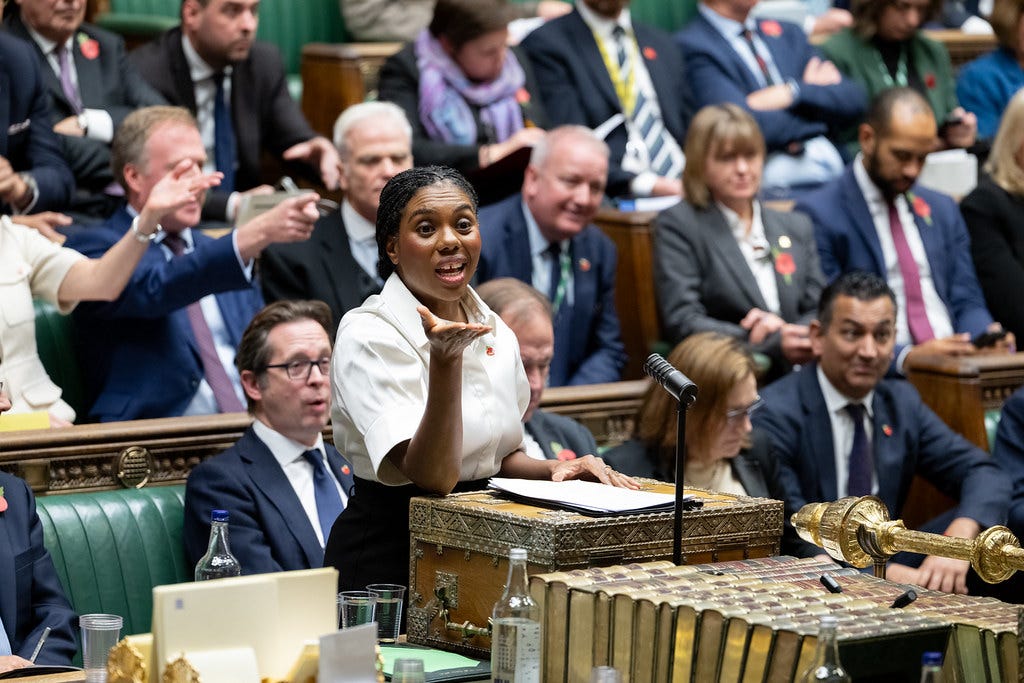
Badenoch has tried to straddle both sides. She has called the deal “terrible”, yet told reporters on Friday that the Tories would seek to amend it rather than scrap it. Reform branded that cowardice, but it’s really a symptom of something more cynical. Every patch of ground is already taken.
The hardest anti-EU position belongs to Farage, Mr Brexit himself. The Liberal Democrats, on the other hand, have gone full Europe, pushing for talks on the single market and a customs union. Labour has claimed the cautious middle-ground: closer ties, with the big red lines intact this side of an election. So where do the Tories go?
It’s quite a bind. The Tories voter coalition was torn apart by Brexit. The voters lost to Reform overwhelmingly backed Leave, while many of the seats they need to win back from the Lib Dems voted Remain. Meanwhile, three in four Britons want a closer relationship with Europe. The only claim for the Tories to make is that they are the party that delivered The Brexit – the one almost everyone admits is a failure.
And while many of us may take great pleasure in watching this party reap exactly what it sowed, we shouldn't bask in it for too long, because this is precisely the moment the country needs a functioning opposition.
There are real questions about this deal. Many of the details will have a real impact on your food, what your kids can do after university, what you pay for energy, and how safe the country is. MPs are not getting a vote on the details, yet they deserve forensic scrutiny, not a scoff and hand wave, or a head buried in the sand. Reform’s interest is in keeping the grievance alive, while the Tories’ are desperate not to have their thin coalition fall apart. Neither of those things hold this government to account.
And whether the Tories like it or not, Europe is going to be on the ballot. At the next election, voters will likely face another huge choice, whether that be rejoin, edge closer, stand still, or rip it all up. After a decade of anger and broken promises, voters deserve parties that tell them honestly what they would do and what it would cost. An honest Conservative case, even one we’d disagree with, would leave the government’s plans better tested and the country’s choice clearer.
Theranos unravelled when somebody finally asked to see what the technology actually did. That is the opposition’s job: to ask awkward questions and demand to see the results. Likewise, Brexit was sold as a miracle machine. A decade on, the least voters deserve is an opposition willing to admit it never worked – and to tell them what it would build instead. ■
About the author: Zoë Grünewald is Westminster Editor at The Lead and a freelance political journalist and broadcaster.
👫Agree with Zoë? Share this story with your friends, family and colleagues to help us reach more people with our independent journalism, always with a focus on people, policy and place.
Maybe there’s more reading of The Lead in the corridors of Northern and Southern power than we thought - given our big focus in the summer on a decade on since Brexit and outlining the impact it’s had. See our full series on The EU Referendum a Decade On. And become a supporter of The Lead to help us go deeper on the stories affecting the UK right now. And remember, 50% off for the rest of November on an annual subscription with our Black Friday deal.