


The Chagos Islands deal has become a political football in the UK.
Despite the deal being birthed by the Conservative government in 2022, the Tories have consistently criticised Labour for the “shameful” so-called “Chagos Surrender Deal,” – woke nonsense that is pandering to international human rights lawyers on the matter of decolonisation, all while giving up national security.
Reform UK has not been quiet either: Nigel Farage has challenged the deal since it was first announced under the Conservatives in 2022. In recent weeks he has upped the political theatre by attempting to bring aid to four Chagossians who are protesting the deal by trying to establish a settlement on one of the islands – and then falsely accusing the government of blocking his visit. (The group of Chassogians was funded by Reform’s biggest donor, the Thailand based crypto billionaire Christopher Harborne).
Farage and the Tories use the Chagos Islands issue to bat off criticism. When the Prime Minister called on Farage to sack a deputy council leader over a death threat to an MP he re-shared on social media (originally reported by The Lancashire Lead), Farage deflected, instead asking the Prime Minister about a 14-year-old Mauritian and the future of the Chagos Islands.
But framing this as Labour’s problem is not just hypocritical – it’s plain wrong. The Chagos Islands Deal is a policy decision rooted in a long, complex history.
So, what is really going on with the Chagos Islands?
How did we get here?
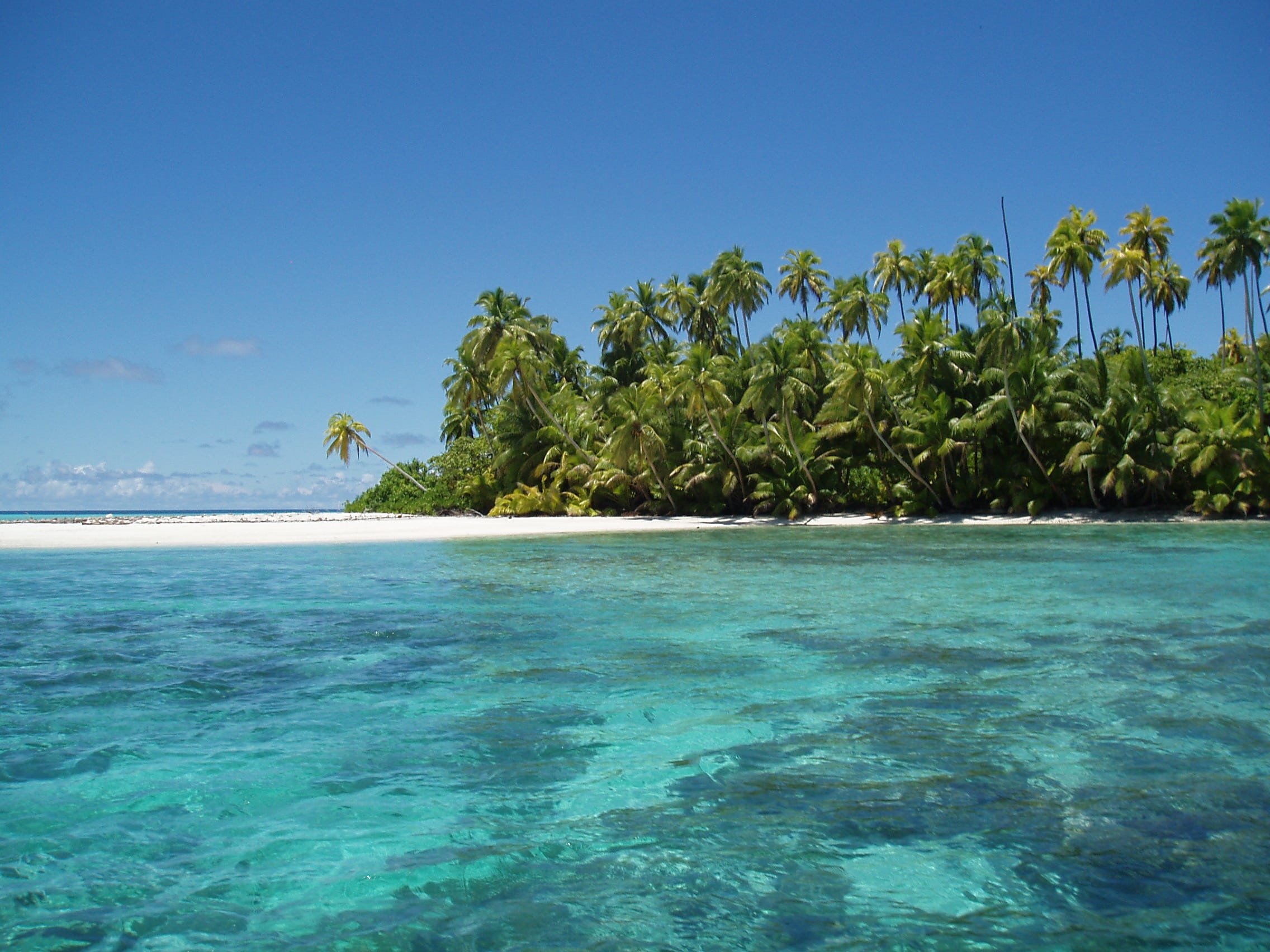
The Chagos Islands form an archipelago in the Indian Ocean, located about 1,250 miles north-east of Mauritius. They became British territory along with Mauritius in 1814, as part of the treaty of Paris.
In 1965, during decolonisation, the Chagos Islands were separated from Mauritius (which gained independence in 1968) and used to build a US-UK military base on an island called Diego Garcia. In exchange for the UK allowing the US to build a base, the UK gained access to top secret, vital military activity that “we would never be able to build or afford ourselves,” according to Ben Judah, former special adviser to David Lammy when he was Foreign Secretary. In order for this base to be built, native Chassogians were displaced from their homes and resettled in Mauritius, Seychelles, and the UK.
Since the 1980s, Mauritius has claimed sovereignty over the islands and has staked its case in international courts. In 2019, the International Court of Justice [ICJ] issued a non-binding advisory opinion stating that the separation of the Chagos Islands from Mauritius was unlawful, that the decolonisation of Mauritius was not lawfully completed in 1968, and that the UK was “under an obligation to bring to an end its administration of the archipelago as rapidly as possible”.
In 2021, in a dispute between Mauritius and the Maldives over maritime boundaries, a judgement by the United Nations Special Chamber of the International Tribunal for the Law of the Sea – which relied heavily on the 2019 ICJ’s advisory opinion – concluded that the UK has no lawful claim to sovereignty. This ruling was legally binding between Mauritius and the Maldives.
This led to the Conservative government beginning negotiations with Mauritius on the exercise of sovereignty over the islands. It was argued that Britain’s defence was best served by having legal certainty over the islands, due to the risk of continued challenges in international courts. It was also an acknowledgment that the UK respected international law.
Why did the Labour government push ahead with the deal?
There has been controversy surrounding the Chagos deal, with critics claiming the deal – which currently has no legal necessity – would weaken Western security. The Conservatives, under the leadership of Kemi Badenoch, described the deal as a “surrender” and argued that the UK was “handing over British territory and paying upwards of £30bn to do so”. Meanwhile, native Chagossians are largely against the islands being sold to Mauritius.
The UK government says this deal is vital for national security. The government believes a legally-binding ruling from the Special Chamber of the International Tribunal for the Law of the Sea, is inevitable.
Should the government need to concede sovereignty without first securing a deal with Mauritius, the risk is that Mauritius could then invite China (or any other country) into the thousands of surrounding islands, risking the security of the Diego Garcia base.
The US government is also aware of this threat. Under the Democrats, the British embassy in Washington became worried that the US would make its own deal with Mauritius, blocking Britain from the vital information and work taking place at the Diego Garcia base.
So, in order to maintain access to the base, the UK decided to make its own deal with Mauritius.
What is in the Chagos deal?
Mauritius will be given sovereignty over all the Chagos Islands.
The UK will then lease back the Diego Garcia military base for an initial 99 years, renewable once for 40 years, costing an average of £101 million a year, totalling about £3.4 billion. This means the UK will have the right to exercise authority over Diego Garcia.
There will be a 24 nautical mile exclusion and veto zone including control over the electromagnetic field around the bases. Mauritius will not allow other powers to use the outer islands without agreement with the UK.
Mauritius will be free to arrange for resettlement of Chagossians on all the islands of the archipelago except Diego Garcia. It will also establish a marine-protected area, with UK support, to protect the environment.
Where does America come in?
The deal began with the Conservative government in the UK and the Democrats in the US in 2022. It has since been handed over to Keir Starmer and Donald Trump, and has become indicative of the difficult “special” relationship the UK has with the US.
The government has previously said the deal will not go ahead without support from the US, because of “a shared military and intelligence interest”. However, Trump has repeatedly gone back and forth in his support for the deal and has recently pulled support again.
In February 2025, Trump said he had a “feeling it’s going to work out very well” and the US continued to commit to the deal for the following months. In January 2026, however, as European countries, including the UK, took a hardline stance on the Greenland’s sovereignty, called the deal an “act of total weakness” and “GREAT STUPIDITY” on Truth Social. A month later, this February, Trump backtracked, stating the deal was “the best [Keir Starmer] could make”.
Last week, Trump backtracked again, despite the US Department of State giving its official backing to the UK government’s plan a day earlier.
He posted on Truth Social: “I have been telling Prime Minister Keir Starmer, of the United Kingdom, that Leases are no good when it comes to Countries, and that he is making a big mistake by entering a 100 Year Lease...”
“Prime Minister Starmer is losing control of this important Island by claims of entities never known of before.”
“We will always be ready, willing, and able to fight for the U.K., but they have to remain strong in the face of Wokeism, and other problems put before them.”
It’s not clear exactly why he has U-turned, but it follows the UK’s decision to block the US from using RAF bases to bomb Iran (the Independent reported that a Presidential veto was “well on its way already”).
What happens next?
The Diego Garcia Military Base and British Indian Ocean Territory Bill is designed to enshrine the Chagos Islands agreement into UK law, It is in the final stages of its passage through Parliament and is currently in the House of Lords.
The government has an unofficial deadline for having the deal ratified by May, or it will have to restart the entire process.
The bill has not been on the order paper in the Lords since then and no date has been set for the next stage, but Justice Minister Alex Davies-Jones said it would return to the Lords “as soon as parliamentary time allows”.
Notes from the north
We start in Lancashire where our story about Reform UK Cllr Simon Evans re-sharing content calling for a Labour MP to be shot, was picked up by the BBC, The Guardian and then eventually Keir Starmer at PMQs. Our Northern editor Luke Beardsworth notes that he wrote this summary while watching Evans “smirk and clap his way through a full council meeting to set the budget at County Hall”, so he doesn’t expect any further action will be taken against him.
What was not covered in much depth, Luke adds, is that several hours later, Reform UK replaced their group whip Luke Parker (who shares AI images of female councillors with gaffer tape over their mouths). We looked at that here:

In Calderdale, Andrew Greaves got stuck into the topic of how pubs work – and how one of the biggest challenges (and costs) of running one is how many of them are attached, indirectly, to breweries:
And in Teesside, Leigh dug into council tax, and how much it will increase, in each of the districts that make up the area.
Thanks for reading our Thursday edition of The Lead. As always, it’s great to have you with us. If you want to dig deeper into the Chagos Deal and surrounding politics, Ed recommends Peter Frankopan’s recent article the wider geopolitics of the deal and James Bloodworth’s read on the people the deal fails to consider.
If you’re looking for something closer to home, Rob Ford’s analysis of Gorton and Denton’s demographics is a great primer for tomorrow’s by-election. For more on today’s important by-election, keep your eyes peeled for our reaction tomorrow morning – Westminster Editor Zoë Grünewald will be back in your inbox first thing. Make sure you’re subscribed so you don’t miss it.
Thanks for this comprehensive assessment of the situation. Personally, I believe justice should always prevail over personal advantage, sadly not something with which the current USA administration agrees. Shame on the Conservatives and Reform for trying to backtrack on previously agreed action.
This is the clearest explanation of the history and current position on the Chagos islands.
There used to be a time where politicians used to work together on issues where the right path was clear.
That the Conservatives, who started the ball rolling on this, turn it into a political football is shameful. Likewise, Reform with their ‘anti-woke ‘ nonsense.