


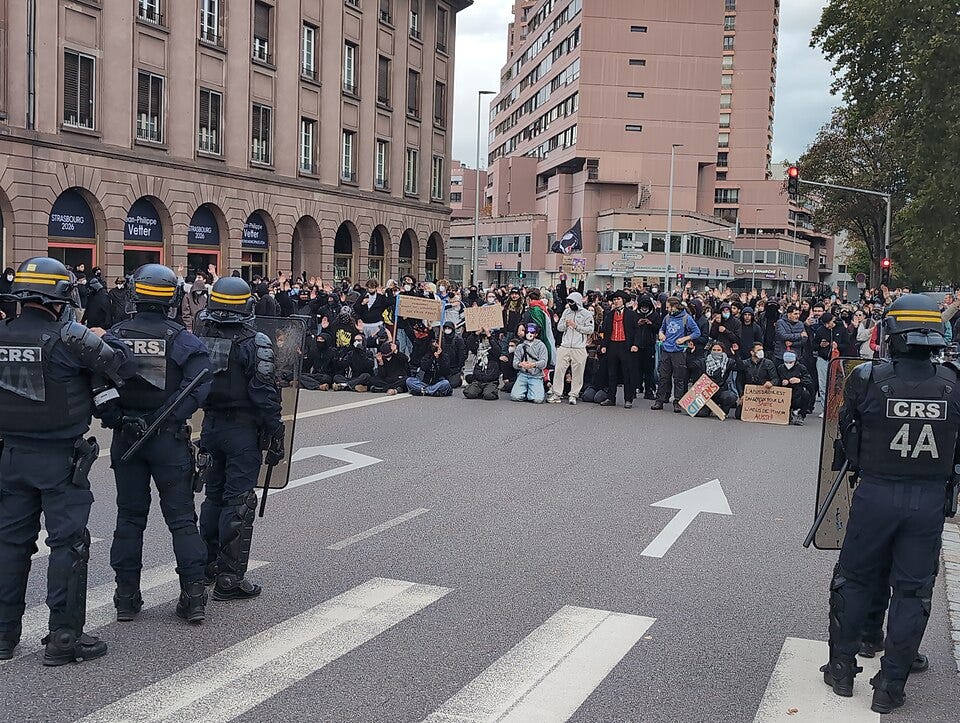
What’s got into Europe’s youth?
In France, hundreds of thousands have marched for three weekends running over living costs and underfunded schools, with more than 560 arrests on Saturday alone.
In Germany, the Gen Z regelt movement marched in multiple cities against rising costs, education cuts and the threat of conscription. In Frankfurt and Cologne masked rioters were beaten back by water cannons.
Italian students have occupied a school in Rome. Milan has seen looting. In Spain and Portugal the anger is about housing. In Belgium, Austria and Greece, education funding.
These aren’t just a flash in the plan. In Albania, students have been on the streets for nearly five months over the cost of living and corruption. In Serbia, candidates chosen by student assemblies just won a general election, toppling an entrenched government. Young Europeans are on the move, and they mean business.
The anger is not mysterious. Across the EU, house prices rose by more than half between 2010 and 2024, while youth unemployment is more than double the rate of the wider population. Across each country lies specific national challenges, but all of them come down to the same grievance. This generation was raised on the promise that hard work would buy them a home, a family and a better life than their parents. Now, it seems, the deal is off.
It would be easy to frame this as young versus old: boomers sitting on houses and pensions while their grandchildren pick up the bill. It isn’t helpful. Most pensioners didn’t design the housing market, and plenty of them are watching their own children stuck in the box room in a house share well into their thirties.
The real story is demography. Europe is ageing fast, and older people vote in far greater numbers. Parties have spent decades quite rationally tailoring their offer to the people who turn up. The result is a politics that protects asset values, guards pensions and treats immigration as the problem to be solved, while the costs pile up on those least likely to complain at the ballot box. Until, that is, they complain in the street.
Britain is caught in exactly the same bind. Take welfare. Our debate has fixated on the sick, the disabled and the near-million young people not in education, employment or training. Andy Burnham has called the NEET figure “an economic catastrophe and a moral failure”, and has pledged support up front with benefits as the backstop.
But the wider conversation too often carries an unspoken charge. The young haven’t earned their crust, that they’re able-bodied and should get on with it, that they simply aren’t resilient enough. What goes conveniently unsaid is that the work they are meant to tolerate is built on stagnant wages, insecure contracts and soaring rents. The rising cost of growing up is even out of reach for those who are doing everything right — so what’s the point?
Or take Shabana Mahmood’s plans to make many migrants wait ten years or more for settlement; a textbook case of governing for the interests of older generations. Immigration ranks among the top issues for 65 per cent of over-65s, but just 21 per cent of 18-24s.
Initially, her policy was sold on cost. The Home Secretary originally claimed £10bn in savings, a figure Jonathan Portes, professor of economics and public policy at King’s College, has shown, using the government’s own data, is closer to £600m. Meanwhile, the IPPR estimates that skilled migrants due to settle (including health and social care workers) would make a net lifetime contribution of around £115bn. The numbers don’t add up. But this policy was never really about money — it was about winning back voters Labour fears it has lost. And the bill will land on the young: an ageing country needs more carers and more taxpayers, not fewer.
So what should governments do? Across Europe, young people are being pulled in all political directions, but it is the far-right that has worked hardest to organise them. Leading political academics Cas Mudde and Duncan McDonnell find the populist right has invested heavily in recruiting and training articulate, university educated young people, drawing them in by talking “in clear terms about the issues that concerned them”.
The lesson for the mainstream is blunt: do the same. Speak plainly and offer real answers. In practice that means two things. First, honesty with the electorate. Restrict foreign workers and there will be fewer people to care for you, and the economy will suffer. Fail to build homes, and your children will struggle to find a place to live; they may stay with you for longer.
Second, engage with the young directly. A Secretary of State for Young People, perhaps, a seat at the cabinet table for the group with the most at stake and the least voice. Longer term, a properly funded national care service and a path back into the EU would do more to rebalance the deal than any number of youth guarantees.
Burnham’s focus on NEETs suggests he grasps the scale of the problem. But while his government keeps pursuing a migration policy written for older, anxious voters, it risks undoing with one hand what it builds with the other.
Europe is shouting, Britain needs to listen. Ignore the young at your peril. ■
About the author: Zoë Grünewald is Westminster Editor at The Lead and a freelance political journalist and broadcaster.
👫Agree with Zoë? Share this story with your friends, family and colleagues to help us reach more people with our independent journalism, always with a focus on people, policy and place.
💯 agree with this article. Neo Liberalism was always going to be a 'race to the bottom' for ordinary people. Meanwhile wealth has drifted upwards and resulted in asset hoarding ,driving up the cost for everyone else.Even the average consumer is now forced to gamble with energy tariffs in our crazy privatised market.