

Deadly delays and treatment in chains: How prisons are failing women with cancer
Months after the Bronzefield cancer scandal, the UK’s prison health system is still falling below NHS standards and putting the lives of female prisoners at risk.


Prisons are not adequately equipped to diagnose and treat cancer to the same standard as the NHS in the community – and female prisoners are at the sharp end of this crisis.
People diagnosed with cancer while in prison are 28 per cent less likely to receive curative treatment – particularly surgery to remove tumours, radiotherapy and chemotherapy – contributing to a nine per cent higher risk of death from cancer. And for women in prison, this inequality is compounded by existing within a system that is still designed around the needs of male prisoners, and lacking gender-specific care.
Leslie was first diagnosed with aggressive breast cancer in 2018. In March 2022, she was remanded for five and a half months at HMP Bronzefield, shortly after discovering a new lump that she feared signalled her cancer had returned.
Leslie was referred to her consultant in April and underwent biopsies, but the results were never shared with her for reasons unknown to Leslie. By mid-May, nothing had happened. Eventually, her husband informed her she had already missed her May appointment.
“The prison insisted they had not received an appointment letter although the hospital had sent one,” Leslie tells The Lead. “I still don’t understand why I was not informed or taken to my consultant.”
Due to the missed appointment, she did not see her consultant again until late June, more than ten and a half weeks after the biopsies. For suspected cancer, NHS policy aims for patients to be seen by a specialist within two weeks of urgent referral as part of the Faster Diagnosis Standard. Depending on the type of cancer, biopsy results typically take one-three weeks.
Unequal care behind bars
“Quite often you’ve got women who haven’t been through cancer screening or even got a good relationship with a GP,” explains Lucy Russell, Head of Policy and Public Affairs at campaign group Women in Prison. While around 70 per cent of women in the community have attended breast cancer screening, women in prison are up to three times less likely to be diagnosed through screening than those in the general population.
In England, women in prison are supposed to be included in the NHS Breast Screening Programme, but in practice, incarcerated women rarely receive screening in a timely way due to failures in delivery by both NHS England and HM Prison and Probation Service. These failures include staffing shortages, limited on-site facilities for screening which leads to sole reliance on external appointments, and poor coordination of appointments between NHS and prisons.
Most end up being diagnosed through emergency presentation, which is associated with more advanced disease and poorer outcomes, explains Elizabeth Davies, lead researcher of the UCL study.
Delays continue after diagnosis, often because prisons struggle to provide escorts – like in Leslie’s case. “Each external appointment requires two officers, and court appearances or staffing pressures routinely take precedence over healthcare,” Davies says.
Even after surgery or treatment, basic aftercare is still missing. “One woman we spoke to came back from a breast lumpectomy with blood all over her clothes,” Russell says. “She hadn’t been given anything to clean the wound. She couldn’t get additional medication or wound coverage, and because laundry is restricted in prison, she couldn’t even wash the blood out of her clothes.”
“I was stripped to the waist in a hospital gown which had to be open at the front. I cancelled all future hospital appointments. I’m not going to the hospital in chains.”
These concerning examples stand in stark contrast to the government’s 2023 National Women’s Prisons Health & Social Care Review, which promised reforms including gender-specific healthcare, access to evidence-based talking therapies for women with trauma, and improved data and outcomes monitoring. More than two years on, many of these reforms have yet to materialise.
Allegations of neglect at HMP Bronzefield
Leslie received her breast cancer diagnosis alone without family or support. The May appointment wasn’t the only one she couldn’t attend. Court dates would take precedence over critical medical appointments due to shortage of prison staff to accompany her, while in other cases, officers would mix up her appointments with those of other inmates.
Before she was allowed to keep her own medication, Leslie did not consistently receive her daily anti-cancer endocrine tablets from the staff. “My medications sometimes ran out due to not being re-ordered by staff. If the prison was short-staffed or there was a medical emergency, which happened on more than a handful of occasions, I would not get the evening medications. On occasion, I was given medication from someone else’s supply.”
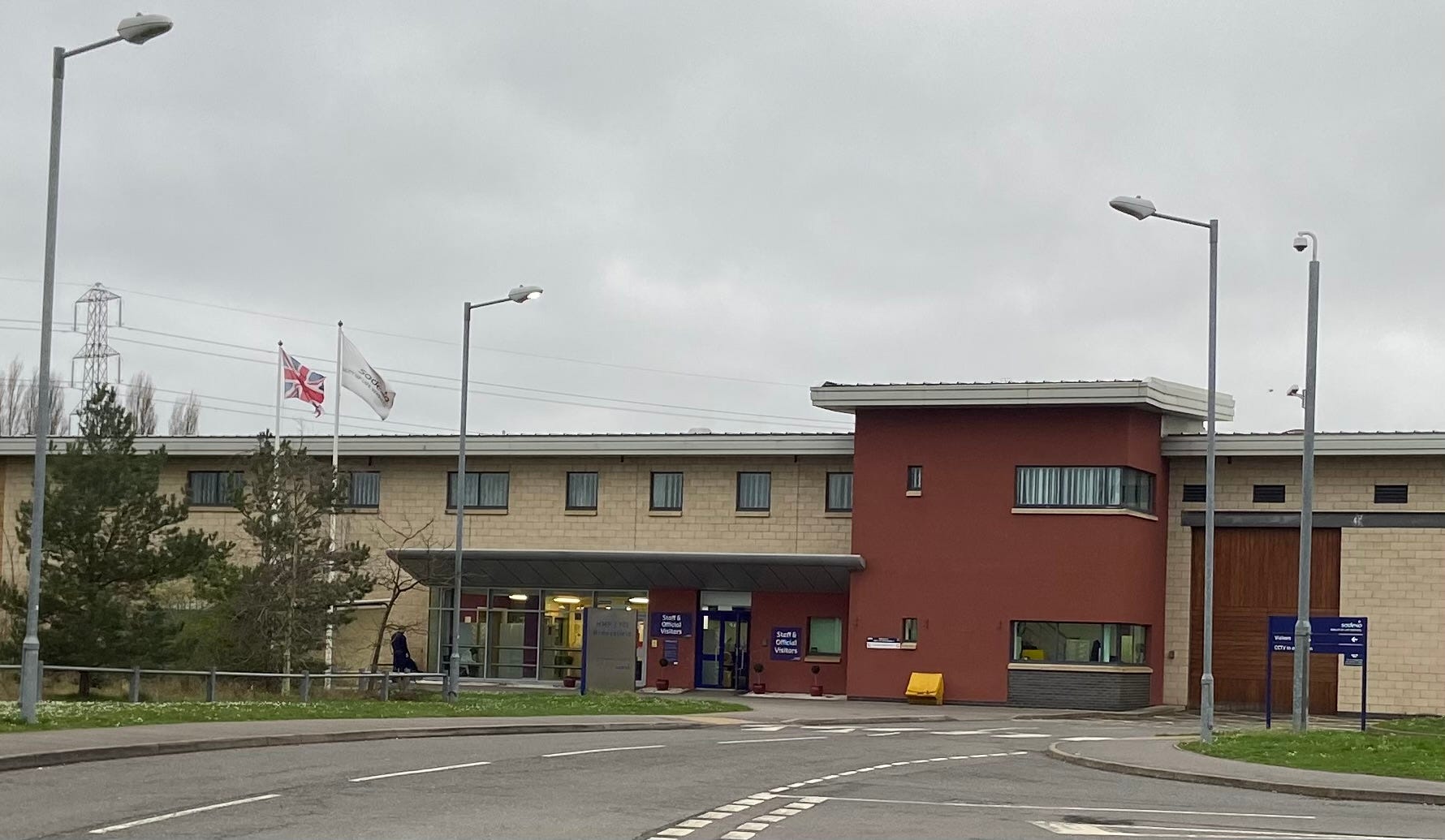
By the time Leslie was released in November 2022, she had missed the window for radiotherapy. Although radiotherapy should be available to people in custody consistent delays and a long prison admission meant Leslie couldn’t access this treatment. Her cancer had now progressed to stage three. She later underwent 18 cycles of chemotherapy between 2023 and 2024. When Leslie was remanded again in 2024, her health deteriorated even further. Hospital appointments now took place while she was restrained.
During one echocardiogram to check for chemotherapy-induced heart failure, she was chained and partially undressed while an officer sat inside the privacy screen. “I was stripped to the waist in a hospital gown which had to be open at the front,” she recalls. “We were all clearly embarrassed. After that, I cancelled all future hospital appointments. I’m not going to the hospital in chains which put me in humiliating situations.”
Leslie has still not received the results of the echocardiogram. Neither the consultations nor any of her test results were added to the NHS app during the time she was incarcerated. Now back in the community in Surrey and diagnosed with complex post-traumatic stress disorder, she believes prison compounded both her illness and trauma.
A spokesperson from HMP Bronzefield, told The Lead: “As a general principle, prisoners are not treated any differently regarding their medical needs, whether they are on remand or convicted, and can expect a level of medical treatment equivalent to that provided in the community.”
Leslie’s case was first brought to public attention by The View, a campaigning platform that focuses on the extreme costs of mass incarceration. In September 2025, HMP Bronzefield came under public scrutiny when The View, along with survivors and allies, launched the Stop the Torture campaign, alleging prisoners with cancer were being chained during hospital treatment, denied medical escorts, left malnourished, and forced to wait months for diagnosis or pain relief.
“Prison sets women up to fail every time yet community support can prevent criminalisation altogether.”
Michelle Wetherall, who has lived with cancer for 20 years, was sentenced in November 2025 to three years and nine months for offences related to the supply of drugs. Initially, she started taking cannabis to ease the chronic pain associated with the cancer which eventually led to her dealing other drugs. While in custody at HMP Eastwood Park, doctors identified a liver lump, an extended bladder and severely enlarged kidneys, and she is currently still waiting for an oncology appointment to determine whether the cancer has returned.
On 28 November last year, she was taken to Southmead Hospital, a hospital local to the prison, for an appointment, during which she was restrained by two officers. She was in A&E from midnight until 7am without pain medication before discharging herself. Michelle is still waiting for the results of a January scan to confirm whether the cancer has returned. Her legal team is now pursuing early release on compassionate grounds under Article 3 of the European Convention on Human Rights.
Fragmented responsibility
According to Russell, these failures stem from fragmented responsibility between NHS England and HM Prison and Probation Service, where split roles mean neither body is fully held accountable when care for women with cancer in prison breaks down. While healthcare is commissioned by NHS England, prisons still control staffing, food contracts, and the daily conditions in which care is delivered.
“There’s an intersection between health and justice, and there are growing questions about what happens as NHS England changes and who will ensure the right staff and resources are in place,” Russell says.
The restructuring of NHS England, following plans to fold its functions into the Department of Health and Social Care, risks further complicating an already fragmented system.
On one hand, Russell explains, individual prisons operate under rules set by governors, but these are constrained by a wider system of national policies and contracts set at the top level of HMPPS, which cannot easily be adapted to meet local needs. This has limited flexibility and has slowed any meaningful change. On the other hand, she notes, healthcare staff commissioned by NHS England are overstretched, with near-daily emergencies such as suicide attempts requiring immediate attention, meaning routine appointments are frequently cancelled and have to be restarted from scratch.
The Ministry of Justice also ultimately determines the conditions in which healthcare is delivered in women’s prisons since it oversees funding. Long-term underfunding has left prisons short-staffed. As of December 2023, prisons in England were operating below target staffing levels.
When The Lead contacted the Ministry of Justice, a representative said in an email that healthcare in prisons is delivered by NHS and private providers, directing queries to those services.
NHS England is yet to issue a response.
According to Dr Jake Hard of NHS England, the next move should begin with evidence of what works and what doesn’t, and right now, that evidence base is dangerously thin.
“Large-scale epidemiological studies of the population could allow health services to properly plan cancer care accordingly but research for patient benefit studies is very low in number,” he says. “Historically, these issues have been related to the relative unattractiveness of undertaking research in prisons, complicated ethical approval processes, lack of funding, and access to data.”
A December 2025 report by Inquest suggested that to curb these gaps, women’s prisons should be dismantled and resources redirected to community-based support.
Russell agrees: “Most of the women in prison should just not be there. Prison sets women up to fail every time yet community support can prevent criminalisation altogether.”
The Feminist Justice Coalition [FJC], a human rights initiative for incarcerated women is currently leading an independent report on cancer care in women’s prisons, one campaigners hope will move the issue toward enforceable change. The report – launched at the United Nations in March – documents delays in diagnosis, disrupted treatment, and builds a national evidence base on how women with cancer are failed in custody. It will be presented to the UK Parliament this month (April 2026).
There are other signs of progress. The Chief Medical Officer of England’s report on prisons acknowledged these gaps, and the National Institute for Health and Care Research review has issued a new funding call focused on improving physical health services in prisons.
Until women’s bodies, lives, and realities are taken seriously by a prison system still built around accommodating men, the cycle will likely continue. Campaigners reiterate the need for concrete change, including clearer safeguarding thresholds, automatic early release pathways for people with serious illnesses like cancer, and mandatory continuity of cancer care equivalent to that available in the community.■
About the author: Tabby Kibugi is a journalist and writer who reports on culture, health, and social justice. Her work has been featured in Teen Vogue, Refinery29, Black Ballad, Sierra, Reader’s Digest, and more.