


“It feels like I’ve been thrown away by society. My future is poverty, debt and destitution. That’s my inheritance for being disabled,” says Holly Donovan, 41.
Holly has complex health conditions, including fibromyalgia and the long-term side effects of childhood cancer. They have never had a full-time job, despite years spent applying.
Holly’s experience is not unusual. At the end of 2025, the disability employment gap stood at 29.7 per cent, meaning just 52.8 per cent of disabled people were in work compared with 82.8 per cent of non-disabled people. The figure has remained largely stagnant for three decades.
“So many of us want to work – even if it’s just three hours a day,” Holly tells The Lead. “I want to use my skills and contribute to something bigger than just surviving day to day. It would help my mental health, my sense of purpose. Instead, it’s just this aimless nothingness.”
Hope is on the horizon with Andy Burnham entering Downing Street and Labour on a mission to regain the public’s trust and rebuild a broken Britain. As always, reforming welfare is on top of the list, but employment is getting second billing.
Labour’s ‘Back to Work’ plan promised to get one million people into employment, with a particular emphasis on disabled and chronically ill people, and Burnham is planning an overhaul of welfare to funnel more people into work. But is it possible to change the landscape of employment for disabled people without first addressing the causes of the gap?
Who is counted as disabled?
Part of Britain’s ongoing issue with disability is the confusion over “who counts” as a disabled person.
Under the Equality Act 2010, a disabled person is someone with a physical or mental health condition that has a substantial, long-term impact on daily activities. That definition includes 16.8 million disabled people in the UK and many of the 25 million people living with a chronic illness.
However, disability employment figures may not include all of them. A self-reported census tells us who is disabled, but respondents don’t always know that they qualify under the Equality Act, resulting in people with chronic conditions, like endometriosis, failing to flag their disability.
Failed by the education system
“For many disabled people with complex needs, the barriers to employment start in our education system,” says Evan John, policy advisor at national disability charity Sense, citing research by the Nuffield Foundation that showed disabled people were nearly three times as likely to leave school without qualifications as non-disabled students.
Holly says teachers assumed that they would never work full-time so did not invest time in their education.
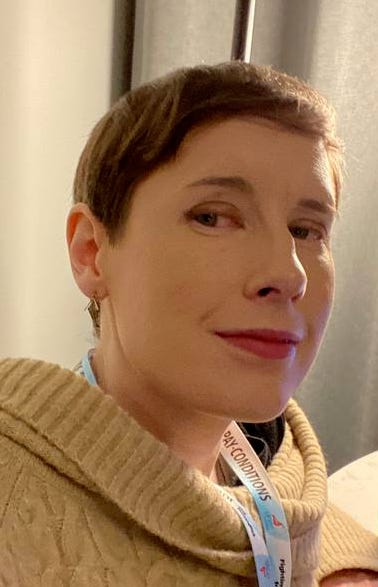
“I ended up teaching myself from a textbook in bed and if I hadn’t done that, nothing would have been done to help me,” Holly says. “I was let down by my school, my sixth form, my GP, my consultants, mental health services – it felt like I was just left to rot.”
Underachieving and low expectations are common themes in many disabled and chronically ill people’s experiences in education, often leading to difficulty finding employment as adults.
But when support is given to disabled students, it works, helping to transition disabled students into employment.
Dylan Kelsall, 23, from Stoke-on-Trent, works as a marketing assistant and supports the work of Caudwell Children, which secured the funds for Dylan’s electric-powered wheelchair.

“When the right support was in place, I thrived,” says Dylan.“The biggest barrier wasn’t my disability itself, but low expectations and environments that weren’t designed with disabled students in mind.”
Dylan credits a robust Education, Health and Care Plan (EHC) – a legal document for children and young people with complex educational needs that outlines the mandatory support required – with preventing him from falling behind after major surgery during school.
EHCs aren’t easy to come by, though. Some 6,000 students wait over a year to receive one, far beyond the target wait time of 20 weeks, leaving countless disabled students to fall behind at school and later, on the career ladder.
Bias in the hiring process
Around one million or more disabled people in the UK who are out of work say they want a job. Among people with learning disabilities, 86 per cent want to work, but only 5 per cent are employed.
The same willingness to work was found amongst NEETs (Not in Education, Employment, or Training) with 84 per cent of young people wanting a job or training. However, disabled and chronically ill people run a gauntlet of bias when attaining employment, exacerbated by rhetoric about disability and benefits.
“The Government talks about benefit fraud and it feeds straight into how employers see us – disposable, annoying, risky,” explains Holly. “If you see someone tick ‘disabled’ on an application, of course, that stigma affects your decision.”
Josh Bullmore, the UK Government’s Disability and Access Ambassador for the advertising sector, agrees that many industries are stuck in a “vicious circle” because “there are few examples of successful disabled people to challenge the unconscious bias about what success looks like.”
“And at times of ongoing financial pressure on businesses, people are less likely to take what they perceive as a ‘risk’, as inaccurate as that perception of disabled people is,” he says.
Closing the disability employment gap will require intervention to overcome employers’ biases. Successive governments have attempted to do so through schemes like ‘Disability Confident’.
Launched in 2013, Disability Confident pledged to transform recruitment by encouraging employers to adopt inclusive practices. Critics within the disability sector argue that the scheme has become a box-ticking exercise because it only requires employers to say the right things without following it up with tangible action.
The numbers prove its failure: less than a third of employers with the Disability Confident badge have actually hired a disabled person. The employment gap has not budged since the scheme was introduced.
With government schemes failing to tackle bias in the hiring process, others are taking up the fight.
Tab Ahmad OBE founded EmployAbility to bridge the gap between disabled jobseekers and employers through training and advocacy.
“A lot of [these schemes] have become symbolic. Everyone is talking the talk, but what actually changes on the ground for disabled people? Not enough,” Ahmad says. “When you apply a blanket approach, it doesn’t level the playing field – it just shifts it.
“Disability isn’t a homogeneous group. You can’t design one system and pretend it works for everyone.”
With most employment policies relying on old practices that may not have weeded out the ableism, government schemes like Disability Confident struggle to move beyond tick-boxing and influence lasting change.
Ahmad also emphasises that the conversation needs to widen its scope. “The whole disability policy space is still very white. Very middle-class. Very dominated by a particular type of experience,” she says. Until that changes, Ahmad argues, those facing the greatest barriers will remain unheard.
Staying in work
Getting the job is only half the battle. Though reasonable adjustments – like flexible hours or accessible equipment – are legally required, many employers view them as an expensive inconvenience, even with Government support to fund adjustments.
Reasonable adjustments make the workplace more accessible and ensure disabled people can stay in work without compromising their health. Dylan says these accommodations make his position sustainable.
“With a few adjustments, I would shine”, Holly says – a sentiment echoed by Dylan.
“My employer has worked collaboratively with me, asking what I need rather than assuming, and adapting as things evolve,” Dylan says. “That approach removes barriers before they become problems and allows me to focus on doing my job well.
“It’s not a lack of skill or commitment that pushes people out of work; it’s inflexible systems that don’t account for different needs.”

Government grant scheme Access to Work funds essential adjustments for disabled people in employment, but delays plague the system. Some applicants wait almost a year for an assessment, with those waiting too long losing job opportunities; the lack of timely support forces disabled people to choose between protecting their health and earning an income.
“It took nine months just to speak to someone from Access to Work,” says Melody*, who works in administration. “They sent a report and that was it. No follow-up, no checking if my employer actually did anything. You’re left to fight for yourself.”
When employers fail to collaborate with their disabled and chronically ill employees, it pushes them out of work. Melody left one job when it became too much to physically handle, failed probation on the next one due to illness, and is now facing pressure in her current role to complete a rapid phased return before she’s ready to avoid losing another position.
“I won’t be able to contribute to a pension like a non-disabled person,” she says. “It’s not just about getting a job – it’s about whether you can stay in work long enough to have any security.”
For the gap to close, schemes like Access to Work need major investment to effectively support disabled workers. DWP whistleblowers have reported covert funding cuts wherein previous claimants are seeing their award slashed by up to 70 per cent without due cause.
Burnham has also inferred that Personal Independence Payment (PIP), a non-work-related, non-means-tested benefit, will face cuts. The benefit is designed to help disabled people cope with the additional cost of living with disability, not to help them into work.
Scope estimates that disabled people spend, on average, an £1095 per month. The maximum PIP payment someone can receive is £778.40 every four weeks.
Government schemes: lots of headlines, little change
Though it’s yet to disappear, successive governments have tried to address the gap with varying levels of success. New initiatives arrive with a flurry of press attention, then quietly fail to deliver change.
Besides the efforts of Disability Confident and Access to Work, there are a few programmes available to help disabled job seekers. But there is no evidence of any impact on the employment gap.
Take the government-funded Work and Health Programme, a voluntary scheme that provides tailored support for disabled job seekers in England and Wales. It held promise for Holly when they stepped up their search for a job. It failed to deliver.
“It took four months just to get onto the programme,” they say. “At first, my job centre didn’t even know what I was talking about. When I did get on it, they helped me get a CV, interview skills, training – but I still don’t have a job.”
Government reforms to welfare also threaten to drive more disabled people into poverty rather than into work. Plans announced under Starmer’s leadership included removing the health element of Universal Credit for new claimants aged 16-21. The change will impact approximately 72,000 young people.
Where does Burnham stand?
Burnham’s plans are still unclear, but he has promised to improve support for people trying to get into work, particularly young people, saying that they had been “quite seriously let down because the support wasn’t there for them”. However, so far, there are no details on what shape the support will take, only that it may become conditional on “people taking opportunities that are presented in front of them”.
He has, so far, made one concrete move: disabled bus pass holders can now use them 24/7; having been previously restricted to 9:30am and 11pm, which stopped many disabled people using free travel to get to work. Access to Work, the scheme most directly tied to staying in employment, has gone unmentioned.
“Sanctions don’t encourage disabled people to seek employment,” says Kieran Aldred, policy manager at disability equality charity Scope. “They erode trust in the Department of Work and Pensions [DWP] and deter engagement with employment support.”
A DWP spokesperson told The Lead: “We’re unlocking job opportunities for disabled people through our £1bn a year of employment support, and by redeploying 1,000 Work Coaches to help sick or disabled people who have been unfairly left behind.”
Based in Jobcentre Plus offices and GP surgeries, work coaches will help individuals find and stay in work by assisting with CV development, job searches and facilitating access to training.
What will really make the difference?
The landscape looks dismal for disabled and chronically ill people locked out of work, but there is hope. Seemingly, the most effective solutions are coming from charities and the private sector instead of from the government.
Tab’s grassroots model working directly with disabled people in need of support mirrors what many disability charities have long argued: personalised support is far more effective than wide-sweeping box-ticking schemes.
However, to permanently move the needle on the disability employment gap, society needs a re-education on disability and chronic illness.
“Disabled people don’t need fixing, workplaces do,” says Dylan. “When disabled people are trusted, supported, and given the opportunity to grow, they succeed. The gap exists not because of a lack of talent, but because accessible opportunities are still too limited.”
The disability employment gap will remain as it’s been for three decades unless non-disabled minds start to change.
Until then, the people most affected by the gap are doing their best to build a job market that gives everyone a fair chance to work – with little evidence yet that Burham’s government is listening. ■
About the author: Hannah Shewan Stevens is an award-nominated freelance feature journalist specialising in disability and health. Her work also focuses on shining a spotlight on underreported issues to make people look at topics from a new perspective. Hannah's work can be seen on Glamour, Cosmopolitan UK, Independent, Refinery29 UK, Metro UK, Telegraph, iNews, and more.
👫Share this story with your friends, family and colleagues to help us reach more people with our independent journalism, always with a focus on people, policy and place.
If you’re enjoying our Burnham’s Britain series, as we unpick the difficult decisions he will need to make as Prime Minister and more become a subscriber to support us to tell more stories from beyond the Westminster bubble.
I'm not sure the argument follows. Burnham mentioned employment support at least twice in parliament today. We are waiting on two reports (Milburn and Timms) before any welfare reform will be drafted. On a number of occasion he has lamented crude cuts.
It's clear that they like the Dutch model, which does involve conditionality. But I didn't see much mention of this.
I enjoy reading The Lead as it hasn't gone silly in silly season, but keeps it's compass straight. But I don't think this has given a measured analysis in the change of direction from Starmer.
What seems clear to me is that support precedes cuts for Burnham. What isn't clear is whether this will be dumped on local authorities without a clear centralised commitment to reversing the dogwhistling language that pervades Britain. Any policy not only has to support disabled people but actually *reverse* the damage that previous governments have done in stigmatising disabled people.