


It’s not often I reach for sporting analogies, for obvious reasons. But here’s one, courtesy of hockey legend Wayne Gretzky: you miss 100 per cent of the shots you don’t take.
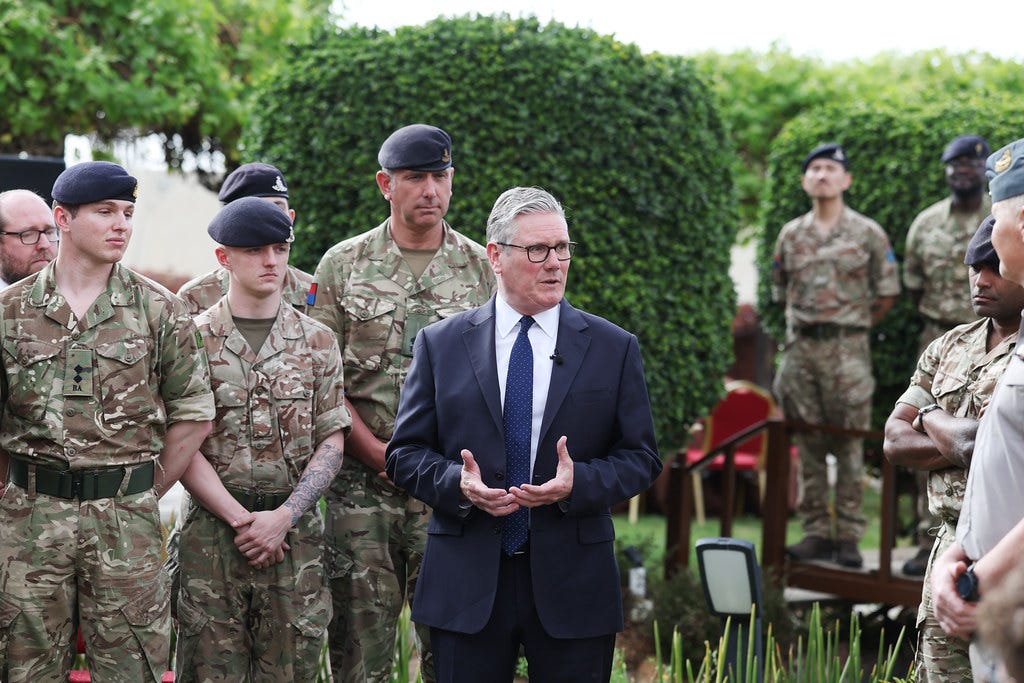
Keir Starmer, it seems, is determined not to take any.
Since coming into power, Labour has acted as a team permanently hovering on the edge of a radical decision it cannot bring itself to make. The discovery of the £22bn “black hole” was the perfect moment to level with the public about the state of the government’s finances. After fourteen years of austerity, Brexit and Covid, the state simply did not have enough money to provide the services we expect. Instead, it was fumbled.
The Budgets that followed could have reset the conversation and the way we handle our finances. Instead, a cautious Rachel Reeves tinkered: a little here and there, the burden falling on working people who are less organised, less vocal, and more accustomed to absorbing the hit, rather than anywhere structural. On farmers, winter fuel, and the deeper questions of wealth and assets, the instinct has been to retreat.
But politics in difficult times does not reward caution. Britain, like much of the world, is in a permanent state of crisis: a fractious, weary population, geopolitical instability, and a creaking economy. Even establishment voices are now saying the quiet part out loud. Today, former NATO chief, Lord Robertson, will warn that the UK’s security is “in peril”, describing a country that is “underprepared” and “not safe”.
The uncomfortable truth is that we cannot get where we need to go without raising lots more money. Borrowing alone will not cut it either. Markets have limits, debt interest is already swallowing billions, and the era of cheap money is over. So that means tax, not the politically convenient kind, or another round of stealth freezes, but a serious rethink of how the state raises revenue in the 21st-century.
The case is overwhelming. Start with the economy. Britain is less productive, less healthy and less resilient than it should be. Investment in infrastructure, in the transition to renewables, and in the basic capacity of the state has been deferred for too long.
Then there is defence. If Donald Trump has taught Europe anything, it is that the old security guarantees can no longer be taken for granted. Even British military chiefs are warning that “the cavalry is not coming”. A more dangerous world demands a more serious state, and that costs money.
Even here, the debate is being skewed. Too often, defence is set against “welfare”, as if national security depends on cutting support for the most vulnerable. Lord Robertson is expected to make exactly this argument, warning: “We cannot defend Britain with an ever-expanding welfare budget.”
Firstly, it is a false choice, not least because when politicians say “welfare”, they rarely mean pensions or the triple lock, which are the largest and most protected parts of that bill. But the deeper problem is that a country cannot be secure abroad if it is failing at home. Britain has a sick, ageing population, rising inactivity and deep regional inequalities. Further stripping back support, without fixing those underlying problems, will undoubtedly leave a weaker workforce, higher long-term costs and a less resilient state.
There is no reason to accept this framing in the first place. Britain is a wealthy country. The question is not whether we can afford to invest in defence, resilience and renewal, but whether we are willing to make the tough choices to do so.
And there is the simple matter of fairness. The current tax system is riddled with distortions: work is taxed heavily, while wealth – particularly unearned wealth – is treated far more generously. Across the political spectrum, there is growing agreement on the direction of travel: reform capital gains tax, revisit land and property, close loopholes, and consider windfalls where appropriate. These are not radical ideas; in fact, are increasingly mainstream.
For too long, British politics has been shaped by the fear of being labelled “tax and spend”. Especially in Labour circles, that reflex lingers even as the ground beneath it has shifted.
But the Government cannot keep telling us everything has changed for the worse while insisting the same approach will suffice. People feel the urgency of the moment, and it is jarring to watch a government respond as if nothing has.
Of course, raising taxes is not easy. It requires trade-offs and strong leadership. But the alternative is far worse: an erosion of state capacity, and a weak, defenceless Britain.
I’d love to say moments like this do not come around often. But it seems they do – with increasing frequency and greater urgency each time. That is exactly why Starmer cannot look away. Moments like this demand that you take the shot.■
About the author: Zoë Grünewald is Westminster Editor at The Lead and a freelance political journalist and broadcaster.
👫Agree with Zoë? Share this story with your friends, family and colleagues to help us reach more people with our independent journalism, always with a focus on people, policy and place.
No I sadly do not think he is up to it - although he has done well to keep us out of the American/Israeli war - but we need to make changes like taxing those with broadest shoulders more and by this I do not means those hard working individuals that earn £100/200 thousand a year as they are taxed enough. We do need to get those very wealthy individuals who have huge wealth to take more of a share of the burden. I wish I had a better idea but I do not sadly!
Agree! Is Starmer up to it? Everything we've seen so far suggests not.