

Keir Starmer cannot pretend this is a passing storm
To have any hope of remaining in Number 10, the prime minister must reset his relationship with his own MPs


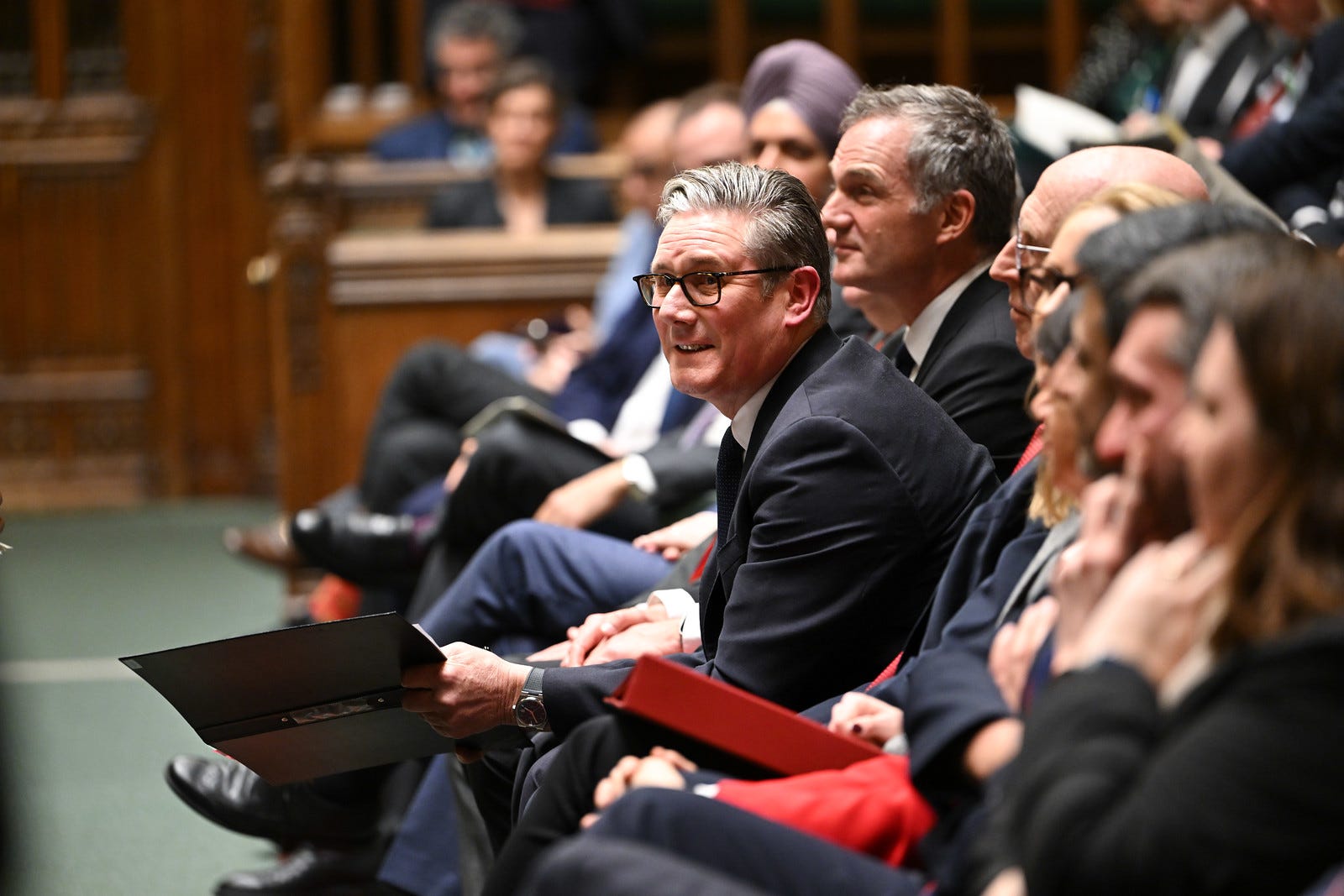
After a week in which his premiership appeared to be about to implode, allies closed ranks, and the immediate threat passed. But this was a political near-death experience. The wound is fatal.
At the heart of the crisis lies the decision that triggered it: Starmer’s appointment of Peter Mandelson to one of Britain’s most sensitive diplomatic posts, despite long-standing controversy surrounding his relationship with Jeffrey Epstein. That judgement now stands as a fundamental moral, political and strategic failure at the centre of the prime minister’s leadership.
Starmer appointed Mandelson as ambassador to Washington in 2024 despite knowing he had maintained contact with Epstein after the financier’s 2008 conviction. When further details emerged about the closeness of the pair (and the serious allegation that Mandelson may have leaked highly confidential information to Epstein), the prime minister apologised for “believing Mandelson’s lies”.
The fallout has been severe. Starmer’s chief of staff, Morgan McSweeney, resigned after taking responsibility for advising the decision, leaving Starmer weakened and isolated.
It is hard to say whether this would have been existential if it were just the Mandelson decision that had enraged MPs. There was little reservoir of goodwill left within the parliamentary Labour Party to absorb the shock.
This was not an aberration but a pattern. For months, Labour backbenchers have complained about a tightly controlled leadership operation: a small, insular group at the centre of No 10, making decisions with little regard for the opinion of its MPs. The Mandelson episode forced those tensions violently into the open.
That perception was of a governing style defined by ruthlessness without sensitivity. As I have written in the New World, the operational heart of No 10 came to resemble a boys’ club: cold, closed, and contemptuous of dissent. The parliamentary party’s concerns were dismissed as incidental to the larger project of Starmerism. You can see the consequences in the bitter rows over winter fuel payments, welfare tightening, and a series of unpopular policy recalibrations and U-turns that shredded party loyalty.
That is why Mandelson acted as an accelerant rather than a standalone crisis. Concerns about Starmer’s leadership had been growing for months. The scandal suddenly forced the question that many had already been circling: should he remain in post at all?
The result is a prime minister who has technically survived but is unmistakably weaker. The looming Gorton and Denton by-election now becomes the next test of whether his authority can be rebuilt at all. And with the possibility of further revelations about the disgraced former ambassador still hanging over Westminster, Labour may soon be forced to decide how long it is willing to defend what already looks like a spectacular failure of judgement.
But for now, Labour’s MPs have chosen pause over rebellion. That instinct is understandable. The party remembers all too well how the Conservatives shredded their credibility by cycling through prime ministers.
Not all of this calculation is cynical. It is easy to look at a week like this and assume Westminster is populated solely by egotists obsessed with power rather than its exercise. That caricature is unfair. Many MPs are quietly despondent at the time lost to internal drama rather than the hard graft of governing a country facing deep structural crises.
There is reassurance in the party’s decision to avoid immediate bloodletting. Markets, allies and voters alike have little appetite for civil war, and a chaotic leadership battle fought through briefings and gossip on the eve of a pivotal by-election would only gift attack lines to Reform UK. Despite deep anger toward the prime minister, the prevailing instinct within the party is to manage this moment soberly and responsibly.
Labour cannot pretend this is a passing storm. So what is required now is honest preparation for the possibility of transition. That does not mean forcing Starmer out tomorrow, but acknowledging that his authority has been structurally weakened and may not recover.
And when a contest does come, the party must take stock. It cannot simply default to the safest managerial option or the most adept internal operator. The lesson of the past week is clear: leadership without a moral heart or political judgment is not leadership at all.
Labour’s next leader will need two qualities this crisis has made indispensable: a clear, compelling vision for what government is actually for, and the communication skills to carry both the parliamentary party and the public with them.
The Mandelson affair may ultimately be remembered not as the moment Starmer fell, but as the moment the party collectively regained control of a ship that had drifted off course. Crisis has a way of focusing minds; faced with the opportunity to depose their leader without a plan, MPs chose restraint. Not out of loyalty, but out of responsibility.
For now, the crisis has been contained. The question of leadership has not. ■
About the author: Zoë Grünewald is Westminster Editor at The Lead and a freelance political journalist and broadcaster. Zoë then worked as a policy and politics reporter at the New Statesman, before joining the Independent as a political correspondent. When not writing about politics and policy, she is a regular commentator on TV and radio and a panellist on the Oh God What Now podcast.
👫Agree with Zoë? Share this story with your friends, family and colleagues to help us reach more people with our independent journalism, always with a focus on people, policy and place.
It all could have been so different.
It is not just the problem of Starmer, but the whole cabinet.
Labour could have been a government of radical democratic reform of Britain's unfair archaic constitutional and political system. They could still become this now and turn things round if they had the political will and political nous. We fear that that they do not have it and they won't.
They could and should end FPTP for local government and Westminster elections and introduce PR by the next round of local government elections after May 2026 and the next General Election.
They could introduce a serious cap on political donations and restore the independence of the Electoral Commission
Yet these proposals are not in the recently submitted electoral reform bill.
They could and should commence a radical reform of the House of Lords and replace it with an elected senate by the next General Election. In the meantime, they should act forcefully and hard to remove the remaining hereditary peers, C of E bishops and other religious leaders.
They could introduce legislation facilitating the removal of peers who break the law or commit serious misconduct and breaches of Parliamentary rules and stripping of their titles and honours (Peter Mandelson and Michelle Mone, we are thinking of you).
Greater powers, including revenue raising powers should be given to the Scottish Parliament, the Welsh Senedd and the Northern Ireland Assembly and their devolved powers equalised. They could create a devolved English Parliament.
They could introduce a written constitution.
At present they are on track to lose the next General Election and pave the way for a Reform Government or a Reform-Tory coalition government elected with a huge majority on a minority of votes, just as Labour were.
The least Labour could do is reform the constitution to prevent this happening and create a fairer system.
He needs to resign & so should the Chancellor. No.10 should be completely re-staffed. Answers to problems pile up & are ignored. I supported Labour for over 50 years & was a card carrying member for a while. This nation should be done with austerity & extractive businesses with no real stake in the country's future. If he stays, there must be a monumental re-think. Stop fearing "the markets" & start considering the electorate. We aren't on this Earth to be 'managed.'