


Have you ever heard of NIMTO?
Neither had I, until a sunny Monday afternoon at Labour Party Conference, when Lord Toby Harris, Chair of the National Preparedness Commission, introduced a room full of delegates to the phrase.
No, it’s not a soft drink made in Manchester, nor a type of pocket mint, but a rather brilliant acronym for the foibles of modern politics: Not In My Term of Office.
Politicians know that Britain has enormous problems that need fixing, yet they also know fixing them will be expensive, disruptive and unpopular. So they put them off, commission a review, kick them into the next parliament and hope that someone else will have to deal with the consequences.
Harris’s point was that this is not just political cowardice, but a structural problem.
Governments are judged on what they can deliver within the narrow window between elections. They are less likely to be rewarded for spending billions preparing for a crisis that might not happen for ten years, or for taking difficult decisions whose benefits will be enjoyed by somebody else.
The result is a country that has spent years putting off difficult decisions — and is now increasingly exposed by the things it failed to prepare for.
By Tuesday morning, the skies over Liverpool had turned grey, the rain was coming in sideways and the wind had picked up. Inside the conference hall, things remained remarkably buoyant. The infighting that had left a dark cloud over the event last year had, for now at least, subsided. Andy Burnham was being greeted as the man who might actually get things done. The slogan — and the mood — was Hope Again.
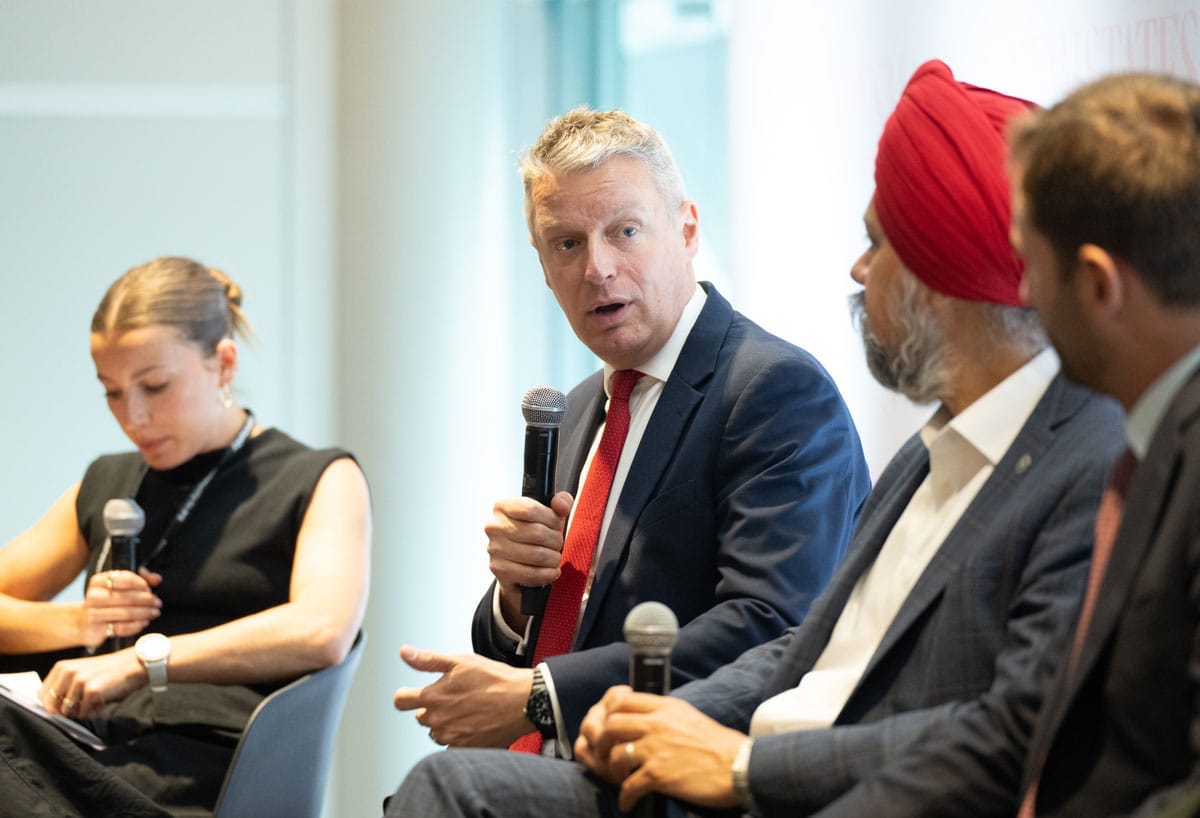
I spent most of my time outside the hall, chairing a series of fringe events over the week on growth, resilience, defence and the challenges facing Britain’s infrastructure and supply chains. The message, repeatedly, was that Britain is not as prepared as it thinks.
A combination of austerity, Brexit and short-termism has left us reliant on countries whose interests will not always align with ours. Defence, energy, infrastructure and industrial capacity all have vulnerabilities that cannot be fixed by the next budget, let alone the next news cycle.
And these problems are competing with things that voters understandably care about much more immediately: energy bills, schools, hospitals, immigration, and the cost of living. It is difficult to make the political case for spending billions preparing for a crisis that may never arrive when people are worried about next month’s bills.
There was hope, certainly. But there was also a nagging sense that hope, on its own, might not be enough.
The night before Burnham’s big speech, conference bars and receptions were spilling over with chattering excitement about what he was going to announce. “Something big is coming,” one minister told me. They weren’t wrong.
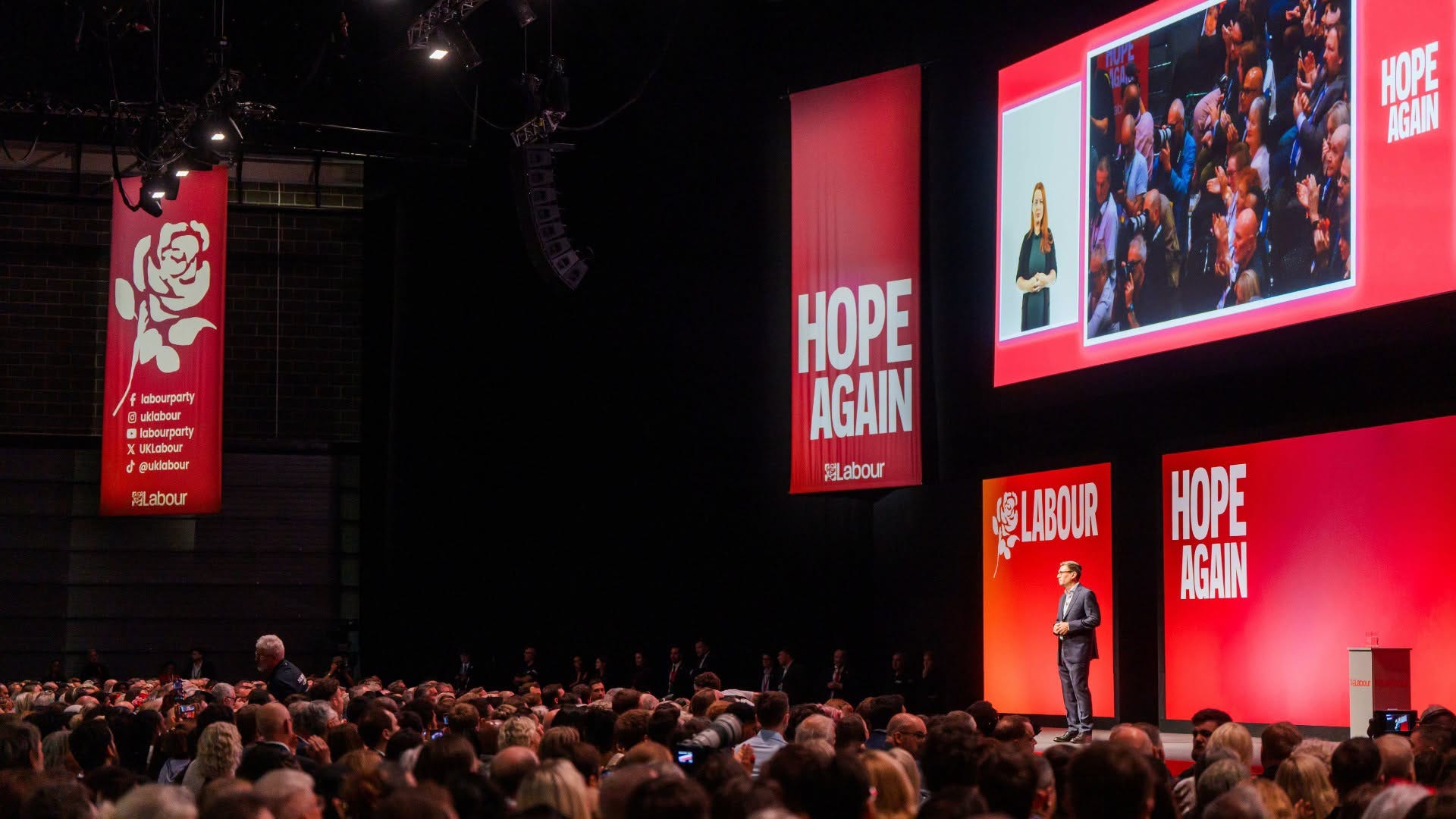
What followed was an unusually ambitious speech: thoughtful, focused and, at times, overflowing with passion and raw emotion. Burnham set out his desire to build a National Care Service in memory of his father, who died only weeks ago, funded in part by changing the triple lock. He backed electoral reform. And, perhaps most strikingly, he argued for a serious conversation about Britain’s relationship with the European Union. A day later, when asked on the Today programme whether rejoining the EU should be considered, the Prime Minister said they were all on the table: “We could go all the way.”
And so it all begins.
Burnham’s speech was, in some ways, an exercise in calling the electorate’s bluff.
“I have given you what you often say is missing from politics,” Burnham concluded. “Honesty, ideas and a clear direction for the country we all love.” The message was thus: You say you want change and are sick of politicians who dodge difficult decisions and offer little beyond managerialism. So here are some difficult decisions — will you back me? Finally, he was calling time on NIMTOism.
Social care has been an albatross around the neck of successive governments, Burnham’s own included. Electoral reform has been debated for decades without being delivered. The triple lock is Westminster’s sacred cow. And the consequences of Brexit are becoming so difficult to ignore, even Nigel Farage has deemed it a failure.
Burnham told his conference that he sees these are the conversations we have spent years avoiding, but it’s time to have them.
A National Care Service would be a huge undertaking, requiring major political upheaval, almost certainly further tax increases and difficult conversations about the redistribution of wealth and the role of the state. But it is precisely the kind of undertaking that has been deferred for years because every government knows the politics are easier if the problem remains somebody else’s.
There was, though, one conspicuous absence from Burnham’s speech.
Immigration was mentioned three times, each time in the context of control. There was no comparable passage about safe routes for asylum seekers, the social and cultural contribution made by migrants or the extent to which Britain’s economy relies upon migrant workers.
That felt notable, particularly against the backdrop of the far-right marches which have swept parts of the country this summer. There is a difficult conversation to be had about migration, but honesty must run both ways. Britain can talk about pressures on housing, public services and infrastructure while also admitting that the country needs migrants.
A recent OBR calculation found that losing 100,000 migrants from the UK would cost the Treasury around £7bn, and yet we rarely hear a politician say talk about the economic contribution of migrants. If Burnham really wants to slay sacred cows, perhaps that one should be next.
Because the end of NIMTO cannot simply mean making difficult decisions about the things other people have traditionally been protected from losing. It has to mean being honest about trade-offs, about how what’s good for society may — on occasion — inconvenience or challenge us, and how the social contract requires us to sometimes put the interests or views of one group aside for the good of the country.
Perhaps that all explains the slightly strange duality of Labour conference. On the hall floor: Hope Again. Out on the fringes: anxiety about just how much needs to change to make that hope meaningful — and whether the government is quite ready to summon the political bravery to have the many fights that need to be had.
There was no shortage of confidence in Liverpool. But underneath it, a deep, niggling recognition that diagnosing the problem is rather different than solving it. That, ultimately, is the core of NIMTO.
Burnham is right that some of these decisions simply cannot be put off any longer. The question is whether politics — and voters —are ready for what comes with finally making them. ■
About the author: Zoë Grünewald is Westminster Editor at The Lead and a freelance political journalist and broadcaster.
👫Agree with Zoë? Share this story with your friends, family and colleagues to help us reach more people with our independent journalism, always with a focus on people, policy and place.
If you’re enjoying our Burnham’s Britain series, as we unpick the difficult decisions he will need to make as Prime Minister and more become a subscriber to support us to tell more stories from beyond the Westminster bubble.
Is he ready for a United Ireland, as it is ever closer.
Also swerved: climate change and the extent of the potential dangers of AI. Naive about the second, misguided in the first