


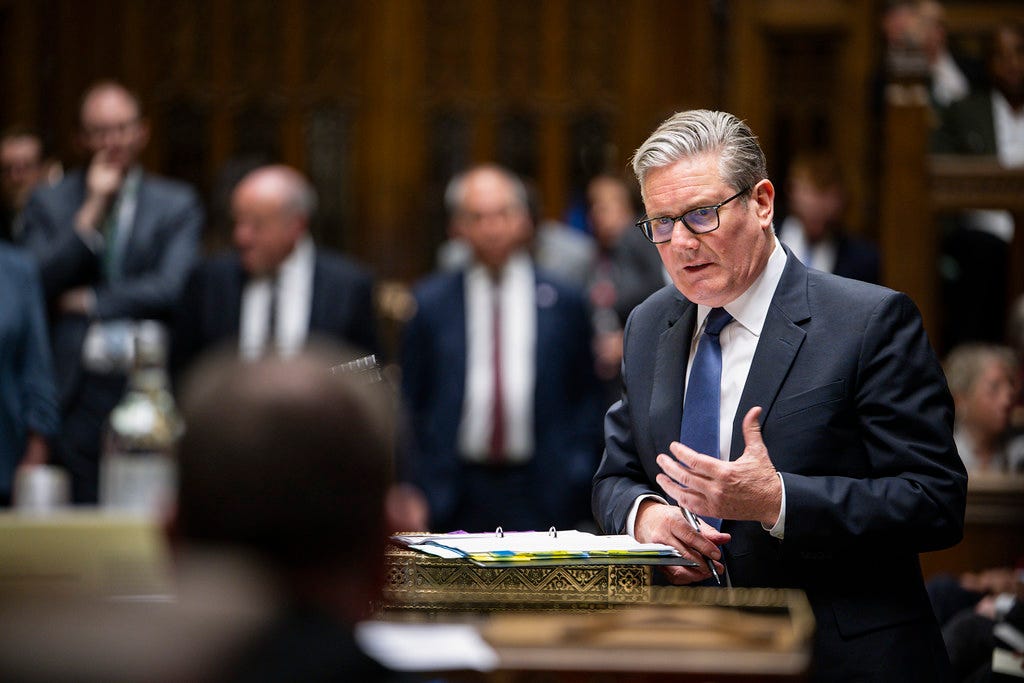
Who, on earth, would want to be Keir Starmer’s successor?
Not many. To put it mildly, it’s a bit of a s***show. Even before this government came into being, enthusiasm was weak. It arrived less on a wave of encouragement and more on exhaustion with what came before. That kind of coalition — broad, shallow, and highly conditional — doesn’t last long without visible change.
And that’s the next leader’s real challenge: not just to govern competently, but to convince people, very quickly, that politics can actually make their lives better. And I mean very quickly. Because if patience was thin before, imagine it now.
The good news, if there is any, is that there are ways to do it without fantasy economics or constitutional overreach. A mix of tax reform, smarter regulation, and clearer signals of priorities could shift the mood. Some of it would cost money, some of it would raise it.
But the point is simpler; that this would be a government that is doing things, knows when the system isn’t working and is taking the fight to Reform.
So, a few starting ideas.
Tax reform
Not sexy, but politically explosive in the best way. The system, as it stands, is arbitrary and unfair: capital is treated more lightly than work, council tax is wildly outdated, and avoidance loopholes are everywhere. Aligning capital gains more closely with income tax, re-banding council tax properly, and closing obvious avoidance routes wouldn’t solve everything, but it would signal a government committed to basic fairness.
There are other interesting tweaks and reforms: a land value tax, or even abolishing national insurance and folding it into income tax with adjusted rates, to name a few. There’s plenty that can be done if the government wants to be creative, and crucially, there’s already more cross-party agreement on this than people admit. It doesn’t have to become ideological warfare. Who can argue with fixing a broken system?
Misinformation and media regulation
Here, the UK’s problem isn’t the rules — it’s the enforcement. On social media, outrage now moves faster than facts, hardly corrected, and platforms simply amplify whatever is loudest. You can already see US-imported narratives shaping Westminster debate in real time, with the leader of the opposition spouting the latest algorithm-driven talking points.
Meanwhile, the line between news and commentary on certain broadcast channels has blurred badly, with regulators sitting on their hands. The result is a potential future prime minister with a prime-time TV spot on his own propaganda outlet, and a political ecosystem where truth matters less and less.
This isn’t about censorship, but catching up with the modern machinery of populism. Stronger transparency on algorithms, faster enforcement against false claims, and a properly empowered regulator would all help. Working with European counterparts would matter too. Strength in numbers, and all that.
Europe
The economics of Brexit are now fairly hard to ignore. Trade has underperformed, investment is weak, and most credible estimates suggest the economy is roughly 6-8 per cent smaller than it would otherwise have been.
At some point, a Labour leader will have to be honest. Closer alignment helps, but deeper integration would help more. Re-joining the EU isn’t a next-week policy, but as a long-term direction — and an honest depiction of the facts — would boost growth, restore frictionless trade, and widen opportunity for younger voters.
And politically, it reframes everything. If you want to take on Reform UK, you don’t just rebut them, you offer an alternative future: open, pragmatic, outward-looking, directly challenging their nostalgia or grievance. And what better way to show the snake oil of Farage than to drag up the failures of Brexit.
Student loans
Nothing embodies the generational squeeze like the student loan system. What was meant to be support into our futures has become a long-term penalty for taking it. High fees, opaque interest, and repayments that linger for decades create a lifetime tax on an already beleaguered generation, for whom wages are stagnant, jobs are disappearing, and housing is unaffordable.
The problem is also clarity. Most people don’t really understand what they’ll repay, or when, or how much it ultimately costs them. That’s rather unlike any other loan we know. Trying to make that system relatively fairer doesn’t have to mean writing everything off overnight, but it does mean making it simpler and more honest. The government could lower interest rates, unfreeze the repayment threshold, tighten repayment structures, or — if they were feeling really brave — move toward a clearer graduate tax model so the generations who benefitted from free education pay their share.
At its core, this is about a basic political signal: that a Labour government understands younger voters are under pressure, and is willing to start easing it, not just observing it.
Standards in public life
If you want to stop populism taking root, you have to start with public trust. There’s a real sense across the country, still lingering since the expenses scandal, that politicians are ultimately in it for themselves. You hear it on doorsteps all the time from disgruntled voters. It feeds Nigel Farage and his anti-establishment pitch, and it corrodes how all politicians are perceived.
For any future leadership to rebuild that trust, it has to show it understands people expect more from public office than they currently get. Tougher rules on second jobs — with only tightly defined exceptions — would be a start. There’s no convincing reason MPs should be earning hundreds of thousands on the side while claiming to prioritise their constituents.
Alongside that, stronger oversight of ethics rules, tighter donation limits, and swifter consequences for breaches would help restore the basic idea that rules actually matter. Closing loopholes around foreign money, crypto-donations, and opaque funding streams would also make a tangible difference — not just in reducing potential influence, but in signalling that politics is a serious, clean system.
None of this is easy, of course and all of it is politically risky. All the hardest problems — housing, immigration, social care remain slow, expensive and resistant to quick fixes.
But that’s kind of the point. The next Labour leader doesn’t need to solve everything at once. Voters want movement, not miracles, and a sense that, however imperfectly, things are starting to shift in a direction that improves their lives.
Right now, too much of government feels like managed decline. That is not enough. The opportunity – and the danger – is that people will fill that vacuum with something louder and angrier if nothing else appears.
Good luck to whoever follows Starmer. They’ll need it. ■
About the author: Zoë Grünewald is Westminster Editor at The Lead and a freelance political journalist and broadcaster.
👫Agree with Zoë? Share this story with your friends, family and colleagues to help us reach more people with our independent journalism, always with a focus on people, policy and place.
Local elections catch-up: As well as our in-depth analysis in the aftermath of Friday’s bruising results for Labour, our Lead Local correspondents were out seeing what the mood was on the ground and the results were across the country.
Lauren Crosby-Medlicott was there for the Pontypridd Cynon Merthyr count on a historic day in Wales.
Jamie Lopez in Southport saw how Labour defended control of Sefton Council from Reform in an all-out election.
Luke Beardsworth drilled into the learnings from district council elections across parts of Lancashire, as Reform and Greens tested Labour and tipped a number of councils into no-overall control. And how turnout was up.
Andrew Greaves on how Calderdale’s Labour MPs vow to hold the new Reform-led administration to account after Reform swept to power.
The policy menu is right but there's a constraint the next leader has to clear before any of it is achievable: the gilt market. UK 10-year yields hit their highest since 2008 this morning. That will become a filter through which every item on this list has to pass. Tax reform and student loans cost money before they raise it. EU alignment takes years to show in growth.
The next leader will likely have about six months to convince bond markets they're fiscally serious before the window closes. Burnham would struggle to do that. Streeting might be able to. The challenge is doing that while actually delivering the change voters are demanding - those two things don't sit easily together right now.
Absolutely agree with this diagnosis. It's bold and what has been lacking hitherto. I would add a strong reaffirmation of the environmental cause - challenging Reform where they are vulnerable and winning back Green votes