

It takes a village: How to make parenting less lonely
The ‘village’, as we once knew it, has disintegrated. A new one is being built from the ground up.


When I became a parent last year, it was the isolation I struggled with the most. How was it possible that this widespread human experience, something so many others are doing at the exact same time as me, could feel so desperately lonely?
And yet, in that loneliness, I also started to notice something else: people quietly reaching out to one another, building support where formal systems are falling short. It looks like parents swapping advice at baby groups, strangers offering reassurance online at 3am, under-represented communities forming out of shared need, filling in the gaps left by the erosion of state services.
The decision to have a baby has never been simple. But the choice of whether or not to become a parent has become increasingly dictated by societal forces beyond personal readiness or desire.
And quietly, behind closed doors, private hopes for family life are shrinking, stalling, or collapsing altogether. Fewer people are having children than ever before. The fertility rate in England and Wales is now at 1.44 children per woman, the lowest since records began in 1938.
This is not a pronatalist moral panic. It is a genuine social gain that more people, especially women, who don’t want children feel able to do this with less shame or coercion. That progress matters. But there is a reality to contend with. Demographically, an ageing population with fewer young people puts pressure on pensions, public services, and the workforce, which raises questions about long-term economic resilience. There is also a deeply human cost. Many people still want children – or want more children than they end up having – and it is a social failure that they feel shut out of that future.
The ‘village’, as we once knew it, has disintegrated. Soaring childcare costs, children’s centres closing down, and disparate familial support, are just a few of the factors contributing to this. But across the UK, parents and organisers are refusing to accept this as inevitable. There are groups, charities, and organisations building a new village from the ground up. Their work – focused on gaps in social support and voices often excluded from mainstream platforms – is already reshaping what parenting can look like.
The Lead spoke to the people dedicating time, resources and space to making parenting more accessible, more sustainable, and more appealing. Rebuilding the ‘village’ is possible – but crucially, we need each other to make it happen.
Improving motherhood for Black women
The Motherhood Group

“Many women are disillusioned with motherhood because the reality of parenting has become increasingly unsupported,” Sandra Igwe, founder of The Motherhood Group, tells The Lead.
“As a Black woman, I understand deeply that this disillusionment is layered.” Sandra explains that Black mothers are disproportionately navigating a healthcare system in which they are often not believed, their pain is questioned, and their concerns can be dismissed.
“I know how frightening and lonely that experience was for me, and so many other Black women carry that same fear into pregnancy and parenting.”
Out of that isolation, The Motherhood Group was born. Now a national community that supports and advocates for Black mothers, the organisation has grown over the last decade to include research projects, support groups and an app where members can connect with one another. Sandra, a mother of three, founded the group after the birth of her first daughter in 2016, determined to create the space she had so desperately needed – and couldn’t find.
“Everything we do is rooted in this belief: that Black women deserve safety, dignity, and community throughout motherhood,” says Sandra.
“It is so important to listen to Black women’s lived experiences and design solutions around what we actually say we need.”
For Sandra, inclusive, community-centred parenting means building practical, reliable networks of care – the kind many of us are told exist, but often don’t experience.
“It’s about mothers not having to carry everything alone.”
She stresses the importance of cultural grounding in maternity spaces, making sure medical staff and practitioners are respectful and sensitive about identity, and making sure the mothers she connects with “can exhale without fear of judgement.”
There is a critical need, Sandra argues, for a total shift in how society views motherhood and its value. She advocates for accessible childcare, protected maternal mental health support, safer maternity care, and rebuilding community structures that give mothers breathing room.
Crucially, she is pushing to ensure Black women are included in these conversations.
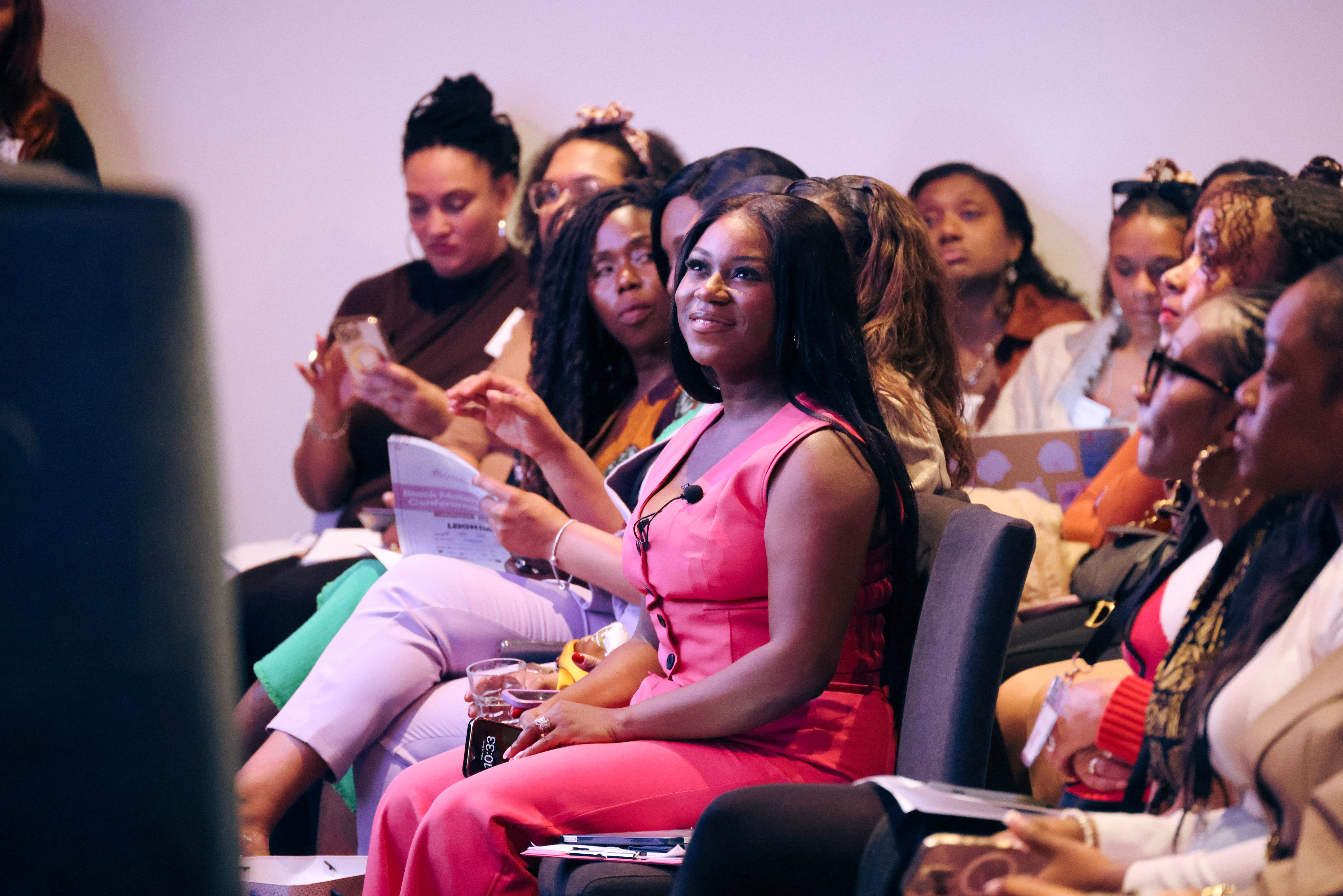
“We have to be honest about racial disparities and commit to addressing them,” she says. “Cultural competency must be a minimum standard across all services. I also want to see more investment in community-led organisations that already have trust and reach. It is so important to listen to Black women’s lived experiences and design solutions around what we actually say we need.”
She reiterates the importance of using data that reflects the specific realities of Black women, rather than treating them as an afterthought.
“Inclusion is not simply representation,” she says, “it’s redesigning systems so that Black mothers are safe, supported and able to thrive.”
It is heartening to hear that, despite the challenges, Sandra sees an incredible amount of hope among the mums she works with across The Motherhood Group and the Blackmums App.
“I see Black mothers building community for one another in ways that are powerful, creative and transformative,” she says. “We are rebuilding the village through modern tools, cultural connection and collective care.”
Empowering dads to embrace caregiving is key
Parenting Out Loud
While the focus on mothers is necessary amid patriarchal systems that have made parenthood disproportionately difficult for women, lasting change is impossible without a parallel shift for fathers.
This is a concept Elliott Rae has centred in the development of Parenting Out Loud – a programme that aims to empower working dads by changing the culture in workplaces. The hope is to create an environment in which working dads can be loud and proud about their caring roles at work.
“A vast majority of the mother penalty – which is 80 per cent of the gender pay gap – is because mothers have been expected to do the majority of childcare, to sacrifice their career, to go part-time, to leave early, to do school pick-up. So if we’re going to stop that, we need to support dads to embrace their caregiving responsibilities,” Elliott tells The Lead.
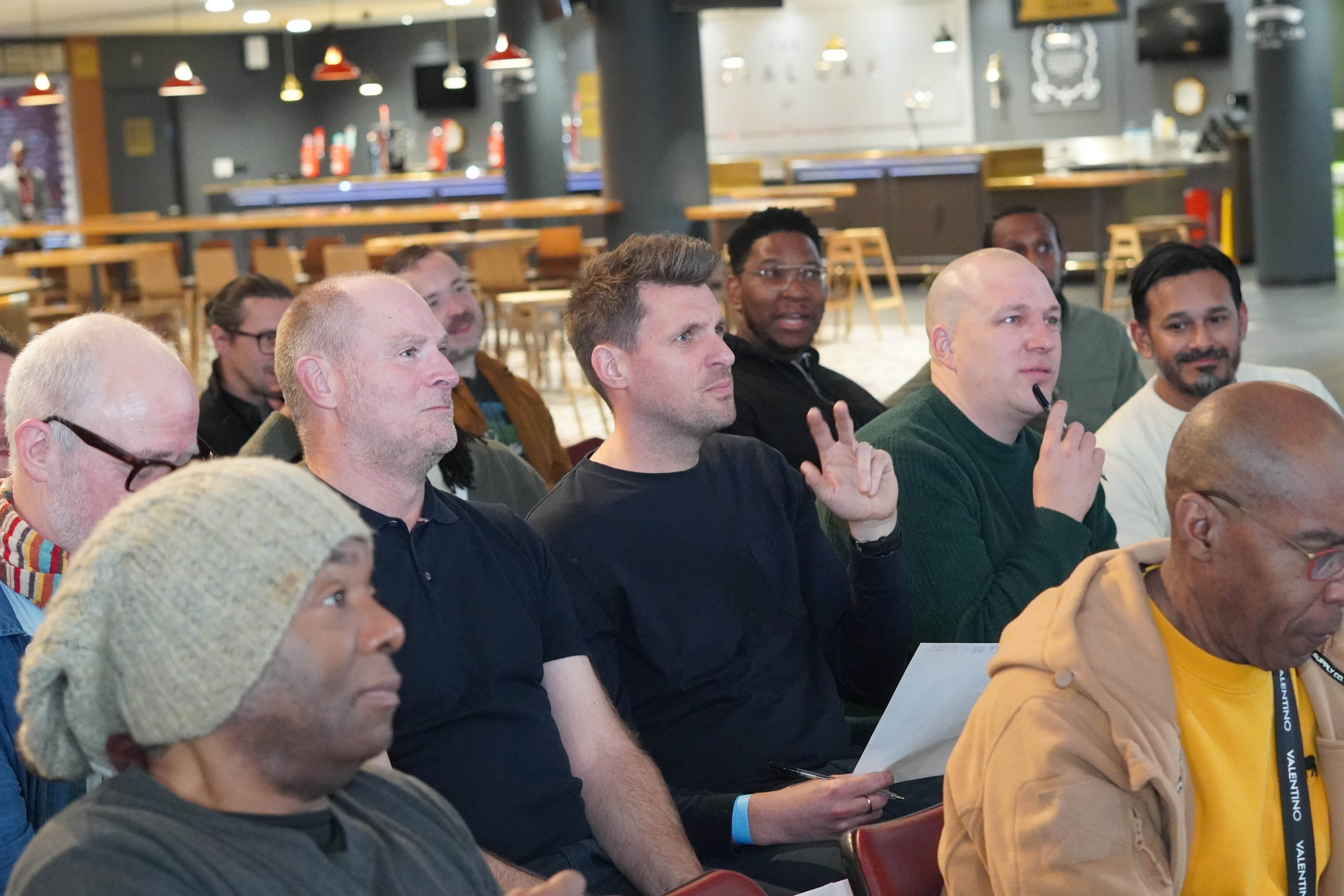
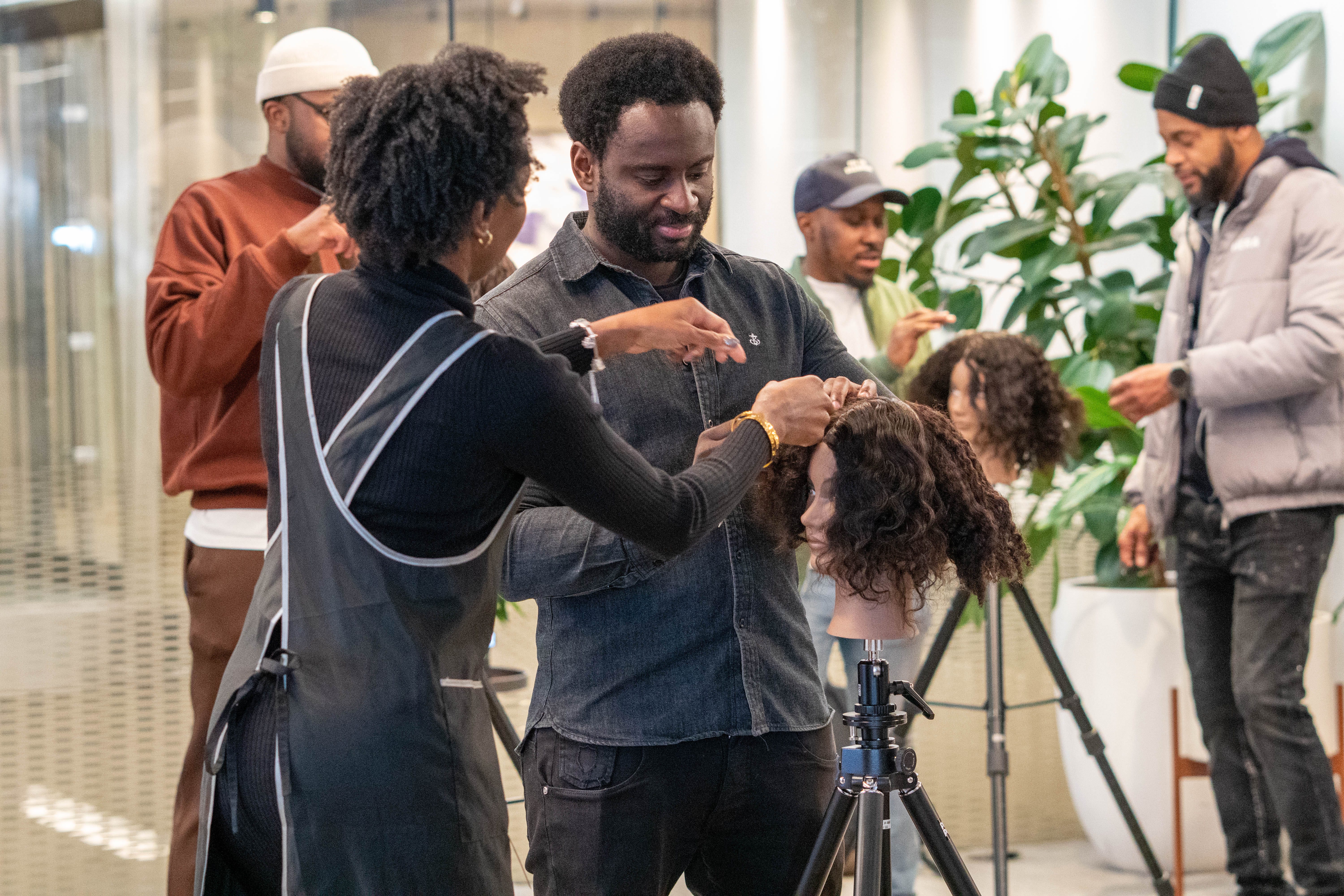
Alongside group sessions (‘dad circles’), workshops to learn how to do hairstyles, and networking events at football stadiums, the programme also encourages employers to make it easier for dads to request flexible working, to have open calendars with school drop-off and pick-up on display, to take the shared parental leave available, and to talk about childcare in the office.
“That’s really important in supporting dads to be more active at home, which is crucial,” Elliott explains.
A recent survey revealed 74 per cent of dads said they want to embrace more equal parenting. 20 per cent said they had been asked “where’s your wife?” when requesting time off or flexible working for childcare reasons. The gap here, Elliot says, isn’t coming from a lack of desire from dads to get stuck in – but the framework just isn’t there.
“It’s not necessarily that leaders and managers are saying dads shouldn’t or can’t work flexibly, but there is a lack of explicit support. For most of the dads, unless you tell them that you support them, they assume you don’t, because that is the norm we have had for generations.”
The impact of this lack of support can be devastating. Elliott has seen many dads struggle with their wellbeing, with their relationship becoming strained. And it can’t be ignored that two to three babies lose their fathers to suicide every week in the UK.
“One in 10 dads will experience postnatal depression. Becoming a parent, the adjustment to caring for another human being, the exhaustion of sleepless nights and how your relationship changes – it is massive.
“If you go back into work and your manager is like, ‘get on with it… you’ve got two weeks paternity,’ and expects nothing to change, that is really hard.”
Elliott has seen first-hand how powerful it is for parenthood to be a collective experience: “It’s about dads understanding they are not the only ones that think this way,” he says.
“It’s also about creating space for dads to hear from other dads, to have a moan, to get inspiration. There are men who have taken six months paternity leave, who work flexibly, who have gone part time. It’s so important to normalise these alternative narratives.
“We are fighting against years of cultural conditioning,” he says. “But every conversation, every workplace policy, every dad who shows up differently – that’s how change takes hold. And it is happening.”
Maternal care must include grief awareness
The Motherless Mothers
My mum died when my baby was three months old. So, for me, the rollercoaster of postpartum was inextricably tied to the messy realities of grief. If new motherhood is an isolating experience, new motherhood without your own mother is that times ten.
It turns out, this experience is far from rare.
The Motherless Mothers is a group set up to help support women who don’t have maternal support, whether that’s through bereavement, illness or estrangement. And their research from earlier this year revealed that one in three new mothers are motherless. That is a huge proportion of women navigating motherhood while carrying this silent burden.
Motherless mothers are more likely to experience postnatal depression, anxiety, and profound isolation. 74 per cent said no healthcare professional ever asked them about grief or maternal support.
Founders Adina Belloli and Louise Kirby-Jones are working to create a sense of community for these women – many of whom feel acutely alone without their mothers – but are also advocating to make maternity care ‘grief-aware’.
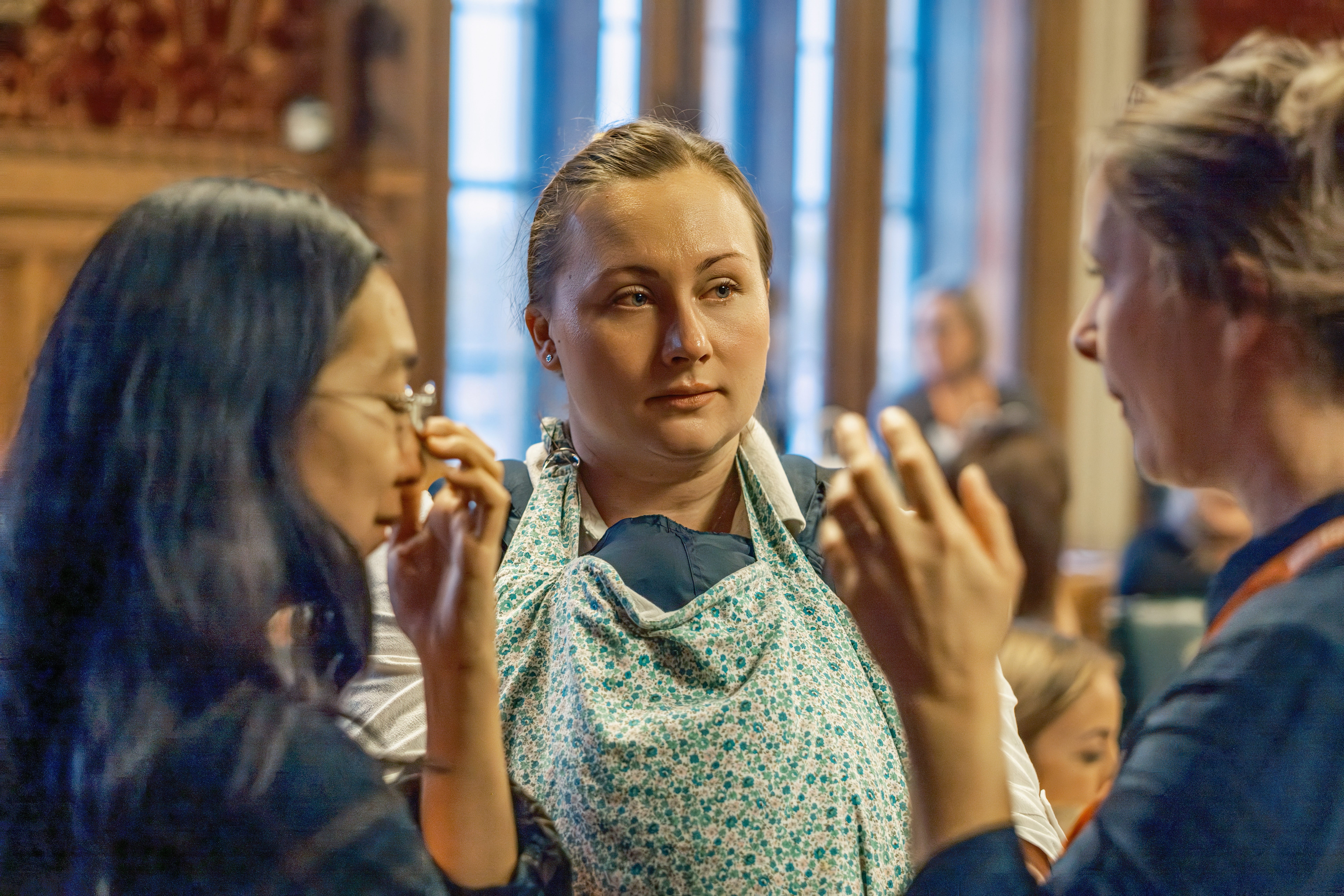
“If you enter motherhood already grieving, the emotional load is heavier than expected, and parenting definitely feels harder than maybe it should be. So then that adds to that pressure and fuels the disillusionment,” Adina tells The Lead.
“What we’re trying to do is make motherhood survivable, compassionate, and humane for women who are already carrying so much.”
“A lot of women don’t even recognise that it’s grief they are experiencing, and many health professionals don’t even identify grief as a mental health factor. So you feel like it shouldn’t be a thing, but it is a thing, and you end up just keeping it to yourself.”
For Adina and Louise, ‘grief-aware’ care starts with a simple question, an opportunity for women to share.
“At the first prenatal appointment, one of the questions would be: ‘do you have maternal support?’ And if the answer is no, there’s a proper conversation around that, and it gets flagged,” explains Louise.
“It’s about awareness and training healthcare professionals to understand the impact that mother loss has in pregnancy and early motherhood. And for mums, it would look like being signposted to services, being given resources, being told what to look out for.”
The Motherless Mothers community includes real-life meet ups, a WhatsApp chat, a podcast and newsletter, and even some free therapy sessions for members. The WhatsApp group is a sanctuary for mothers like me. It is a safe space for all of the unpalatable emotions that emerge as grief and postpartum overlap – rage, bitterness, jealousy. And, of course, there is always someone else awake at 3am.
“Meeting other mothers in the same position as you, it is life-changing,” says Louise. “They don’t take the grief away, but they sit in the gap with you and say, ‘I’m alone too.’ It saved me from a very, very dark place when I had a young child.
“What we’re trying to do is make motherhood survivable, compassionate, and humane for women who are already carrying so much.”■
About the author: Natalie Morris is our National Editor here at The Lead. Elsewhere, she is a freelance writer, author, and host covering social justice, inequality, health and community.

The Hope Reset is our series that aims to help you start the year on an optimistic note. Ditch the doomscrolling and tap into something hopeful instead. Cutting through the apathy of our times starts with you. Thank you for reading.
👫Enjoyed this article? Share it with your friends, family and colleagues to help us reach more people with our independent journalism, always with a focus on people, policy and place.
Half crying reading this. The sadness of the loss of village but the hope that some are taking these heartbreaking experiences and creating something so good! Loving this series. Thank you for raising the flag 👏👏👏
Not sure if this is any help for parents but you can find a great list of local nurseries on https://www.nurseryadvice.co.uk/
Our local nursery closed unexpectedly so we were in right pickle trying to keep our boys routine in place.