



The Lead Untangles focuses on a different complex, divisive issue with each edition. The entirety of The Lead Untangles will always be free for all subscribers.
Get beyond the headlines and make sense of the world with The Lead Untangles direct to your inbox. And support us to get into the people, places and policies affecting the UK right now by becoming a subscriber.
Subscribe to The Lead today and help us go beyond the headlines on the big issues affecting the UK right now.
On 9 March, the Government officially announced its new “social cohesion strategy” in a policy paper called Protecting What Matters.
“Cohesion underpins our economic strength, our democratic freedom and our national security,” said Communities Secretary Steve Reed. “It is a fundamental part of the Britain we love. We have made our choice in place of division, we choose unity, and we know the people of Britain have made the same choice.”
A leak to the Spectator’s Tim Shipman a few days earlier meant the coverage largely centred around the paper’s focus on addressing anti-Muslim sentiment. But while that’s no doubt important, digging deeper reveals some key points of where the Government feels it must take the fight against the extreme polarisation that the far right drives and thrives on.
Context
More in Common’s “the state of social cohesion” report, published in early January, showed that 64 per cent of Britons felt that the UK is divided, with 45 per cent feeling that the differences between us are too great to overcome.
In its report, the Government states that a string of political and economic crises – from austerity to Brexit to the pandemic to geopolitical tensions – have not only eclipsed the issue of social incohesion, but exacerbated it.
The report identifies four key issues driving the lack of social cohesion, and three broad areas for action.
The first driver is the economy, including the ongoing cost of living crisis, wage stagnation and austerity.
Next, it hones in on technological advancement, linking the decline in physical spaces (including the shift towards working from home) to the almost universal use of social media platforms. Not only are people not connecting with their local communities, it said, they are also at risk of falling down rabbit holes or echo chambers, leading to misinformation and radicalisation.
Demographic changes have also contributed to a lack of social cohesion, it says, citing rapid and “unsustainable” rises in immigration which has not been spread equally across the country. It also pointed to the use of hotels as contributing to “poor integration outcomes for both existing communities and new arrivals”.
Finally, it outlines rising extremism and wider geopolitical threats. In particular, it points to hostile nations and foreign actors, including “influential figures” (for example, Elon Musk), “politically or ideologically affiliated groups and individuals, and state-backed organisations” which promote extremist narratives with the end goal of sowing division. It specifically highlights the Extreme Right, which is “becoming increasingly interconnected globally, including via social media and other channels”.
What does the social cohesion strategy actually do?
To tackle the social cohesion problem, the government is looking at three key areas: confidence, cohesion and resilience.
The Pride In Place scheme, announced in September 2025, aims to give people more control over how money is spent in their local communities. Additionally, the Government has promised £800 million over ten years to a further 40 areas where social cohesion is under pressure and £1.5 billion to invest in cultural organisations
On top of this the Local Media Plan sets out to support local media to combat division with clear, honest and diligent reporting (editor’s note: See what we do with The Lead’s local titles), which it says is “essential for giving voice to communities that can otherwise struggle to be heard, holding local institutions to account and countering false narratives.”
The report notes how “tensions between some communities have festered unchecked”. The Southport riots revealed how divisive forces are eager to pounce on divisions in Britain – the Action Plan specifically mentions “digital grifters” who exploit tense situations. The plan aims to identify and combat both domestic and foreign (Russian in particular) social media interference in UK communities.
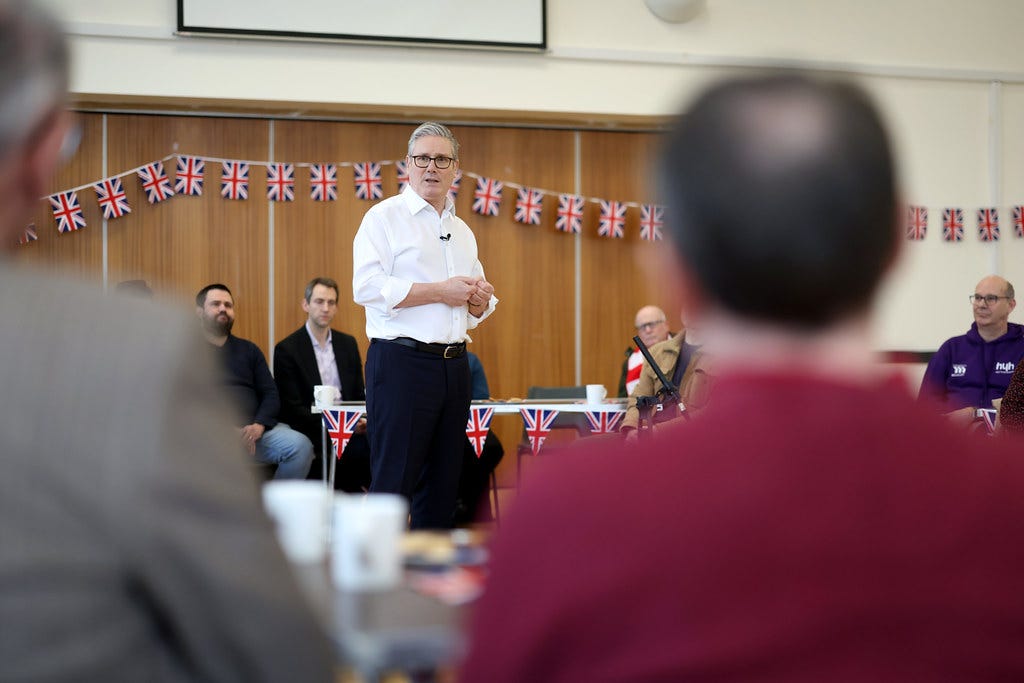
It will also continue to financially support local authorities and grassroots initiatives to run initiatives for bringing people together, via the Common Ground Resilience Fund, establish a cross-government Cohesion Support and Interventions Function (CSIF) to better respond to tensions and unrest and establish an Advisory Board to support local authorities should tensions arise.
The plan also sets out to tackle racism in schools and expand interfaith understanding, while clearly stating resistance to any calls for a “blasphemy” law. This includes a new definition of anti-Muslim hostility. The report particularly focuses on Muslim and Jewish communities, who are experiencing increasing hostility. With calls for Tory shadow justice secretary Nick Timothy to be sacked this week, after he described a mass Muslim public prayer as an “act of domination and division,” this is clearly urgent.
Finally, the government is committing to tackling extremism by taking action in schools and universities, strengthening the charity commission’s powers to suspend trustees and shut down charities and publishing a Media Literacy Action Plan, among other things.
What are people saying?
The plan is popular with Labour MPs who are seeing the effects of extremism in their constituencies. But the question is, can Labour communicate it?
Labour MP Alex Ballinger said: “Across Halesowen and the wider Black Country, I see people every day who are working hard to strengthen our community,” he said. “From volunteers who give up their time to help others, to local groups organising events or supporting neighbours. These acts of service might not always make the headlines, but they are the backbone of our communities.”
Wajid Akhter, secretary general of the Muslim Council of Britain, said: “Social cohesion cannot be built on suspicion or securitisation, it must be built on trust, equal citizenship and democratic freedoms.
“At a time when anti-Muslim hate crime is rising, and online disinformation is fuelling division, cohesion requires leadership that builds trust rather than deepens suspicion.
“Building a more cohesive society is something we all want to see. We welcome steps by the government that brings communities together rather than divide them further.”
Danny Stone MBE, Chief Executive of the Antisemitism Policy Trust, said: “This action plan is a welcome step towards realising a vision of Britain that celebrates our liberal democratic principles, is patriotic but that is muscular in its defence of our values.
“The key now will be implementation, and I look forward to working with Ministers and others on ensuring this plan is fully enacted.”
A spokesperson for the Race Equality Foundation said: “[We] welcome the Government’s acknowledgement that racism, antisemitism and anti-Muslim hostility threaten the safety and stability of communities across the United Kingdom. However… if the Government is serious about preventing the kind of violence we have witnessed over the past year, it must move beyond a narrow understanding of social cohesion.
“Racist mobilisation is not simply the product of communities failing to get along; it emerges when prejudice is normalised, misinformation spreads unchecked, and public institutions fail to challenge exclusion. Addressing these risks requires political leadership that is willing to name and confront racism, to ensure that public policy does not legitimise hostility, and to work with the communities most affected to build a society rooted not only in cohesion but in genuine belonging.”
Labour peer Lord Walney, co-chair of APPG on Defending Democracy said: “[Genuine change will require political leadership and not] just a glossy document.
“In particular, ministers must monitor closely whether the new definition of anti-Muslim hatred has a further chilling effect on people’s ability to speak up on the problem of Islamist extremism in Britain.” ■
About the author: Ella Glover is the audience engagement editor at The Lead. She is also a freelance journalist specialising in workers’ rights, housing, health, harm reduction and lifestyle.
About The Lead Untangles: In an era where misinformation is actively and deliberately used by elected politicians and where advocates and opposers of beliefs state their point of view as fact, sometimes the most useful tool reporters have is to help readers make sense of the world. If there is something you’d like us to untangle, email ella@thelead.uk.
👫Found this edition of The Lead Untangles useful? Share it with your friends, family and colleagues to help us reach more people with our independent journalism, always with a focus on people, policy and place.
The drivers identified here are real; economic strain, tech disruption, demographic change, extremism. But social cohesion can't be built on a foundation of institutional distrust. When nine per cent of people trust politicians, no strategy document changes that. Cohesion comes from citizens feeling they have a genuine stake in their governance. That's a structural question, not a funding question.
No. A demand to build has many problems.
I speak as someone who has had 4,000 homes built around my town over the last few years, and they're pretty much useless. Most of the estates are going to be abandoned before I retire.
* The developer needs to be required to build the infrastructure (from sewage through to schools, shops, and space for doctors and dentists) before putting a single brick down on a house.
* The developer should not be allowed to roll back on affordable or council housing as part of the scheme.
* They should not build on floodplains.
* 30% of the new houses my friends have bought have been poorly constructed, which needs to change.
* They need to be future-proof - ideally, solar panels and heat pumps, but at least with proper cooling as well.
* We need to be building for our demographics, not "get people on the ladder". Build for an ageing and infirm population. My grandparents had fantastic family homes and struggled with stairs - build for their comfort, then let others who can take their old houses.