


The UK government says it is about to draw “a line in the sand” over children’s use of social media.
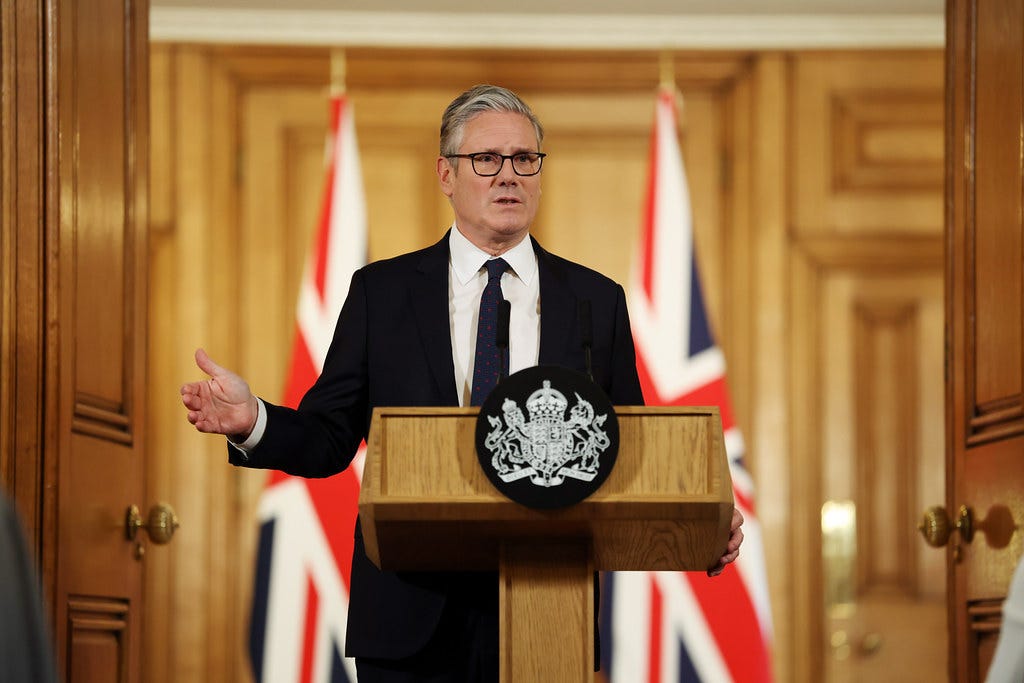
Announcing plans for what ministers are calling an “Australia-plus” model, Prime Minister Keir Starmer has pledged to ban under-16s from using major social media platforms, arguing that tech companies have failed to protect children from harmful content, addictive design features and contact with strangers.
It follows Starmer’s announcement last week that Britain will be the first country in the world to make it impossible for children to take, share or view nude images.
The proposals mark one of the most significant overhauls of online child safety rules in a generation. But while campaigners and bereaved families have welcomed the announcement, questions remain over whether such restrictions can be effectively enforced – and whether legislation alone can reshape young people’s digital lives.
What will the ban do?
Under the plans, children under 16 would be prohibited from holding accounts on major social media platforms whose primary purpose is social interaction and user-generated content. The government says this will include apps such as TikTok, Instagram, Snapchat, Facebook, X and YouTube.
Messaging services including WhatsApp and Signal are not expected to fall within the scope of the ban.
But ministers insist this is about more than simply restricting access to social media. Alongside the age limit, the government plans to introduce a series of safeguards targeting the features it says drive online harms.
Under-16s would be blocked from livestreaming and prevented from communicating with strangers across a wider range of online services, including gaming platforms. Restrictions on these functions would also be enabled by default for 16- and 17-year-olds, in an attempt to avoid what ministers describe as a “cliff edge” at 16.
The government is also exploring overnight curfews and mandatory breaks from infinite scrolling for under-18s, with further details expected in July.
Meanwhile, AI “romantic companion” chatbots designed to simulate sexual relationships or roleplay will face a minimum age requirement of 18, and similar intimate functions on more generalised AI chatbots will also be restricted for all under-18s.
The government intends to introduce the measures through secondary legislation using powers already secured under the Children’s Wellbeing and Schools Act, allowing regulations to be passed before the end of the year and brought into force in spring 2027.
How is it different from other countries?
The UK is not the first country to attempt to curb children’s access to social media, but ministers argue it is going further than any nation has before. Austria, Spain, Germany, Turkey, Greece, Canada, Denmark, Indonesia, Malaysia, Poland and Slovenia are also considering banning social media for children.
The model closely follows Australia, which became the first country to ban under-16s from major social media platforms in December 2025. Under Australia’s rules, platforms including TikTok, Instagram, Snapchat, Facebook, YouTube, Reddit and X must take “reasonable steps” to prevent under-16s from holding accounts.
What sets the UK proposal apart is its focus on harmful functionalities rather than platforms alone.
Ministers argue that children encounter risks across a wide ecosystem of digital services, including gaming platforms and AI tools. By targeting livestreaming, stranger messaging, infinite scrolling and sexually explicit AI interactions, the government says it is regulating the mechanisms that enable harm, rather than simply restricting access to specific apps.
The UK also plans to strengthen age verification requirements. While many platforms already set a minimum age of 13, enforcement has historically relied on users self-reporting their age. Now, Ofcom has been asked to conduct an urgent review into what the government calls “highly effective age assurance” technologies, which could include facial age estimation, identity checks and third-party verification systems.
Will it work?
Evidence from Australia – the only country with a comparable nationwide ban already in force – remains limited. Early signs suggest the legislation has had some effect: Australia’s eSafety Commissioner says more than 4.7 million social media accounts were removed, deactivated or restricted in the first days after the rules came into force.
However, many children continue to access platforms by circumventing age checks. Australia’s shadow communications minister Melissa McIntosh said that “new accounts are being created and the age-verification tools that the government assured Australians would be effective, have proven laughably easy to bypass with some makeup and good lighting” – and that children had migrated to other platforms such as Yope and Lemon8, which were not included in the ban.
Researchers studying the early impact of Australia’s policy have identified a similar challenge. Young people quickly share workarounds, from using parents’ accounts to exploiting weaknesses in facial age estimation tools.
Critics argue that bans risk pushing children towards smaller, less regulated platforms or private channels that are harder to monitor. YouTube has warned that blanket restrictions could drive young users away from “curated, supervised, beneficial experiences” and towards more anonymous services.
Others question whether the debate risks oversimplifying the relationship between social media and wellbeing. While concerns about cyberbullying, harmful content and compulsive use are well documented, researchers remain divided over the extent to which social media directly causes poor mental health problems. Most studies identify associations rather than clear causal effects, and experts argue that outcomes depend on factors including a child’s age, existing vulnerabilities, what they do online and how much support they receive offline.
Supporters of the ban counter that perfect enforcement is not the point. Like age restrictions on alcohol, gambling or tobacco, they argue the objective is to establish clear social norms, reduce exposure to harm and shift responsibility away from parents and onto companies.
Public opinion appears firmly behind that approach. According to the government, more than 116,000 people responded to its consultation, with nine in 10 parents supporting a ban for under-16s. Two-thirds of young people also said children under 16 should not be allowed to use at least some social media platforms.
What happens next?
The government plans to publish more details in July, including proposals for overnight curfews, breaks in infinite scrolling and how age checks will work in practice. Ministers intend to introduce the measures through secondary legislation before Christmas, using powers already secured under the Children’s Wellbeing and Schools Act.
Ofcom has been asked to review age assurance technologies and develop an enforcement strategy, with the government pledging additional funding for the regulator. If Parliament approves the regulations, the first restrictions could come into force in spring 2027.
The government has set out an ambitious vision. The harder task may be turning it into everyday reality. ■
About the author: Ella Glover is the audience engagement editor at The Lead. She is also a freelance journalist specialising in workers’ rights, housing, health, harm reduction and lifestyle.
About The Lead Untangles: In an era where misinformation is actively and deliberately used by elected politicians and where advocates and opposers of beliefs state their point of view as fact, sometimes the most useful tool reporters have is to help readers make sense of the world. If there is something you’d like us to untangle, email ella@thelead.uk.
👫Found this edition of The Lead Untangles useful? Share it with your friends, family and colleagues to help us reach more people with our independent journalism, always with a focus on people, policy and place.
🇪🇺 And we’ll be back in your inbox later this week as Zoë Grünewald examines the outcome of the Makerfield by-election, which may prove seismic for the future of the country. Make sure you’re subscribed to receive it first.
I think the tech companies need to take more responsibility instead of making children and parents do their work for them
I’ve worked with OOSC children (5-12yo) for 15 years. Over that time the inability of some to regulate emotions when denied or limited ‘screen time’ has rocketed off the scale. For the past 2 years we have had to ban all use of screens while they are with us - they moaned a bit initially, but accept ‘no’ when it is an across the board restriction.