


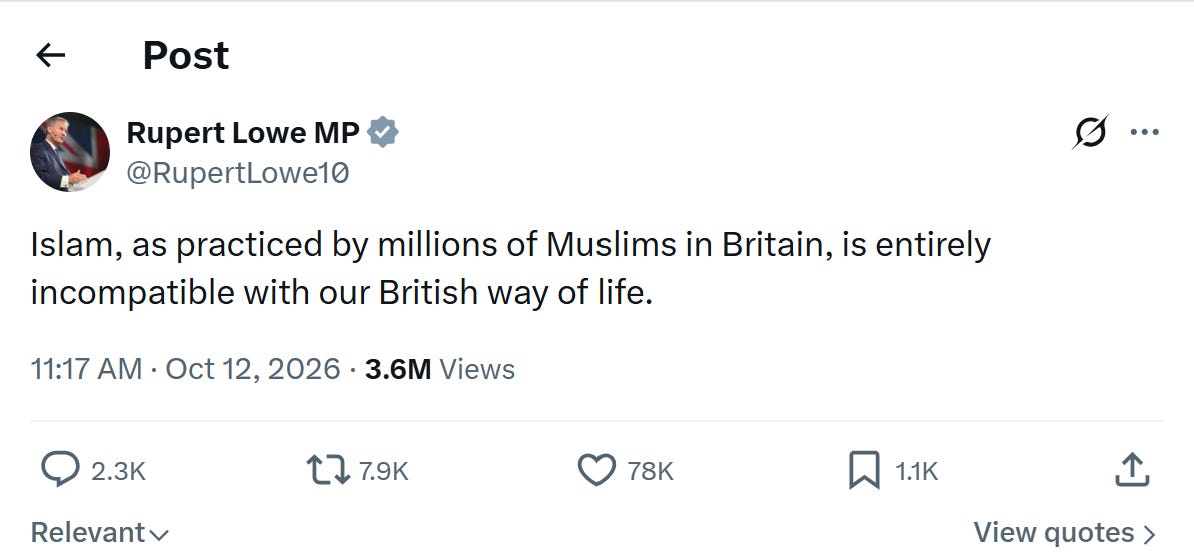
Dressed in a navy suit and spotted blue tie, and flanked by Union flags, Restore Britain’s insurgent leader Rupert Lowe MP is delivering the kind of unapologetically anti-immigration, anti-Islam speech that has typified his rise to the top of British politics.
“We will not wait for the next terror attack. We will act before they do,” he tells party members in a speech later posted across his socials. “We will remove the cancer of radical Islam, and we will reverse the Islamification of our country.”
As support for Restore Britain has grown, pulling away significant numbers of Reform UK’s more extreme voters, the line that Britain is undergoing rapid demographic replacement due to a hostile, fast-growing Muslim population has become their defining talking point, and arguably the most influential conspiracy theory operating in British politics today.
The idea of a nation under invasion has captured people’s imaginations, offering a simple explanation for the cycles of poverty, insecure housing, perceived crime spikes and declining social cohesion being felt across the country. While Islamophobia has been influencing British political discourse for many years, in recent years its presence has shifted from the fringes to the mainstream.
2024 research by Hope Not Hate found that support for multiculturalism has declined, with 51 per cent of Britons saying multiculturalism “isn’t working” and 38 per cent viewing Islam as a threat to the British way of life (a rise from 27 per cent in 2022). The Home Office reported a 15 per cent rise in anti-Muslim hate crimes in the year ending March 2026.
Restore Britain and the party that first took its leader into parliament, Reform UK, have played an important role in giving legitimacy to extreme anti-immigration views. But to truly understand the salience of the modern conspiracy theory around the “Islamification of Britain”, we have to look back further.
The normalisation of anti-Muslim suspicion
“9/11 was a turning point in the mainstreaming of Islamophobic attitudes,” says Abdul Azim-Ahmed, deputy director of the Centre for the Study of Islam in the UK at Cardiff University. The research backs this up; one 2006 study found that following 11 September 2001, “levels of implicit or indirect discrimination towards British Muslims rose by 82.6 per cent and experiences of overt discrimination by 76.3 per cent”.
This laid the groundwork for a right-wing press onslaught against Muslim communities as the 2000s progressed into the 2010s. According to Cardiff University, between 2000 and 2008 two-thirds of newspaper stories about British Muslims portrayed them as “a threat or a problem”. Once David Cameron’s coalition government was elected in 2010, one man in particular began ratcheting up suspicion around Britain’s Muslim population.
“It’s really interesting to look at the influence that Michael Gove has had on the political mainstreaming of these narratives,” Azim-Ahmed tells The Lead. “I think for many, the Trojan Horse scandal was an example of the worst of these conspiratorial narratives combining with a really reactionary government to lead to some really draconian and unhelpful political decisions.”
Recognising the climate of suspicion and division spread by the Trojan Horse affair is crucial to understanding Islamophobia in Britain today.
To summarise, parts of a letter appeared at Birmingham City Council in November 2013, apparently revealing a Muslim extremist plot to “take over” sections of the British education system, specifically in Birmingham and Bradford. The letter made its way to then-Education Secretary Gove, who reacted by ordering Ofsted inspections of Muslim-majority schools in Birmingham, appointing a counter-terror chief to an issue deemed a “security” matter, and paving the way for the rollout of the Prevent programme, a controversial counter-terror policy criticised for its disproportionate impact on Muslims.
This letter was later proved to be totally bogus. And crucially, this information was available to Gove early on, but did not stop him from pursuing a path centred around his understanding of the perceived threat of “radical Islamism”. His 2006 book Celsius 7/7 argued: “Nowhere has moral clarity been more lacking in British state policy over the last ten to fifteen years than in our approach to the Islamist threat… The West faces a challenge to its values, culture and freedom as profound in its way as the threat posed by fascism and communism.” Sound familiar?
Journalist Hamza Syed, speaking about his and Brian Reed’s investigative podcast The Trojan Horse Affair to the writer and activist Owen Jones, explained: “Michael Gove was told before the Trojan Horse letter ever went public that this letter is bogus, that counter-terror cops in the West Midlands have looked at this, Birmingham City Council have looked at this… and this letter has serious credibility issues. About a week or two weeks later, the first reports started coming out publicly… and he was in Parliament referencing it.”
According to Azim-Ahmed: “For many in Birmingham, young people especially, that had a direct impact on educational opportunities, and on how they were able to live out the rest of their lives. Some research by Bristol University identified Muslims as facing the largest penalty in the job market of all minority groups, and that has a multi-generational impact because it limits the capacity to move out of poverty and up the social ladder.”
A recent study shared by Zeteo UK backed this up, finding that Muslims in Britain are paid on average 8.1 per cent less than equivalent non-Muslim colleagues. Azim-Ahmed says the Trojan Horse affair was a “watershed moment where some of these ideas went from the sole occupation of fringe groups to something that could be discussed in mainstream political circles”.
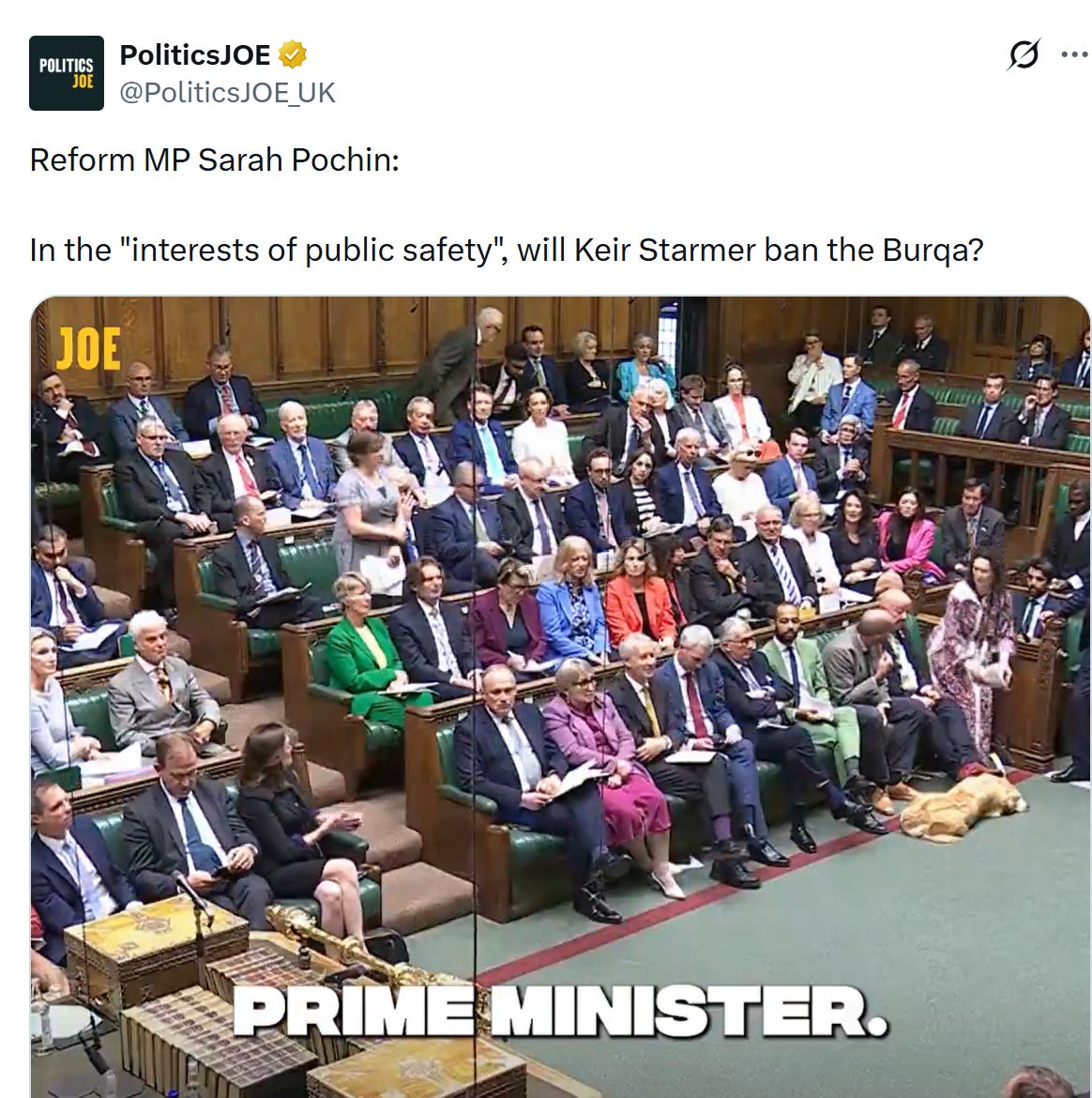
Perhaps the most famous example of this was Boris Johnson‘s comment that Muslim women in burqas “looked like letterboxes”, but there are plenty of others, including MPs like Tory Paul Scully labelling Birmingham and Tower Hamlets “no-go areas”, or Reform’s Sarah Pochin using her maiden speech to unilaterally call for a burqa ban. Without the groundwork laid by the Trojan Horse scandal, these mainstream political comments would likely not have been possible.
The weaponisation of violence against women and girls
Ever since this watershed moment, Islamophobia has been increasingly present within mainstream media circles. The momentous political storm that has built up since 2022 around small boat crossings – and the highly visible nature of the many young men from Muslim-majority nations occupying them – has further normalised hostility towards people consistently framed by the far right as “invaders”.
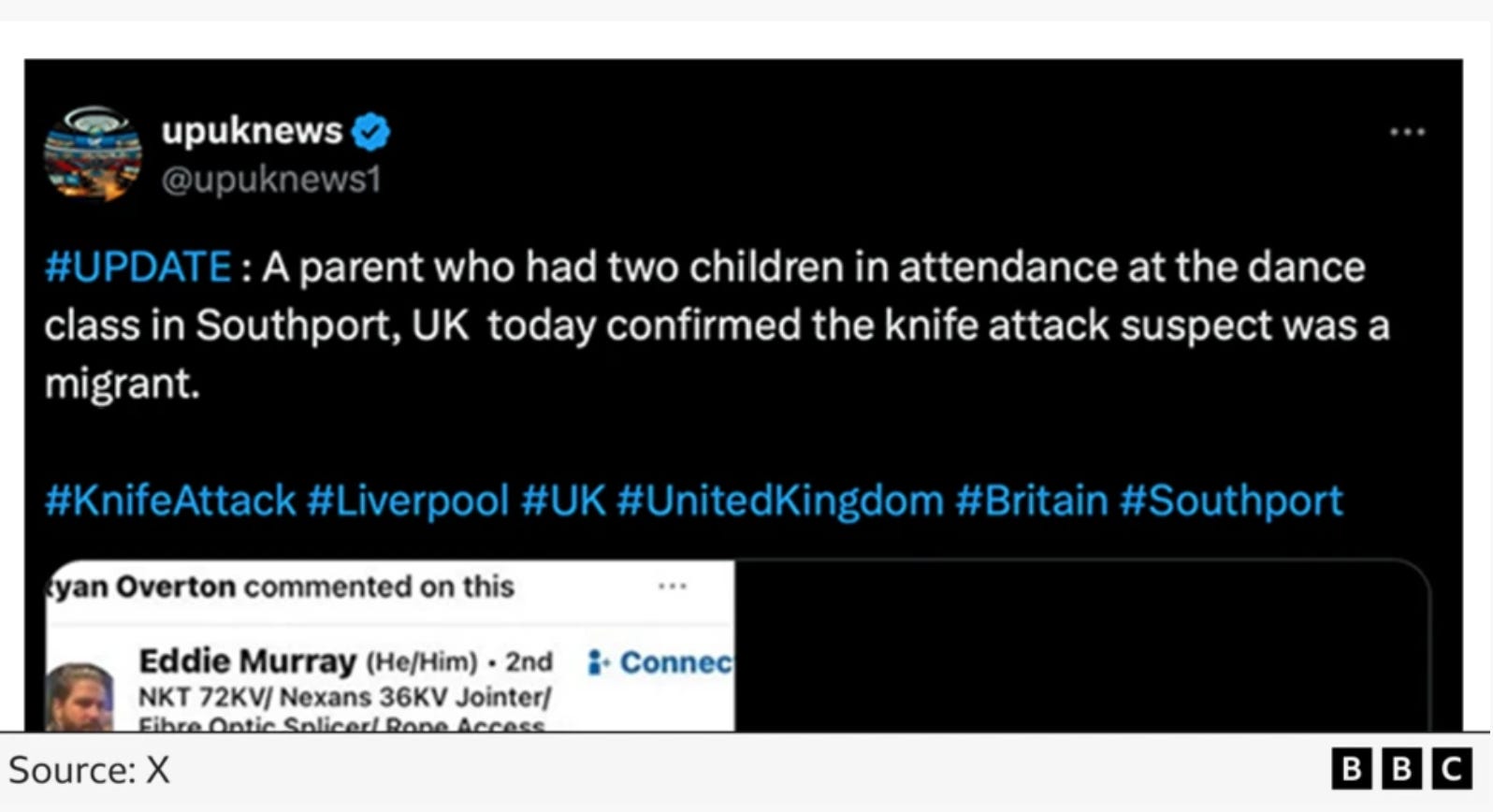
The outbreak of shocking racist attacks and rioting across England during the summer of 2024, fuelled partly by misinformation spread after Axel’s Rudakubana’s horrific Southport murders (with Amnesty International finding that within 24 hours of the attack, X posts wrongly labelling the perpetrator a Muslim, refugee, foreign national or arrived by boat had gained 27 million impressions), indicated how normalised anti-Muslim hatred had become.
Since then, Islamophobic voices in the UK have rallied around a troublingly effective message that has been central to the rise of Restore Britain and associated far-right figures like the recently jailed Daniel “Danny Tommo” Thomas: that migrants and asylum seekers, particularly those from Muslim-majority countries, pose a unique threat to women and girls.
At anti-migrant flashpoints like the Patriot Platform mobilisation in Dover or the protests around RAF Barnham in Suffolk, banners and chants consistently focus on this theme.
“The weaponisation of violence against women and girls is a huge talking point within the far right,” says Misbah Malik, head of communities at Hope Not Hate. “But if you look at the stats, something like 90 per cent of sexual crimes are committed by someone who is known to the victim, so this whole discourse around this racialised stranger hiding around asylum hotels actually does a disservice to people who are at risk, because that’s not what the majority of sexual violence looks like.”
Addressing these facts head on, and demonstrating the kind of honesty that many progressives lacked when it came to the grooming gangs scandal in the 2000s, is crucial. Unfortunately, already a huge number of people have been radicalised by the latter issue.
Just like the Trojan Horse affair, the grooming gangs scandal – and crucially, Lowe’s owning of the issue after successfully crowdfunding a rape gangs inquiry – has ramped up anti-Muslim discrimination and played a decisive role in the upward trajectory of Restore Britain.
Social media’s capacity for spreading simplistic messages about this perceived threat has been vital here, a key recent example being the online circulation of an official Home Office pamphlet telling asylum seekers that rape, sexual assault and harassment are crimes in the UK. All this did was perpetuate the myth that those arriving in small boats pose a unique danger to women and girls. Many on the left don’t seem to appreciate just how radicalising this perception has been among the public.
“With the grooming gangs, we learned that if we don’t talk about it, that leaves an information vacuum for the far right to fill,” Malik says. “So we have to talk about it.”
She continues: “We’ve done great work with End Violence Against Women (EVAW) around how to talk about this. The bottom line is, men are going to commit sexual violence against women. Racialised men are going to commit sexual violence against women. Asylum seekers will commit sexual violence against women. So it’s about being like: this is really bad, but we can’t make assumptions about an entire group of people based on the actions of a few. And from a practical perspective, putting the spotlight on the organisations and people who actually care about protecting women.”
The veil of Christian Nationalism
The shift of anti-Muslim hatred from fringe to mainstream has been underpinned by the emergence in Britain of a strand of aggressive Christian nationalism that feels highly unusual on these shores. Over the last two years, Christian and Crusades-themed language and symbols have become synonymous with populist right-wing rallies like Unite the Kingdom, while activists and vigilantes like Thomas have defined their agenda as a battle to defend Britain’s historic Christian identity.
The mainstreaming of this language and imagery, and the concurrent evolution of the myth that this Christian identity is under threat, has been vital in further legitimising anti-Muslim rhetoric.
Ethno-nationalists and the far right have consistently shown the linguistic hoops they’ll jump through to avoid admitting that they support white supremacy, from Restore strategist Harrison Pitt discussing “the Anglo-Celtic peoples of Britain”, to his colleague Charlie Downes posting about England’s “native people”, and party leader Lowe tweeting voraciously about “English ethnic identity”. Co-opting the Christian cause is another convenient way of disguising their racism and presenting it as a natural opposition to stigmatised Muslim identities.
“We know that people like Danny Tommo and Tommy Robinson aren’t actually Christian. They’ve not properly picked up a Bible,” says Malik. “But it’s been hugely successful at bringing people in. It’s evoking an emotion, and when you tap into that protector element, that’s a really useful emotion to harbour within people to try and get them to take to the streets.”
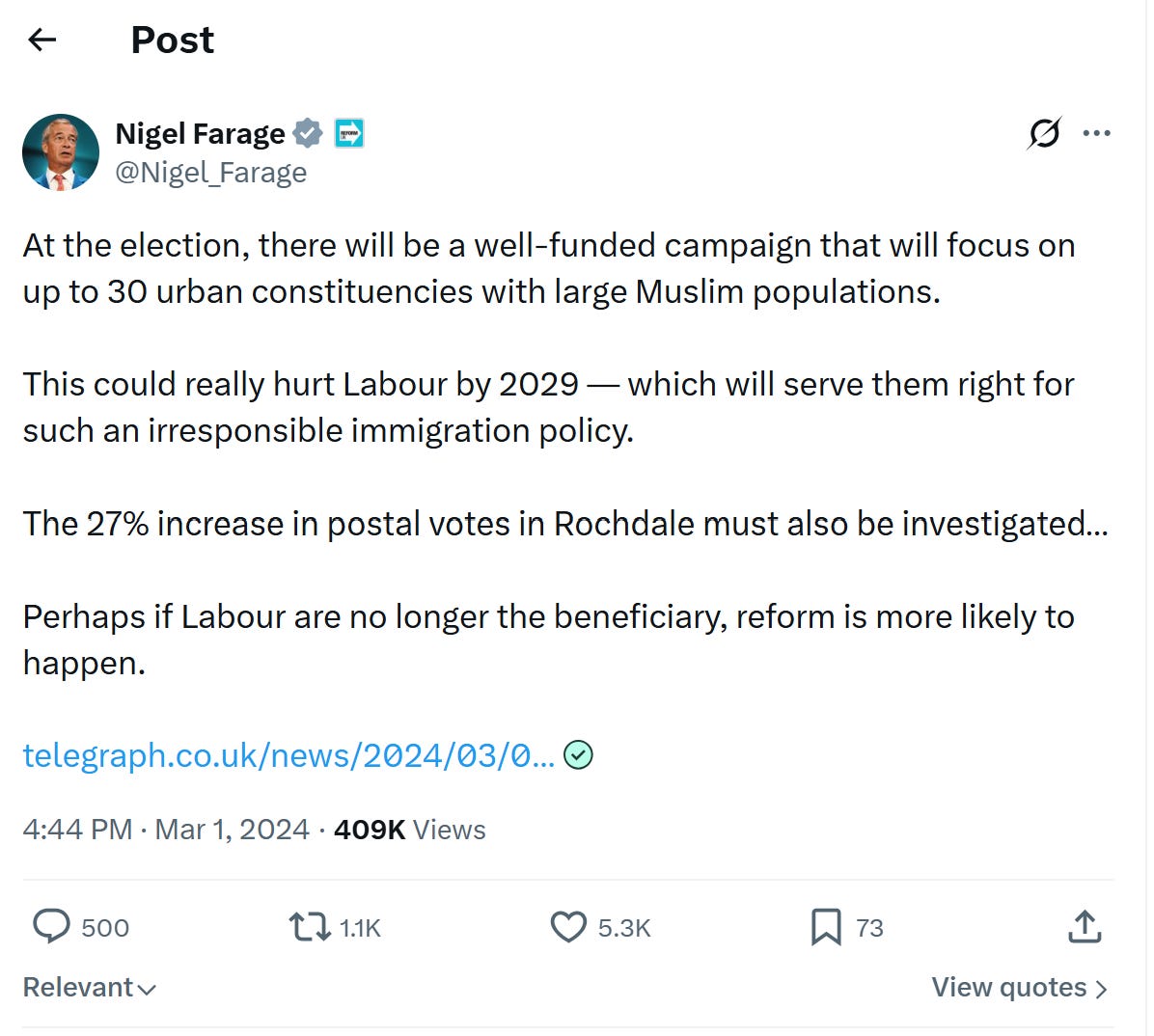
To help exaggerate the threat that Islam poses to British Christianity, the far right has focused hard on projecting the myth that parts of the UK with large Muslim populations (like Luton, east Birmingham or Tower Hamlets in east London) have become “no-go zones” where “Sharia law” has taken over.
These narratives have been swirling around for a while, first given real credence (perhaps unsurprisingly) by Gove’s cohorts in government, chiefly arch-Brexiteer David Davis, who said in October 2015: “We can look at Tower Hamlets and parts of the north, for example, where extreme groups have actually built up no-go areas for white British people.”
The Metropolitan Police and the Greater London Authority (GLA) have since repeatedly confirmed that there aren’t any “no-go areas” in London, while a 2018 independent review for the Home Office affirmed that “Sharia councils have no legal status and no legal binding authority under civil law”. Home Office minister Dan Jarvis reaffirmed this statement in March 2026, while Full Fact has also recently rebuffed the “no-go zone” argument.
Of course, this hasn’t prevented the narrative of Muslim takeover from gaining ground among the right. And the rise of Christian nationalism as a means of justifying these messages has further incentivised many. So to understand the full extent of the demonisation of Muslims in Britain, we must trace this Christian edge back to its roots.
On the face of it, Robinson is largely to blame for the rise in this brand of far-right nationalism: since pastor Rikki Doolan converted him to Christianity while he was in prison, he’s consistently campaigned on religious lines, framing his rallies as attempts to defend Christian British identity and telling Discern TV in 2025: “The fall of Britain is linked to the decline of Christianity.”
This pivot has been key to legitimising pro-Christian, anti-Muslim messaging in the UK. And behind it? Shedloads of American money.
Whether it’s right-wing US think tank the Middle East Forum (widely accused of spreading anti-Muslim misinformation) spending a five-figure sum on Stephen Yaxley-Lennon’s legal defence – to give Robinson his real name – tech billionaire Robert Shillman funding his “citizen journalist” rebrand to a reported tune of $100,000-plus, or Republican donor Andy Miller responding to his Spring 2026 US tour with a $100,000 donation, Robinson’s anti-Islam activism has consistently been fuelled by American cash.
These wealthy, behind-the-scenes operators are part of a broader ecosystem of powerful figures and groups that have fuelled the surge of Islamophobia in the UK from fringe to mainstream in recent years.
From government and media responses to 9/11, and the hostile tabloid frenzy that ensued, to more moderate-looking figures like Gove and Davis legitimising anti-Muslim suspicions in the 2010s, years of Overton window-shifting meant that when the small boats issue arrived post-Covid, the groundwork was in place for a re-energised assault on Muslim communities in the UK.
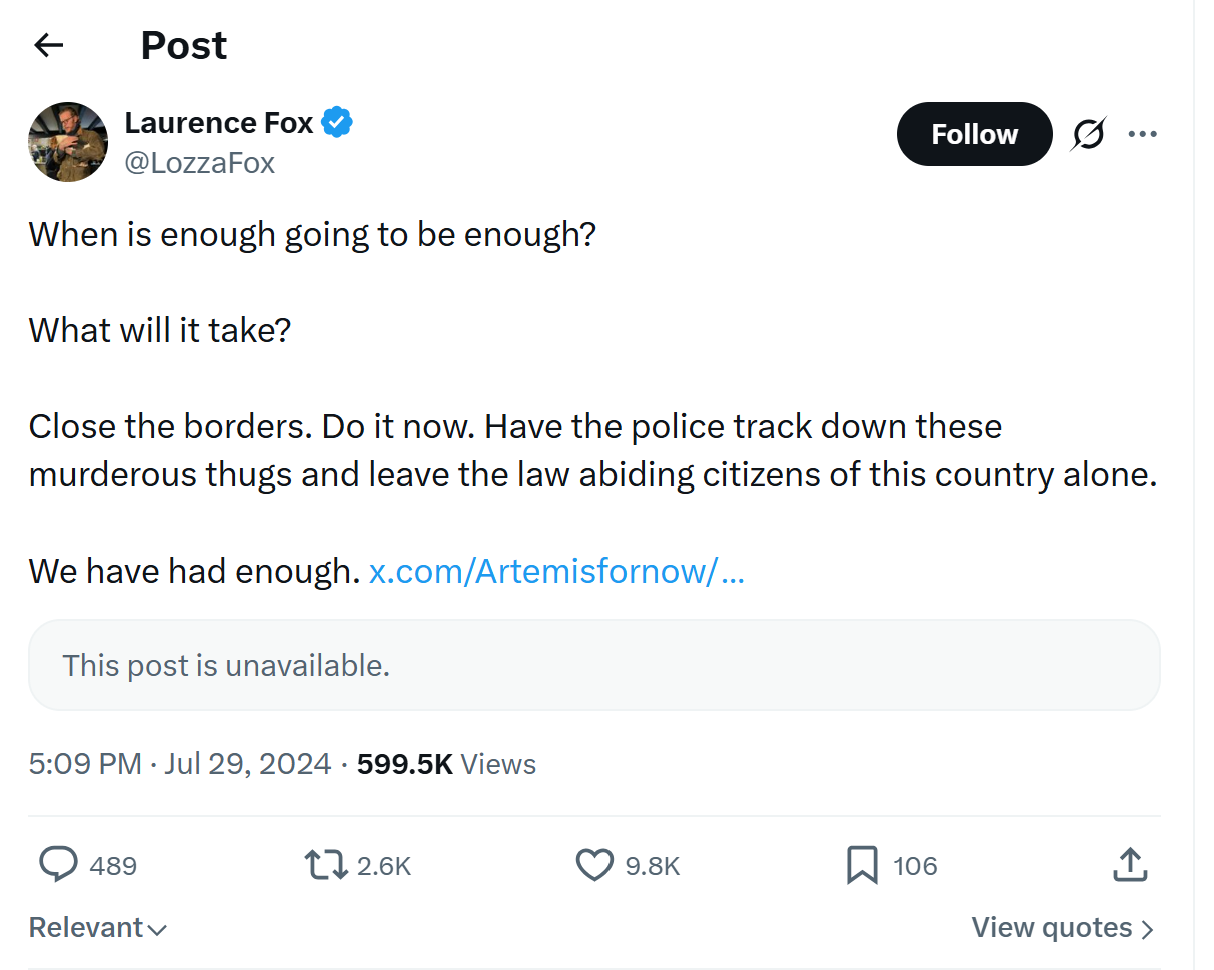
Since then, an insurgent far right has used social media misinformation, myths about the nature of the violence facing British women and girls, and evocative symbolism around Christian nationalism to push things further, normalising Islamophobia and creating a climate in which British Muslims are more under threat than they have been in years.
Given the power structures behind this shift, undoing that work is a huge uphill task. But it starts with unpicking the far right’s deeply flawed arguments about religion, social cohesion, crime and sexual violence.
It means referring people to voices with real authority on these subjects, from EVAW to progressive Christian vicars like Lucas Larner, who are battling against the far right’s co-opting of their religion.
And it relies on greater regulation and the rooting out of online misinformation, something the new national Information Disorder Portfolio aims to tackle. Only this kind of multi-pronged approach can help turn the tide against the myth of the “Islamification of Britain”. ■
About the author: Fred Garratt-Stanley is a freelance journalist who writes about culture, politics, football, and pubs. He’s based in London and has written for a wide range of publications including The Lead, The Guardian, NME, Huck, and Pellicle.
👫Enjoyed this investigation by Fred? Share this story with your friends, family and colleagues to help us reach more people with our independent journalism, always with a focus on people, policy and place.
This is the latest part in our series aiming to tackle the misinformation ecosystem being built in Britain, and digging into the dark forces behind it. If you missed it, Katherine Denkinson went inside the ecosystem that is turning silence into conspiracy and Lois Shearings dive into the growing issue of misinformation in rural communities. Subscribe to The Lead today to support our reporting and until the end of November it’s half-price thanks to our Black Friday deal.
It would help if this article used census figures to show what percent of people in uk are muslim or immigrants and the percent of christians as opposed to no faith to show how the racists figures are distortions
"Given the power structures behind this shift, undoing that work is a huge uphill task. But it starts with unpicking the far right’s deeply flawed arguments about religion, social cohesion, crime and sexual violence." With respect, and in the spirit of debate, it would be a far better start to discuss openly, honestly and objectively the clear points of tension, and potential conflict, between key doctrines of, and the practice of Islam in the UK, and secular liberal democracy. To ignore this and / or treat Islam as simply another religion in the way we have understood a religion (ie essentially a personal belief system of free choice) is dishonest, ignorant and naive. A good starting point would be - how well does Islam align with our most foundational values and principles of freedom of thought, expression and speech? And, how does / can sharia law align with liberal democracy and man made laws?