


Extreme heat this summer put patients and healthcare professionals at risk; the UKHSA estimated there were 2,877 excess deaths for two early heatwaves alone.
It’s not just this year, either: there were 1,504 excess deaths in the summer in 2025 and in 2022, there were 2,985 heat-associated deaths. The climate crisis is having a huge impact on mortality around the world, and the UK is no exception.
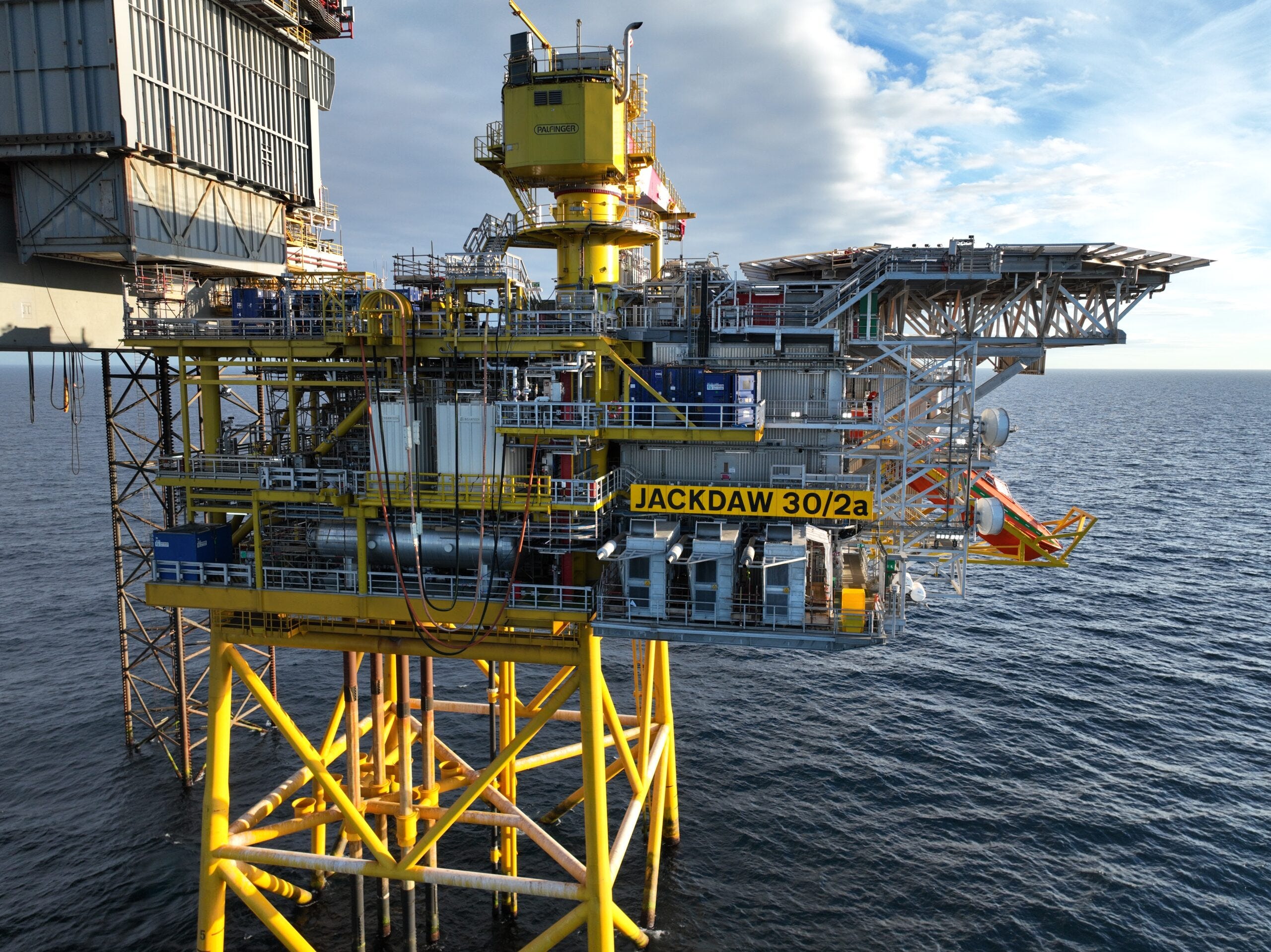
The climate crisis comes from our use of fossil fuels, so many people have been shocked that Labour has honoured a license issued under the previous Conservative government for Jackdaw gas field.
The licences for Jackdaw, and a nearby oil and gas field named Rosebank, had been blocked after a legal challenge by Greenpeace.
What are the health risks?
Doctors are not particularly concerned with direct health risks from drilling gas at Jackdaw (such as risks to workers, or local pollution).
Instead, doctors warn the long-term impact of giving the go-ahead for Jackdaw is ‘significant’.
Last year, dozens of clinicians in leadership roles wrote to the then health secretary to outline the impacts including:
increasing risk of pregnancy complications
increasing incidence of children with asthma
greater risk of stroke
acute kidney injury
premature death in older adults
Signatories included the chair of council for the Royal College of GPs, president of the Royal Pharmaceutical Society, president of the Faculty of Public Health and chair of the Royal College of Nursing England.
Many of these risks, and their costs, are already having an impact. In a report published last year the Royal College of Physicians put 30,000 deaths a year down to air pollution. In 2019 the government said it was the top environmental risk to human health in the UK. Studies are now beginning to link air pollution with cognitive impairment and dementia.
The letter also warned of health risks across the board when extreme weather (such as storms and floods or, in summer, heatwaves due to global warming) disrupts NHS services. Polling last year found that more than two thirds of UK health workers have been unable to get to work because of extreme weather since 2020.
Who is protesting?
The Doctors’ Association UK will write to Yvette Cooper, the Health Secretary, to call for an independent health impact assessment of the Jackdaw gas field. The letter has over 100 signatories already.
“The science is clear that every fraction of a degree of warming now is understood to be associated with health harms and subsequent increases in mortality,” wrote Dr Matt Lee, DAUK’s sustainability lead.
Authors of the DAUK letter estimate that Jackdaw may be associated with approximately 8,000 projected heat-related deaths when applying estimates from research on the mortality cost of carbon to projected lifetime emissions.
The letter also calls on the government to reject Rosebank and joins a wider call for a ‘national emergency briefing’ – something over 130,000 people have called for in a petition launched earlier this year.
The campaign group Health for XR also spoke out against the decision. In an open letter, members have also called for a health impact assessment for Jackdaw (and for a commitment to one before making a decision on Rosebank, and the removal of policy costs from electricity bills.
Dr Naomi Adelson, a GP in London and member of Health for XR, said: “Our response is grounded in our professional duty,” she said. “The GMC expects doctors to raise concerns where patients are at risk because of ‘policies or systems’. Where patients ‘are, or may be, at risk of death or serious harm for any reason’, doctors should report it ‘immediately’. That is what we are doing.”
Health for XR urged health professionals to raise concerns through the Royal Colleges, unions, MPs and local health bodies, to talk with patients about the impact of policy on their health, and to stand with colleagues who act on their conscience.
What about the Budget?
Energy bills are one of the things that experts are expecting – and hoping – to be a target in this year’s Budget.
Policy costs in electricity bills – which Health for XR are campaigning about – pay for things like renewable energy projects, social and fuel poverty schemes and carbon pricing support mechanisms. They make up about 18 per cent of a bill.
The suggestion that these could be moved from electric bills to gas bills was raised last week by MPs on the Commons Energy Security and Net Zero Committee.
It’s also something that UK businesses want. Over 120 organisations, including the Confederation of British Industry, AgeUK, Nationwide and the British Retail Consortium wrote to the Chancellor last month calling for all taxes to be removed from electricity.
Something similar happened in last year’s Budget when some policy costs were moved into general taxation, but this year many voices are calling for more changes.
Energy UK has proposed removing the remaining 25% of Renewables Obligation (RO) costs from domestic electricity bills, removing RO costs in full from non-domestic electricity bills, and removing the Feed-in Tariff (FiT) from the unit rate for both domestic and non-domestic bills.
What about Rosebank?
Doctors are expected to raise another wave of protest if the government also allows drilling at Rosebank. The UK Health Alliance says it plans to publish a statement once this decision is made.
After all, the stakes are much higher for the second site. Oxfam has estimated that, if it goes ahead, Rosebank’s estimated lifetime emissions would cause up to 57,400 excess heat deaths, more than the babies born in Scotland in 1 year.
Rosebank is an oil field with some natural gas off the northwest coast of the Shetland Islands. It is Britain’s largest untapped fossil fuel reserve.
But as numerous campaigners have already said, Rosebank’s resources will not reduce bills or offer energy security, as the oil at Rosebank will be sold on international markets. If approved, Rosebank’s oil would generate 254m tonnes of CO₂ equivalent in greenhouse gas emissions – around 70 per cent of what the UK produced last year.
There is no way to limit global climate rise to 1.5°C while approving new oil and gas ventures – and with Jackdaw already going ahead, doctors are doubling down on stopping this second site. Members of the public can still sign DAUK’s open letter. ■
About the author: Ellie Broughton has over 12 years’ experience writing about mental health and wellbeing for titles including The Guardian, the i paper, the Huffington Post, Lifehacker, patient.info, Stylist, The Independent, Refinery29 UK and Vice UK.
About The Lead Untangles: In an era where misinformation is actively and deliberately used by elected politicians and where advocates and opposers of beliefs state their point of view as fact, sometimes the most useful tool reporters have is to help readers make sense of the world. If there is something you’d like us to untangle, email ed@thelead.uk and you can see every edition of The Lead Untangles so far.
👫Found this edition of The Lead Untangles useful? Share this story with your friends, family and colleagues to help us reach more people with our independent journalism, always with a focus on people, policy and place.
All eyes are on The Budget on Wednesday, and our political editor Zoë Grünewald’s will be. She’ll bring you her reaction and analysis direct after the new Chancellor has delivered his first ever Budget. Make sure you’re subscribed to get it first.
It seems Burnham and Labour just don't get climate change.