


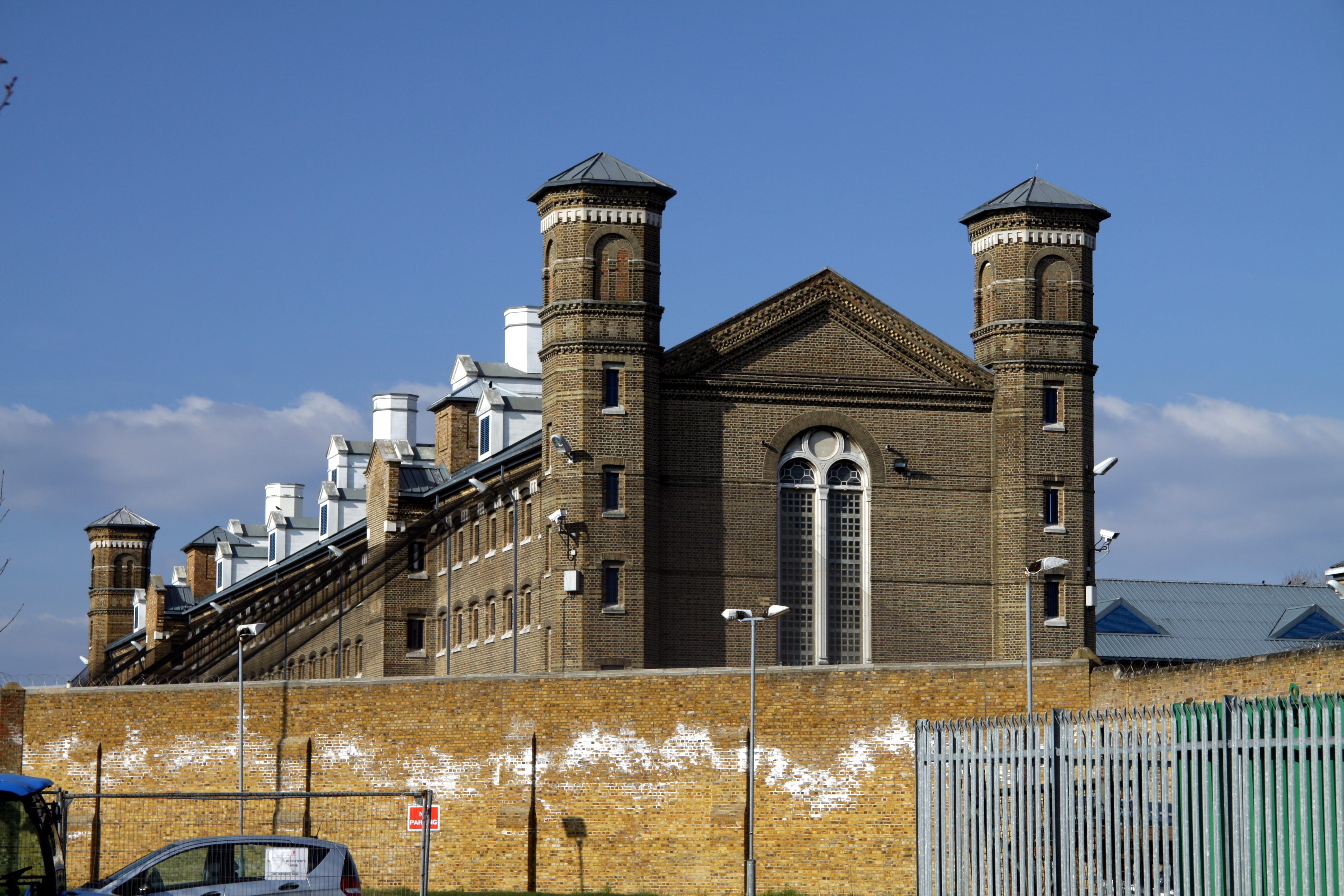
This month saw the second wave of early prison releases, authorised by the Burnham government. Around 650 offenders were released, and the government expects the total to rise to 5,000 by June next year.
It is, frankly, a desperate measure in a crisis – and, as often with crises, the politicians are learning the wrong lessons. Alongside the early release scheme more prisons are being built or expanded in order to add another 14,000 prison places by 2031.
The driving factor behind these developments is the UK’s acute prison overcrowding crisis, with 87,499 people detained in prisons in England and Wales as of last week, a rise of 1,700 since June this year and a further 8,495 people were imprisoned in Scotland. Since 1990 the prison population has grown by 94 percent, near five times the growth of the general population.
Three quarters of prisons are overcrowded, meaning that in practice rehabilitation takes second place to warehousing inmates in cells where they can be kept for up to 23 hours a day.
The results are that prisons are more dangerous and unhealthy places, for prisoners and staff, and their outcomes are worse. The reoffending rate is around 37 percent in the first year after leaving prison and rises to 75 percent in the nine years after.
The Norwegian model
The UK is not the only country to have faced this challenge.
“If we go back in time, in the 80s here in Norway when I started in the business, we had big problems in the correctional service,” says Are Høidal, a retired prison governor. Reoffending rates were as high as 70 percent five years after prisoners were released, he explains, along with significant problems with mental health, violence and drugs within prisons. The then Minister of Justice decided to embark on a wholesale reform of the system, sending civil servants to other countries to find best practice. Their findings shaped the design of anew correctional service set out in a White Paper. Høidal was one of the members of the working group that produced it.
“In this white paper, we focus a lot on the prison officer role. How shall the prison officer work inside the prisons,” he says. The shift they wanted was away from a traditional “guard” and towards the rehabilitation of offenders through social work. Høidal was the governor of Oslo Prison, the largest in the country at the time, and recalled that this change in role was a challenge for staff, some of whom did not want to work in the new ways.
“That was my job, to change Oslo prison, and that was quite a heavy job, difficult work to motivate the officers to work in a totally new way,” he says also changed the education for the officers, so they learned a lot of new subjects at the officer training school.” This drew on work from Canada where officers were trained to deliver learning and skills to prisoners and incentive rehabilitation. The training for prison officers in Norway currently lasts two years, and will increase to three next year. By contrast, prison officers in England and Wales receive ten weeks of training.
Norway built on these reforms with an expansion in community sentences in the late 90s, electronic monitoring in the 2000s. There was a second White Paper in 2008 that focused on support and life after release from prison. “We give them, we call it the normality principle. So the life inside the prison shall mostly look like the life outside the prison,” Høidal explains. “You can go to school, you can go to the healthcare, you can also have work in workshops, and we also help them to find new interests in life.”
Norway’s reoffending rate is now among the lowest in the world at 20 percent after two years and 25 percent after five years.
Lessons from the Netherlands
The UK has been a world-leader in criminal justice policy and practice before. In the 1970s, again in response to an overcrowding crisis, the UK pioneered the use of community service as an alternative to incarceration. It is a fact that my attention is drawn to by Jochum Wildeman, the head of the international bureau at Reclassering Nederland (the Netherlands Probation Service) which is constituted as an NGO independent of government. “I think it’s good for the UK also to be proud of what they invented and how it was adopted in the rest of Europe, but also in the rest of the world,” he says.
The Netherlands, like Norway, has also succeeded in reducing its prison population - in its case by around 40 percent, enabling it to close some 20 of its prisons completely. A high proportion of of criminal sentences result in community service and probation rather than incarceration and this approach is seen across the political spectrum as an efficient way of tackling criminal behaviour.
“We know in the long term, that probation and community service and supervision and electronic detention, that it works, it works better than locking up people in terms of reoffending, in terms of people getting back in the system and costing tax money,” Wildeman says. Reclassering’s own research has concluded that every Euro spent on prevention saves two Euros in costs to the government and society at large.
The prison system in the Netherlands does still have capacity issues, which stem from a shortage of staff rather than of prison places, Wildeman explains. While the job is relatively well-paid, it demands a lot of staff and is not a particularly desirable career at the moment, a problem faced by other professions in the country. However, the workforce challenges are less acute in probation, which Wildeman feels reflects the fact that their work is entirely focused on rehabilitation and resocialisation and so is rooted in hope.
Another big discussion happening in the Netherlands is the use of short sentences of less than three months, which comprise 80 percent of prisoners. These are generally acknowledged by practitioners to be counterproductive, as they do not enable any serious rehabilitation and resocialisation work to happen while damaging any positive relationships the prisoner may have in their community. As a result the reoffending rates for this group of prisoners remains high.
“There are new laws [being] drafted to make changes in this system so that we also can make sure that short-term prison sentences will be replaced by electronic detention, so wearing an ankle bracelet and making use of community services,” Wildeman explains.
A home, not a cell
There are changes and innovations happening in the UK too, that point the way towards a better alternative to prisons. One Small Thing is an NGO based in Southampton. It runs Hope Street, a small residential community for women who have committed criminal offences, which opened in 2023.
“We wanted a small scale alternative, where women who would normally be remanded or sent to prison on sentences under 12 months [had] a place for them to go.” explains Fionnuala Gordon, a criminologist and former prisons inspector. The service provides trauma-informed intensive support, wraparound services meeting the needs of addiction and other factors linked to offending and on-site accommodation.
The most radical element of Hope Street is that women can bring their children to live with them. “There’s a very strong theme around our model about maternal separation and keeping mothers and children together where possible and where appropriate,” Gordon says.
Hope Street is an example of a “detention house” a model found across Europe. These are small scale residential homes where people with criminal convictions may live and work on their rehabilitation and resocialisation. It is, arguably, an example of the normality principle used in Norway. The building is purpose-built and designed to accommodate up to 24 women and eight children at any one time. “We had a group of women with lived experience who we consulted with around the design, and they were very keen for it to look like a home,” Gordon says.
“We wanted people to come in and out of the building, and we designed it in that way,” she explains. The building includes a cafe, which is run as a social enterprise and where women can train as baristas and work. Hope Street also provides training in hospitality and horticultural qualifications.
Each resident has a personalised plan that is supported by the staff at Hope Street and by partner agencies, and the approach is one that is trauma-informed and which looks at the strengths the person has rather than a more traditional prison approach of punishing infractions and non-compliance.
Gordon and the team at One Small Thing believe the model they are developing at Hope Street could be replicated across the UK and are already in conversations with other organisations about supporting work to establish similar communities in Wales the South West and North East of England. They are currently three years into a five-year evaluation that they believe will strengthen their case for the Hope Street model to be used as an alternative to incarceration for women.
Smart on crime
While the UK is locked into its current political consensus of warehousing people in prisons, it would be understandable to feel pessimistic about the possibilities of change. But the case for things to stay as they are does not hold. Prisons are an expensive and largely ineffective solution to criminal behaviour and actions. The alternatives are there and the financial imperatives may just overtake the political ones in time.
“It’s also about being smart on justice, smart on crime,” Wildeman explains. “The majority of the people who commit crimes, big crimes, small crimes, will not benefit from prison, and that’s the story you have to carry in a very honest way.” This means “show it with numbers” but also with stories and emotions,” he says. ■
About the author: Samir Jeraj is a journalist and author with a focus on social issues. He is co-author of The Rent Trap, a book on private renting in the UK and reports on housing, migration, and homelessness. Samir is a policy correspondent at the New Statesman and commissioning editor at Hyphen.
👫Share this story with your friends, family and colleagues to help us reach more people with our independent journalism, always with a focus on people, policy and place.
This piece is the latest in our Burnham Britain series, where we’re testing the new agenda against the reality on the ground.
So far we’ve looked at what his conference speech tells us about the kind of premiership he wants to run, asked whether he can really end rough sleeping by Christmas, and revealed in an exclusive that more than a third of people at risk from cuts to universal credit disability payments are over 50, a group facing some of the toughest barriers to work. We’ve also looked at the long road to adult social care reform. Subscribe to help us dig deeper into the issues which Burnham must tackle if he is to build a new Britain.
I think this is wonderful but suspect in the current neoliberal penny pinching climate it won’t be allowed to happen. Getting the current crop of politicians to focus on longer term policies that need investment to ultimately save money and a lot of unnecessary suffering is probably a lost cause.
Absolutely 👍