


This is the first piece in Burnham’s Britain, our new series examining the policies shaping Andy Burnham’s premiership, and what they mean for the people living under them.
We're starting somewhere personal, because that's where The Lead always tries to start from. When the prime minister announced his social care plans back in July, he spoke movingly about his own father's care, about the workforce who "should be the best paid people in society, not the worst," and about family carers being "broken" without support. He announced an accelerated Casey Commission review, a fair pay deal for care workers, and cross-party talks. What he didn't announce was any respite for the estimated millions of unpaid carers already propping up the system he's trying to fix.
Jacqui Hylton spent more than thirty years as an NHS midwife before she became a full-time unpaid carer for her mother. She hasn’t stopped working. She’s just stopped being paid properly for it.
Here, she writes about what it means to lose a salary, a professional identity and financial independence, all while navigating a cliff-edge benefit system, where earning a few pounds too much can cost you your entire Carer’s Allowance overnight.
Over the coming weeks, months (or however long it takes), this series will look at the policies Burnham is betting his political capital on, from social care to devolution. But today we begin with the people those policies are meant to serve, and the gap between what the system assumes about their lives and what it’s actually like to live them.
— Zoe Grunewald, Westminster Editor
For more than 30 years, I worked in the NHS as a midwife.
Then my life changed, and I changed too.
I left the career I had known for most of my adult life to become a full-time unpaid carer for my mum. I didn’t stop working. The work changed.
As a midwife, I was used to responsibility, long hours and being needed at all times of the day and night. Caring is different, but it also does not conveniently fit between nine and five. Now there is no end of a shift when somebody else takes over.
I am grateful that I am able to care for my mum. But I have also had to adjust to losing my salary, some financial independence and a professional life that had been part of my identity for decades.
That is why the debate about encouraging unpaid carers into employment interests me. I do not lack the desire or skills to work, in fact, I have worked throughout my adult life. The problem is making paid work fit around caring – and a benefits system that can make earning more feel like a financial risk rather than an opportunity.
To put Carer’s Allowance into perspective, someone like me receives £86.45 a week for providing at least 35 hours of care. For those on the National Living Wage, the equivalent amount can be earned in less than seven hours. And while Carer’s Allowance is not a wage, the comparison is difficult to ignore.
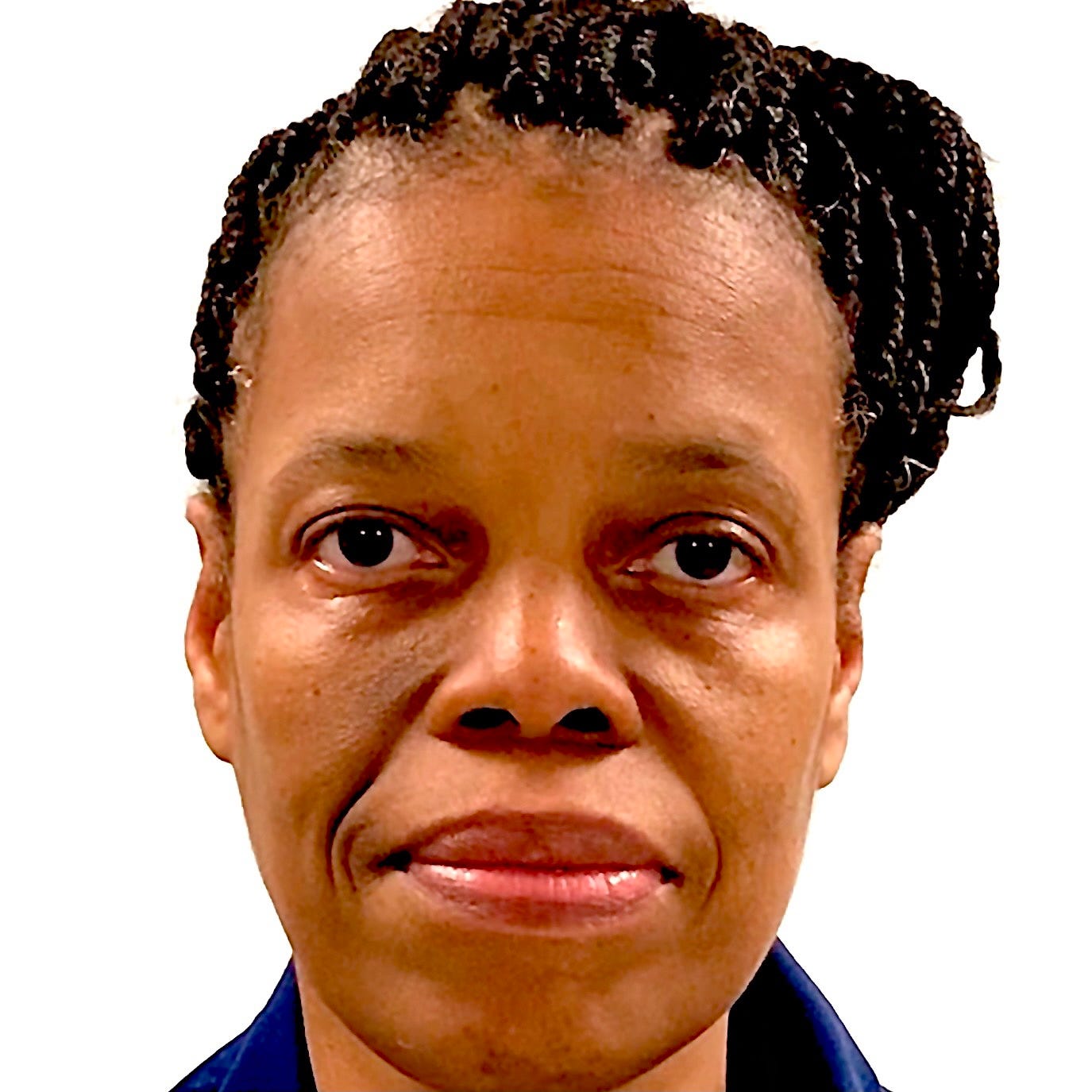
After more than 30 years as a midwife, I have decades of professional experience. Yet combining regular midwifery work with caring would be extremely difficult.
If I wanted to earn a little while caring for my mum, I might have to look outside my profession simply to find sufficiently flexible hours. That could mean accepting work at a much lower rate of pay.
It is not the work itself I would find demeaning. It is the feeling that becoming a carer can leave decades of professional experience with so little room to be used.
Stepping away from a regulated profession also has longer-term consequences. Remaining professionally connected as a midwife requires maintaining practice and continuing professional development. Caring can affect not only what I earn today, but how easily I might return to my profession.
Then comes the Carer’s Allowance earnings cliff edge. A carer can currently earn up to £204 a week after specified deductions and remain eligible. Cross that limit by even a penny and you can lose the entire £86.45 weekly payment. There is no gradual reduction: it is a cliff edge. How does that encourage work?
An extra shift or a better-paid week should be good news. Instead, someone with fluctuating earnings can worry about crossing the limit, losing their Carer’s Allowance and potentially facing an overpayment that later has to be repaid.
The Department for Work and Pensions has been asking whether earnings should be averaged more predictably and whether a taper could replace this cliff edge. Both deserve serious consideration.
Caring is rarely predictable. Appointments arise, needs change. A difficult night affects the following day. Care arrangements fall through. Someone may work more one week and less the next. The system should reflect that reality.
But there is also a more fundamental question. Someone who checks on a relative for a few hours each week and someone who cannot safely leave the person they care for alone may both be unpaid carers. Their ability to take on paid employment is clearly very different.
Carer’s Allowance draws one important line: to qualify, you must provide at least 35 hours of care a week – almost the equivalent, in hours, of a conventional full-time working week. Many provide considerably more.
There are only 168 hours in a week. Carers need to sleep, eat and rest like everyone else. There must be a point at which fitting more work into an already demanding caring role becomes unsustainable.
Before asking how many additional hours a carer could work, perhaps we should first ask how many hours of care they already provide — and how much of their week is actually left.
None of this means carers should be discouraged from employment. Quite the opposite.
Those of us who can and want to work should have a system that makes it possible: predictable earnings rules, a gradual reduction in support rather than a cliff edge, genuinely flexible employment and affordable replacement care.
But we must also recognise carers for whom paid employment simply is not possible. Some are already caring for far more than 35 hours a week. They are already working. The difference is that their work is unpaid.
I do not regret caring for my mum. But caring for someone you love should not require you to surrender your financial independence, professional identity or future choices.
If the government genuinely wants carers to work when we can, it first needs to understand the work we are already doing. ■
About the author: Jacqui Hylton is a former NHS midwife from Leeds who left a career of more than 30 years to become a full-time unpaid carer for her mum.
👫Agree with Jacqui? Share this story with your friends, family and colleagues to help us reach more people with our independent journalism, always with a focus on people, policy and place.
If you’re enjoying our Burnham’s Britain series, as we unpick the difficult decisions he will need to make as Prime Minister and more become a subscriber to support us to tell more stories from beyond the Westminster bubble.
Hard to know what to say - clearly caring for your mum is very important - we expect more & better care now ! A daughter’s care is probably close to perfect. How we equate that to how we pay for this personalised care system is going to tax us all ! No pun intended ! Care is the elephant in the room - sadly defence is the propaganda weapon to steal our tax payers £s - together with many very large Capitolist Businesses that see the tax take as their own private piggy bank ! How to change this with the newspaper propaganda & control the rich & powerful have ! Look how Reform steal the votes with daily migrant propaganda on GB News - we need balanced news reporting not hedge-fund sorts controlling reality for the masses !
I sympathise with you and every carer. Of course the allowance is insufficient! It’s just one of many hundreds of injustices. And it all steams from the publics misunderstanding of money but moreover our governments misunderstanding if it too!
The question always arises, “where is the money going to come from?”. And the answer is the same as it’s always been!….. “the same place it’s always come from!”.
To get paid, to get money, to get paid from tax take it has to come from someone else SPENDING it!
The problem isn’t so much, “is there sufficient money?” So much as “is there sufficient SPENDING of that money!”.
Because any financial economy has to have two constants. Otherwise it will never work. Money and SPENDING.
Without sufficient money and sufficient SPENDING there can be no financial economy.
What we have now is insufficient money and insufficient SPENDING of that money. That’s why we have recessions, stagnation and depressions. Without the ability to gain proper reward and then have the inability to SPEND means we have too little turnover and so too little tax take if that revenue.
If money were to be SPENT once and kept then money would be being conjoined up all the time. So we know then that, money is in fact meant to be SPENT and used time and time again. Like a never ending pass the parcel never keeping it just continually moving it on. And we do that by SPENDING. It’s SPENDING that passes on money to the next person for their reward.
As for taxation that is also triggered as a result of SPENDING. Even income taxes! Yes, even income tax and Nic are triggered by the SPENDING of the employer on the employee.
So if tax is triggered by SPENDING and we all need SPENDING to receive money then SPENDING had to be the way to gain more revenue than his and more tax take than now.
So let’s look at money. It had to be sufficient. There had to be enough in circulation to be able to cross palms with all the population. If it’s insufficient then it had to be topped up.
But if there is enough then it has to rotate and revolve via SPENDING.
But, if we allow our system to withhold money to be UNSPENT then it fails our need. It prevents flow. And there lies the flaw. Our system allows money to be kept and withheld from free rotation. So that’s why we are in the mess we are. Not so much a lack of money but a lack of it being SPENT.