


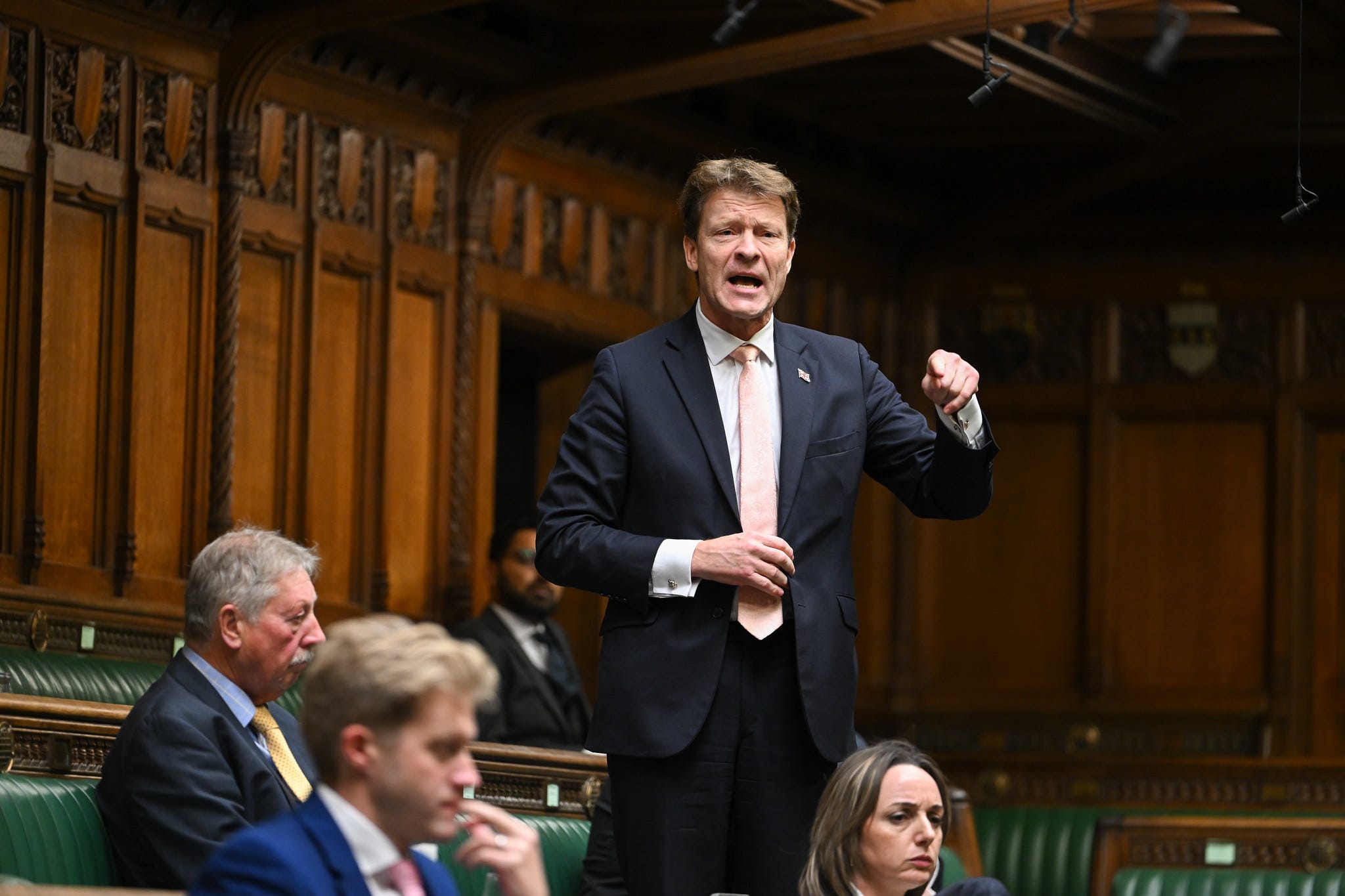
Richard Tice thinks you should do as little for your country as possible. No, really.
When asked whether people ought to minimise what they contribute to the tax system, the Reform UK deputy leader was unequivocal: “Yes, within the legal limit. That is what you should do.” The idea that anyone might feel a moral obligation to pay more, he added, would be “the road to ruin for the UK as an economy.”
It is not a new argument, but it is striking to hear it stated so plainly. This was not merely a defensive justification of his own tax affairs – after The Sunday Times reported he had avoided a whopping £600,000 in corporation tax – but a worldview, offered up as common sense. The most responsible thing any citizen can do is give as little as possible to the state. Well, how’s that for the social contract?
As Tice surely knows, the law sets the floor of our obligations, not the ceiling. A society cannot function on the basis that everyone does the bare minimum they can get away with. Imagine Reform’s dismay if workers collectively decided to offer no initiative or flexibility, doing nothing beyond the letter of their contracts; NHS staff delivered only what was strictly required, with no discretion or care beyond it; citizens never checked in on their vulnerable neighbours unless compelled. Taken seriously, that principle very quickly corrodes the fabric of collective life and the shared services and basic sense of community on which a country depends.
Of course, for most people, there is no meaningful choice to be made. The vast majority of working Britons do not “optimise” their tax affairs. Their contributions are deducted automatically through PAYE before their salary even reaches their bank account. A nurse, a teacher, or a retail worker cannot route their income through a company or restructure their earnings to minimise liability. They pay what they owe, in full, every month.
The freedom to pay as little tax as possible is not a universal right, but a privilege overwhelmingly enjoyed by those with the wealth and resources to access complex financial arrangements in the first place. And Tice’s intervention is not some refreshing, hard-headed realism, but a form of elite advice, dressed up as common sense. It pretends everyone can behave like the very wealthy while ignoring that most people simply cannot.
The reported £600,000 his company is said to have avoided is not an abstract figure. It is money that could fund nurses, teachers or local services. The ability to avoid that kind of contribution is itself a marker of extraordinary distance from the lives of ordinary voters. If you find yourself nodding along to Tice’s argument, it is worth asking: how easy was it to get your last NHS appointment? Is your child’s school stretched? How frequent is your bin collection? This is the reality of a system in which those with the most means contribute as little as they can.
“The answer cannot be to encourage everyone to retreat into self-interest and to take what they can while contributing as little as possible in return.”
All of this might matter less were it not coming from a party that trades so heavily on the language of patriotism. Reform UK presents itself as a defender of national pride, community and shared identity; a party of duty and belonging. But a patriot who insists on paying as little as possible into their own country is offering a rather thin form of loyalty. The nation becomes something to celebrate, but not to contribute to; a place to take from, not build.
We should be wary of politicians who tell people their duty ends at the legal minimum, that government is inherently wasteful, and that giving more than required is for fools. That is how trust in public institutions erodes, and how citizens come to feel less connected to one another. When that shared sense of endeavour weakens, the society beneath it does too.
Britain already faces deep disillusionment: stagnant wages, stretched services, and a growing sense that the system does not work. The answer cannot be to encourage everyone to retreat into self-interest and to take what they can while contributing as little as possible in return.
Strong nations are not built on minimal obligation. And a politics that tells people to give as little as possible will, in the end, produce a country that has nothing left to give.■
About the author: Zoë Grünewald is Westminster Editor at The Lead and a freelance political journalist and broadcaster.
👫Agree with Zoë? Share this story with your friends, family and colleagues to help us reach more people with our independent journalism, always with a focus on people, policy and place.
Hi Zoe. Thank you for your article but think you may be muddling tax and charity. Tax isn't charity; It's taken, not given. We don't have a moral obligation to pay additional tax but we do have a moral obligation to be as charitable as possible. No idea about Richard Tice but I'd hesitate to judge anyone's moral character by their tax return.