


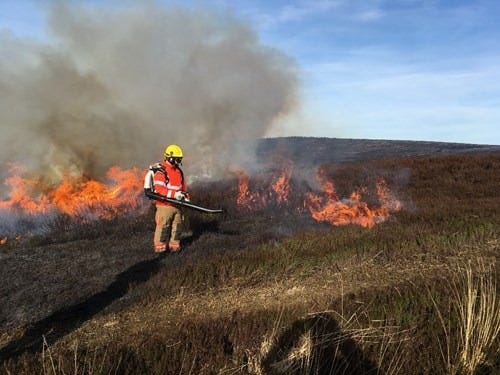
Fire services are battling dozens of wildfires across Britain after another spell of hot, dry weather, adding to growing concerns that the UK is entering a new era of wildfire risk.
The UK’s fire services are facing “extreme pressure”, with wildfires burning across the country.
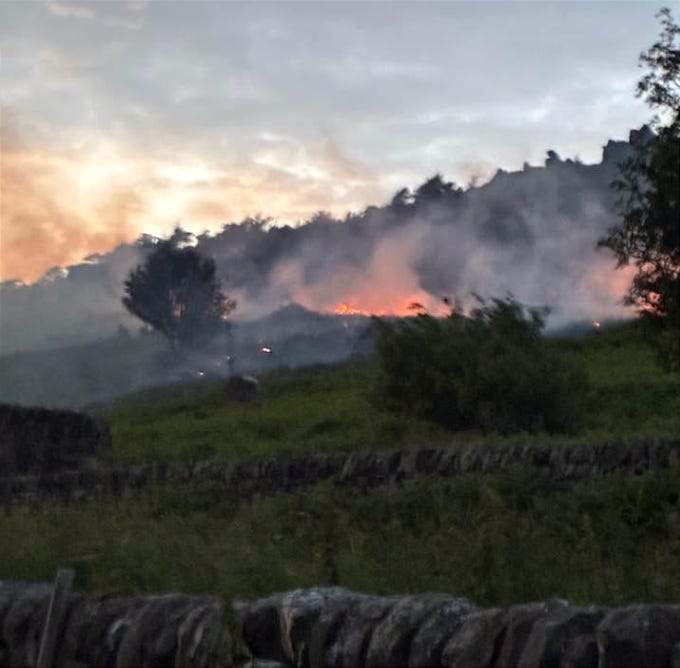
As of Monday, there were 19 wildfires active in England and Wales. Major incidents were declared in Conwy, north Wales, and in Glossop, Derbyshire, on Sunday. Hampshire, Durham, West Sussex, East Sussex, Devon and Somerset were also affected over the weekend. Blazes have also been reported in Orpington in London and in the Peak District.
A warning is also in place in Scotland, issued by the Scottish Fire and Rescue Service and the Scottish Wildlife Forum, for central Highlands, southern and eastern Scotland from Wednesday, lasting until next Monday.
From 6 July to Monday – just one week – data from the National Fire Chiefs Council (NFCC) showed that fire and rescue services in England and Wales responded to 342 wildfires. By comparison, they responded to nearly 1,000 wildfire incidents in 2025, surpassing the previous record set in 2022.
There is no single official definition of a wildfire, but fire services generally classify them as large outdoor fires that require significant resources because of their size, duration or threat to people and infrastructure.
Is climate change making UK wildfires worse?
With heatwaves becoming the norm, is the UK more at risk of wildfires?
According to the annual State of the UK Climate analysis, published in the International Journal of Climatology, the UK’s climatic extremes are becoming increasingly normal, with last year the hottest on record and further “unprecedented changes” likely to break the record again soon.
Tuesday this week was the 10th consecutive day that anywhere in England recorded a temperature above 30C. Meanwhile, large swathes of England have so far recorded 0% of the rainfall they would normally expect in July, while most areas of Wales have seen less than 10% of the usual July average.
According to the NFCC, most wildfires in the UK are caused by human activity, including leisure activities or deliberate acts. However, the impacts of climate change increase the risk and severity of wildfires.
Can the UK cope?
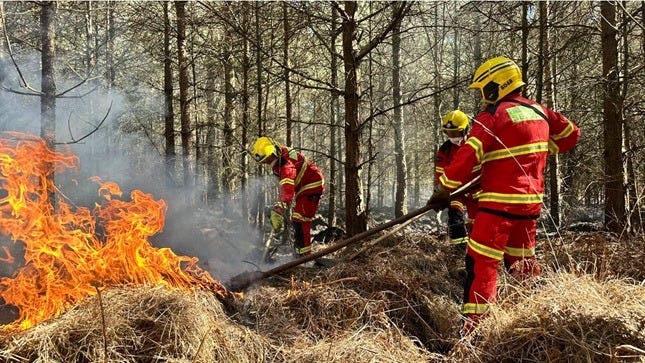
Last month, the government announced it was strengthening its wildfire resilience heading into summer, including stationing specialist-trained firefighters within reach of communities and investing £97 million to upgrade fire and rescue assets, including kits and off-road vehicles.
The wildfire teams will be located strategically and hosted by fire and rescue services in Lancashire, Greater Manchester, Northumberland, London and South Wales. The teams visited South Africa and Poland to learn from international communities that have more experience of wildfires.
As our sister title The Knot in Staffordshire reported, followed a near miss incident at The Roaches in when Staffordshire Fire and Rescue Service (SFRS) were called to extinguish a blaze, Staffordshire County Council issued urgent emergency pleas in June banning all barbecues, warning that the parched terrain had created a highly volatile, extreme wildfire risk.
The Staffordshire Wildlife Trust launched a summer appeal to raise £15,000 to create and maintain firebreaks and restore damaged habitats, and later increased its fundraising target to £20,000 to help it meet the extra pressures it faces during heatwaves. Teams are on high alert across reserves so it can support the Fire Service where needed and help wildlife and habitats recover where fires have caused damage.
According to experts, the big future danger in the UK is the risk of more fires at the point where rural landscapes meet inhabited ones, also known as the rural-urban interface. These require different tactics because of the need to take account of housing, and UK fire services have not had much experience with them.
The UK does not currently have a fit-for-purpose Fire Danger Rating System (FDRS), which would assess fuel and weather conditions and provide broad estimates about fuel flammability and the potential fire behaviour under those conditions. However, one is being developed and should be disseminated soon, although it’s not clear when.
What happens next?
As the country gets used to hotter, drier summers, steps are being taken by the government and fire services to become more resilient. Individuals may also need to change their habits, such as by sweeping up dead and dry leaves and not growing vegetation up against buildings.
For now, people also need to be aware of the increased risks and take steps to avoid igniting fires by not throwing cigarettes on the ground, taking care with barbecues and paying attention to any bans or warnings. ■
About the author: Ella Glover is the audience engagement editor at The Lead. She is also a freelance journalist specialising in workers’ rights, housing, health, harm reduction and lifestyle.
About The Lead Untangles: In an era where misinformation is actively and deliberately used by elected politicians and where advocates and opposers of beliefs state their point of view as fact, sometimes the most useful tool reporters have is to help readers make sense of the world. If there is something you’d like us to untangle, email ella@thelead.uk.
👫Found this edition of The Lead Untangles useful? Share it with your friends, family and colleagues to help us reach more people with our independent journalism, always with a focus on people, policy and place.
Plus take advantage of our special offer and get 30 per cent off an annual subscription (usually £49, use this link to get it for £34.30 instead) to help us combat misinformation.
Firefighting aerial drones get to the starting fire early with higher imagery guidance
https://tech.yahoo.com/general/articles/california-alaska-firefighting-drones-training-232400183.html
Wow. That was a word-fest. Phew!