


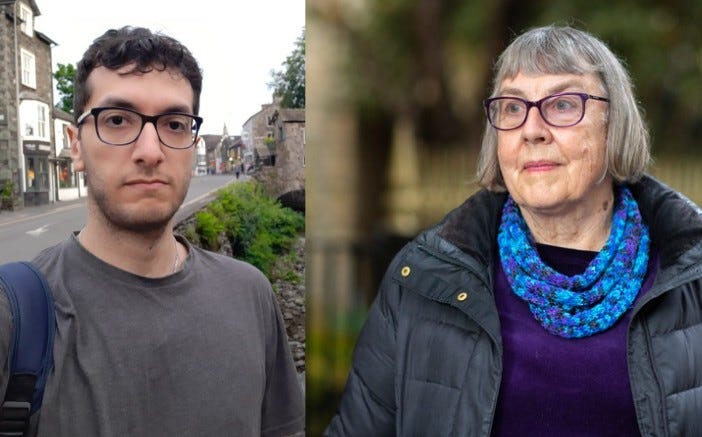
Wiktor Weglarz was only planning a brief adventure when he arrived in Scotland 10 years ago after graduating from university in his native Poland.
He had taken on a temporary contract through an agency to work in hospitality in a small town.
A decade after the EU referendum, he’s living in London with a successful career in fundraising for an arts centre – one of 5.8 million EU, EEA and Swiss citizens with settled status in the UK.
“I didn’t really know what I wanted to do so me and my friends decided to go abroad and earn some money,” says Weglarz. “Initially it was just going to be a short stay – I was meant to be here for three months.
“After a month, we decided to move to London, so we ended the contract and took on another adventure. And it turns out I have found something for me here in the UK.”
The EU Settlement Scheme (EUSS) opened in 2019 under the EU-UK Withdrawal Agreement, with an initial deadline for applications of June 2021. It offered settled status to EU, EEA and Swiss citizens who had been living in the UK for a minimum of five years. Those with less than five years could apply for pre-settled status. Campaigners persuaded the government to make it a free process.
For Weglarz, who now calls the UK his home, the process was straightforward, as it was for many who applied before the deadline. But as time went on it became harder for people to amass the residential, employment and travel evidence the Home Office required.
Following a successful judicial review by the Independent Monitoring Authority for the Citizens’ Rights Agreements (IMA) in 2022, the Home Office simplified the process, granting extensions to pre-settled status, taking pragmatic decisions on required evidence and eventually automatically converting pre-settled to settled status.
But it has now begun removing pre-settled status from those without continuous residence, and has stopped funding organisations that can assist with applications. For the 1.4 million people with pre-settled status, many of them vulnerable or digitally excluded, the future is far less certain.
“For a lot of people, the process has been fine,” says Kate Smart, CEO of Settled, a charity set up in 2019 to help EU citizens living in the UK. “They went through it at the earliest opportunity. It was successful. They’ve got on with their lives.”
Nevertheless, Brexit was a shock for those who witnessed it at close quarters. “The whole of the Leave campaign felt like one lie after another,” says Birgit Briem Anglesey, who moved to the UK from Sweden in the late 1980s to be with her English husband.
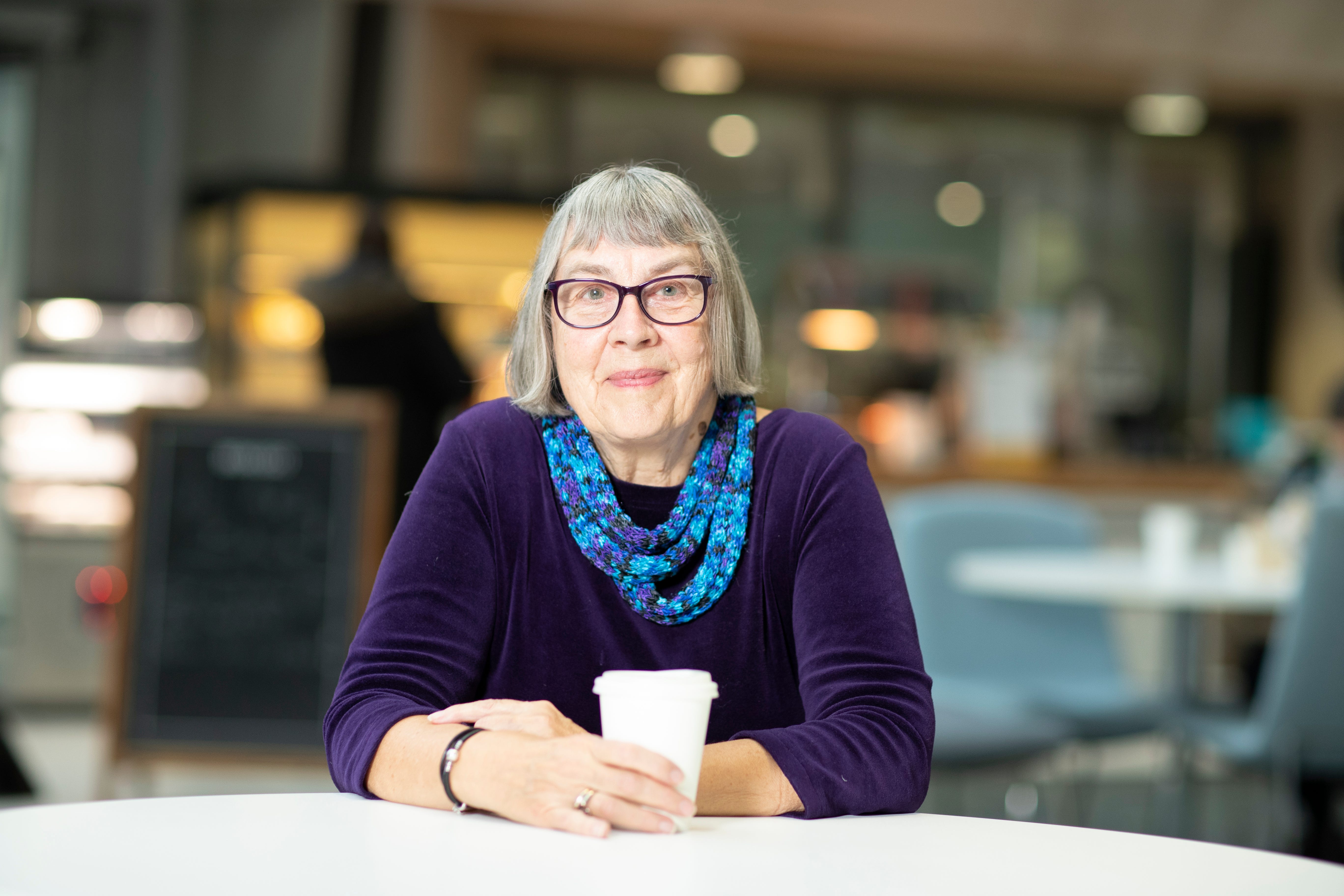
“My husband was absolutely horrified, and so were the rest of my family – that people had been lied to to that extent.”
“The next morning when Nigel Farage said about the £350 million to the NHS pledge that it was just a suggestion, then we knew that it was going to be absolute chaos, and it turned out to be absolute chaos,” says Briem Anglesey, who taught in primary education in Huddersfield, where she lives, and Bradford. She is also a member of the IMA’s citizens panel.
“Britain has got poorer. It’s not just economics for me – it’s that freedom that you have within the EU. Difficulties for postal services between countries, getting hold of Swedish food, pet owners wanting to travel – “it’s just like shooting yourself in the foot”, she says.
“They wanted to cut red tape, but they have covered the country in red tape, which you have to really fight to cut through on a daily basis. For so many people, it’s sad – extremely sad.”
Wladislaw Jagiello had been living in the UK for 13 years at the time of the EU referendum and considered it his home. But in his mind he was cast back to his teenage years in Poland.

“I remember going to the shop and somebody refusing to serve me, saying I should wait because I’m not British,” says Jagiello, recalling a Leave campaign that professed to have principled objections to the EU’s structural weaknesses but also played on the “the very deep racism and notions of discrimination against others” in the UK.
“I’m a gay person and the first thing when the referendum happened was a feeling of being back when you were 17 and couldn’t do anything openly because you were scared of being beaten up. It was clear, that othering notion.”
Jagiello, fluent in English, had moved to the UK after his studies, attracted as much by its diversity as the prospect of furthering his career. He took a job in multicultural Leicester – “an experiment that worked well”.
He’s worked in the public and charity sectors since, covering sexual health, migration, learning difficulties, LGBT people and now social care.
When the notion of Brexit first reared its head, Jagiello, who studied politics, thought the belief that the European project was based on peace and solidarity would prevail. “Why should you leave such a strong, robust union that basically improves your life rather than disadvantages it?”
Data on EU people in the UK and their circumstances is incomplete. People have children or want to bring elderly relatives over, meaning numbers are fluid.
“What we are finding, year on year is there are still people who haven’t applied [for settled status], who didn’t know about it, and who’ve applied and been refused,” says Smart. “It’s a continual stream of people – even though it’s years after the deadline – who are needing help with their cases. Not everybody has gone back to a feeling of being secure and welcome here.”
In a survey of more than 2,200 EU people last year, IMA found that 97 per cent were aware of their rights to work, live and travel, but one in five had difficulties accessing them. Of those, a third were from an ethnic minority background and 53,893 had applied on the full citizenship pathway in the most recent figures available for the year up to June 2025.
A third of those surveyed said they felt discriminated against by public bodies since Brexit – half of those from ethnic minority backgrounds.
Miranda Biddle, IMA chief executive, describes people with settled status needing to go through an additional layer of proof of entitlement when accessing public services.
Now eVisas have replaced physical documents to show immigration status, EU migrants have to be able to get a shared code to prove who they are. That requires them to be online – and the system not to be down.
Biddle said: “Even if the policy and the legislation says, for example, you have access to healthcare, that might not be how it feels when you’re accessing those services,”
“If you are challenged you’ve got another hurdle or hoop to go through to evidence that you have got that eligibility.”
And yet, as Biddle points out, EU citizens make a significant contribution to the UK economy. They make up 8 per cent of the UK population (including 460,000 Irish passport holders born in Northern Ireland) and 7 per cent of the total in paid employment. “That sort of contribution across all sectors and different groups is evident,” she says.
That includes people like Weglarz and Silvia Malnati, who moved to the UK from Milan in 2019 to pursue her ambition to work in radio and her passion for music. She had put those to one side for financial reasons, needing to take a job in advertising.
From Italy she had interviewed a UK record label owner, who told her of some shift work available in a nearby record shop. “I was fine in Milan,” says Malnati. “But I had this idea that London is still the place for music.”
Her dreams remained on hold amid the hardscrabble of making a living in London, working shifts, reluctantly taking a job back in advertising, having to find a place to live and then to find a guarantor to convince the landlord. Yet the process of getting settled status itself was straightforward – especially for someone used to Italian bureaucracy.
Malnati has had positive experiences when accessing healthcare and public services, and has been able to pursue her ambitions once more. She’s an audio producer, working on BBC programmes including Gilles Peterson’s show on Radio 6 and Radio 3’s Late Junction, and is co-founder of experimental record label Sagome.
“I do what I would have never been even able to dream of,” she says. “All the struggles and the work and then eventually managing to find this – it feels like it was really worth it.
“The good thing about London is it’s really hard, but if you are driven by passion and hard work, you really can achieve stuff.”
Like Malnati, Weglarz is fulfilled in his job, feeling it’s one with purpose, and made good friendships. He values the lack of homophobia compared with rural Poland, where’s he from, meaning London “is a place where I can be myself”. And he wishes he could play an ever fuller part in society through being given voting rights in a general election.
But he’s feeling the cost of living bite and sees how investment and development in Poland are levelling up his home country to the UK, which feels economically stagnant. He knows of a number of people who have moved back not only to Poland but to Portugal, Spain and Italy as well.
The figures bear him out. According to the Migration Observatory at Oxford University, net migration of EU nationals to the UK turned negative in 2022. Between mid-2021 and mid-2025, the number of EU nationals living in the UK decreased by 162,000 because of migration outwards.
Possible reasons include “uncertainty about the political and social situation in the UK after Brexit, and a fall in the value of the pound, reducing the value of earnings in the UK”, says the Migration Observatory.
Should this continue, the damage to the UK’s economy, with its ageing population and skills shortages, will increase.
Meanwhile, uncertainties continue to mount. Late last year, the Welsh Senedd’s Equality and Social Justice Committee warned that a new Windrush scandal is in the offing if thousands of EU citizens in Wales don’t apply for settled status.
The committee’s concerns particularly related to vulnerable groups including older people, children in care, the Roma community, victims of abuse and homeless individuals. Like Windrush, the EUSS “places the burden of proof on individuals to prove residency when they may not have the necessary documentation”, it says.
As with Windrush, the danger often only becomes clear after many years of living in the UK in apparent security. Adults with settled status often don’t recognise they must also apply for their children.
It’s when they hit a pinch point, such as returning to the UK after travel, that their world could be upended. The consequences of not obtaining permission to stay are “dire – losing rights to work, housing, benefits, education and even deportation”, warned the committee.
This is compounded by problems with the eVisa and related UK Visas and Immigration accounts, with log-in failures, system outages, incorrect information and account retrieval delays all causing profound anxiety.
“There was one day when I was Nigerian,” laughs Cesare Ardito, who is from Rome and now a mathematics lecturer at Manchester University. The glitch didn’t affect him at the time but as a registered legal adviser with Settled and elected member of Comites de Manchester, which represents Italians in the north of England, he’s interacted with an estimated 10,000 cases.

Ardito, who holds dual UK-Italian citizenship, says the EU Withdrawal Agreement does safeguard EU nationals’ rights. But he is highly critical of the digital-only system and how EU nationals were used as its guinea pigs, saying people are “super-scared” of being questioned at a border, for example, and stressing the need for some sort of back-up system. And this only highlights a darker, looming problem.
Every time Reform or the government make some announcement threatening migrants’ rights, concerned calls to organisations like Settled rise – even though the proposed policy may not concern EU nationals. And if a future UK government were to get even harsher on migrants, that anxiety might turn into real fear that settled status might be taken away.
This has prompted Malnati to join many others in paying the £1670 needed to move to full UK citizenship, “so I can be 100 per cent sure they can’t kick me out, even if things change, because everything changes so fast that it’s better to be safe than sorry”.
Ardito says: “Not everyone is acutely aware that something has fundamentally broken here. Freedom of movement is gone, and every right you have here is the subject of an international agreement that needs to be protected. ■
About the author: Kevin Gopal is a Manchester-based journalist who has returned to freelancing after editing Big Issue North from 2007 until its closure in 2023.
👫Enjoyed Kevin’s writing? Share this story with your friends, family and colleagues to help us reach more people with our independent journalism, always with a focus on people, policy and place.
🇪🇺 This story is the latest part in our series examining the impact voting to Leave the European Union had on the UK since June 2016. We’ve dug into the numbers around the economy, immigration and more since the EU Referendum and also heard how Brexit has left our universities in a bleak position. And we welcomed Naomi Smith from Best For Britain as she argues why the time is now re-joining based on the public mood and our Westminster Editor Zoë Grünewald penned an exclusive essay on how the EU Referendum paved the way for Reform and we also visited Dover which has always enjoyed strategic importance when it comes to relations with the EU. See the full series and if you’ve enjoyed our series make sure you upgrade today to help us do another deep look at the issues, people and places affecting the UK right now - we need 30 new subscribers to help us do another one. And you can use this link to get 30% off an annual subscription.
Disgraceful.
I had a similar shop experience in Bristol when they heard my Welsh accent.
The right and far right have stirred up horrendous levels of unjustified fear and hatred.