


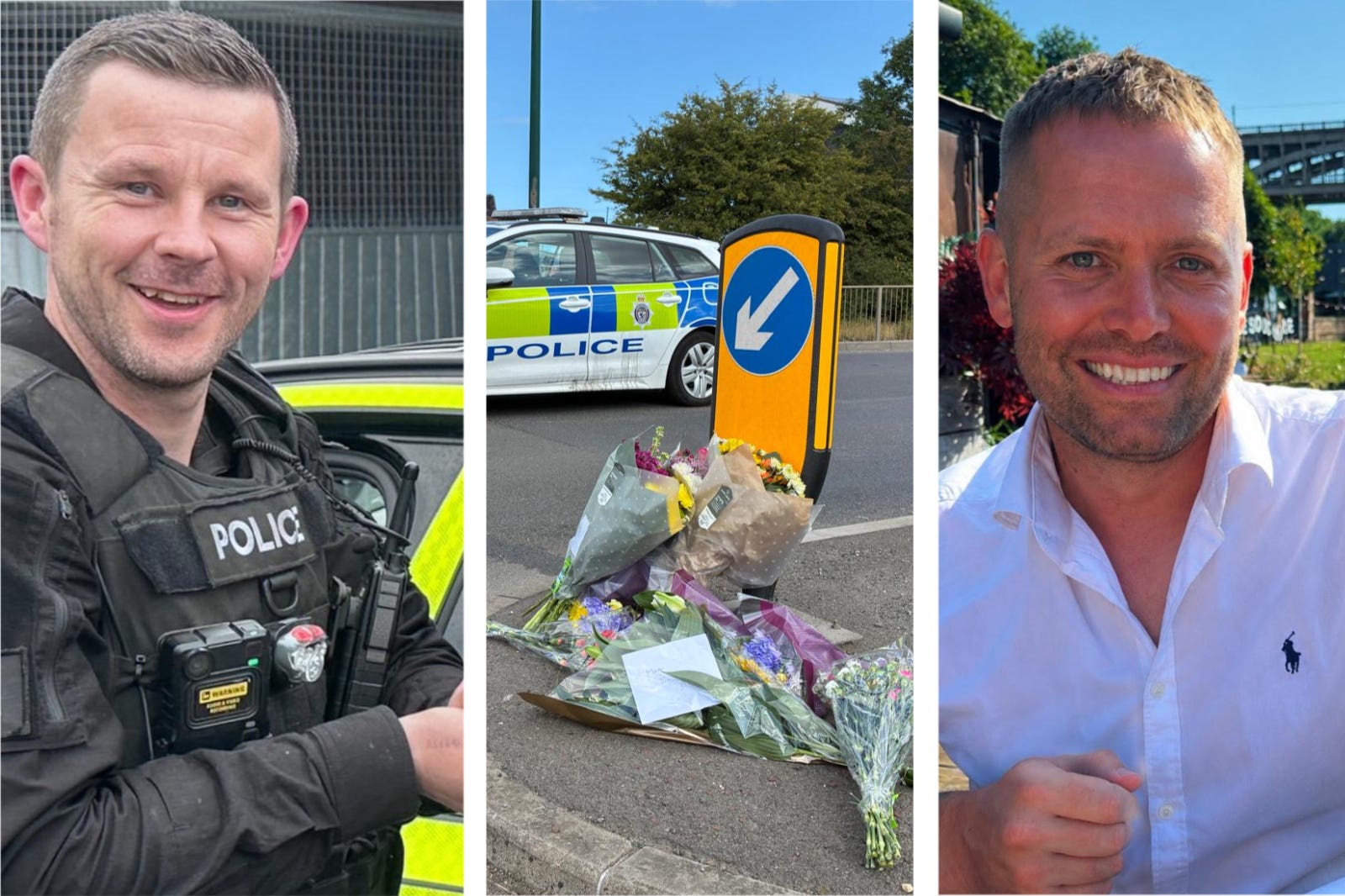
Two weeks ago news alerts were sent on apps to millions of us about seven deaths on the A66 between Middlesbrough and Redcar. For many people outside the area huge question marks remain about what’s actually going on thanks to arrests, counterattacks, car rammings, a deadly house fire and burned out cars at a supposed “vigil”.
To many outsiders the last fortnight of events on Teesside have been a spectacle of violence, with Middlesbrough being perceived as lawless to those from afar. But as somebody who’s reported in-depth from the area for years I can say there’s no novelty to recent events, only the coverage they’ve received.
The A66 runs east-west from Middlesbrough to Redcar - a typical English seaside town in that it has high deprivation and faces the same social problems of other towns just like it. The two towns are not separated by greenbelt land, but by huge swaths of industrial land. The former ICI chemical works was sold in the 90s, divested and now hugely diminished, employing a fraction of the people it once did.
On the other side of the A66 to that site is where the steelworks along the river Tees once were. Thousands of acres of this land is reclaimed from the river by steelmaking slag. At steelmaking’s height around 100 years ago there were 91 blast furnaces on Teesside. By the 1970s only one remained. It closed in 2015, causing 2,000 job losses overnight - a huge blow in one fell swoop, but a fraction of the jobs that had been lost over the decades before.
The old steelworks land is now the site of Teesworks - a regeneration project that’s had around £600m of public money invested over eight years only to see at least £120m going into the pockets of two local businessmen and very few jobs in return.
Tens of thousands of jobs have been lost over the last five decades, and the workers lived in places like South Bank and Grangetown, where the national media’s attention has been over the last fortnight.
Grangetown and South Bank technically lie just across the border in Redcar and Cleveland, but are considered by most to be part of suburban Middlesbrough.
The town centre in Middlesbrough has seen better days. Huge numbers of commercial units are empty, and those shoppers who remain seem to barely outnumber those with addiction problems, rough sleepers and beggars.
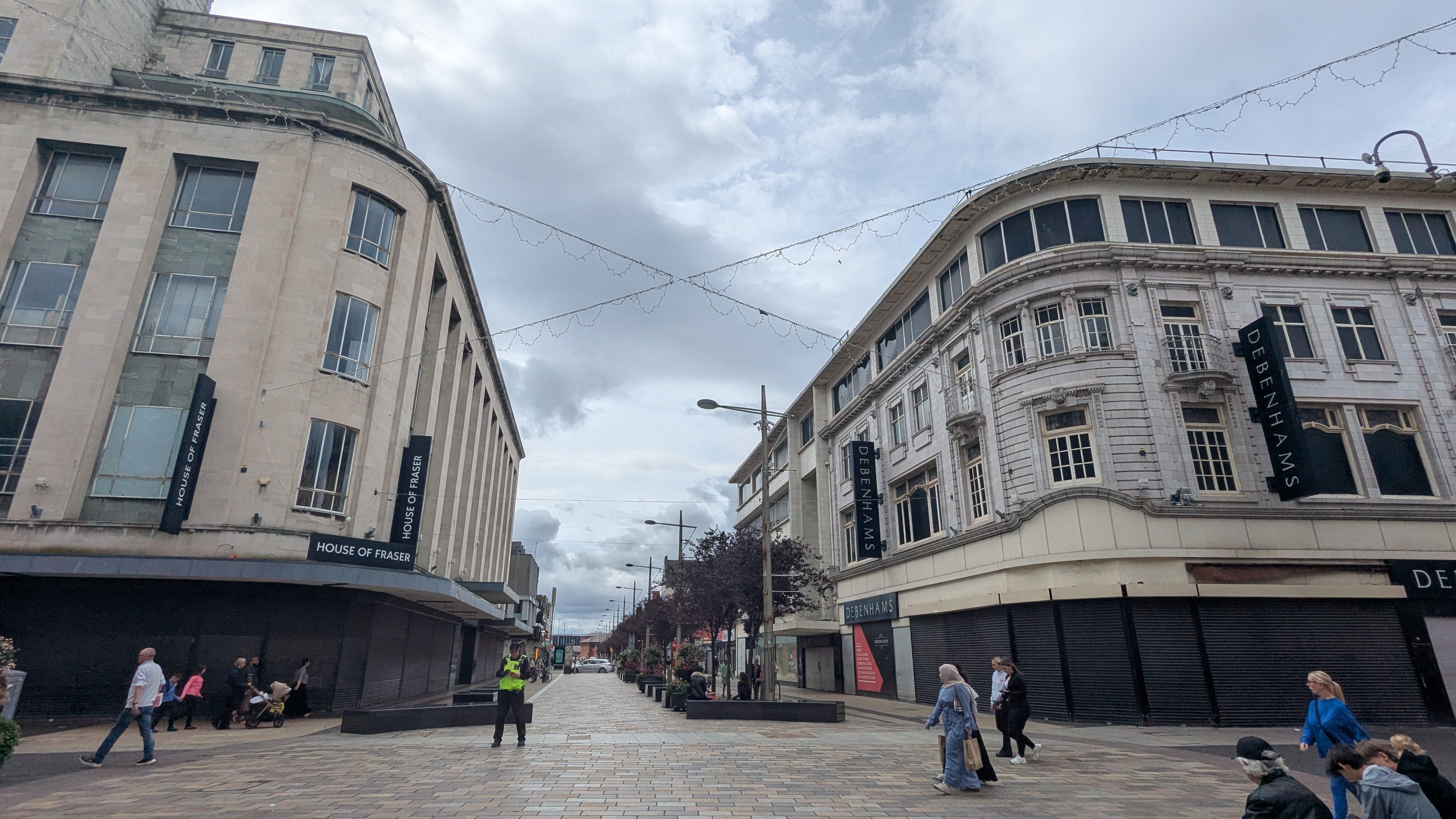
The town’s market cross is emblematic of the area’s problems. Two huge department stores sit opposite each other - a Debenhams and a House of Fraser - which have been closed and shuttered for five and eight years, respectively.
Towns across the UK have suffered in the wake of deindustrialisation, with similar social problems to those seen in Teesside. But while deprivation exists in all towns and rural areas, it’s there in pockets, while across Teesside the depth and spread of deprivation is unlike anywhere else in the country.
It took Tees Valley mayor Ben Houchen eight days to publicly respond to the A66 crash in any meaningful way. In his Mail on Sunday article last week he argued the events which captured a national spotlight weren’t unique to Teesside, “but symptomatic of Underclass Britain”.
He lamented “the slow death of personal responsibility” and added: “It is a national failure that just happened to be on show in the North East last week.”
But the statistics don’t back that up.
If you want to talk about national failures, the government’s latest statistics show 31% of children live in poverty. In the Middlesbrough and Thornaby East constituency the number is 44.1%.
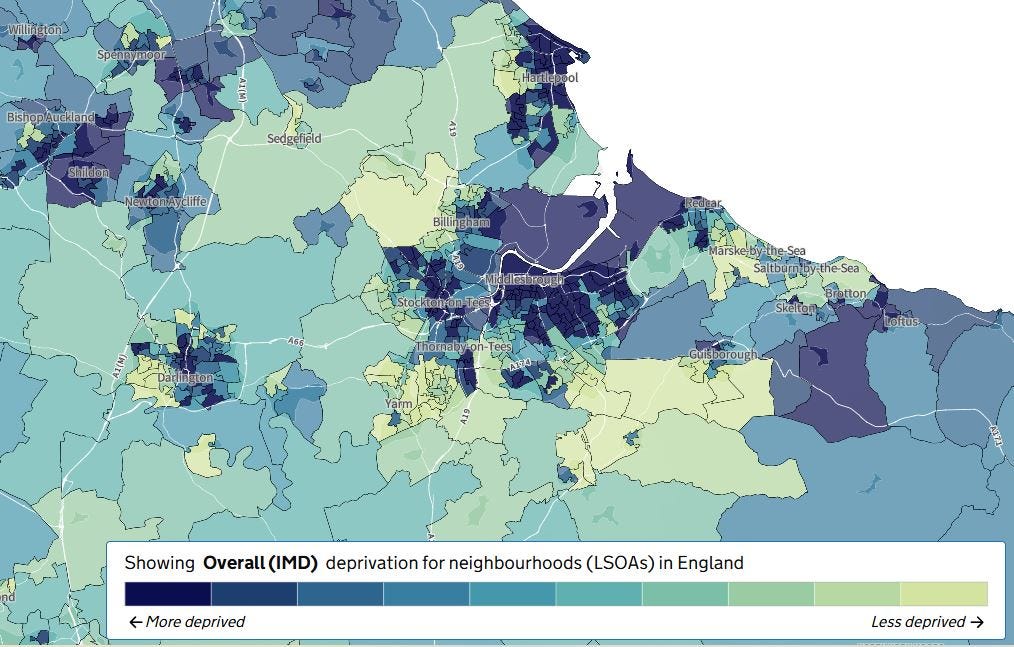
According to the Government’s index of multiple deprivation Grangetown is ranked the 99th most deprived area in England out of 33,755. South Bank is number 60.

When there’s so much deprivation, there are more people who are vulnerable to being groomed into gangs and selling drugs. As my colleague, The Lead’s Westminster Editor Zoë Grünewald argued earlier this week - the new Prime Minister when he talks of hope must ensure it is these young people who are front of mind when building a future for the country.
Whenever I’ve reported from these areas, I’ve been met by friendly, open people who are keen to share their stories. The burning cars and buildings being rammed are part of a picture of antisocial behaviour that includes dirt bikes and quads being driven through streets and across fields that people have been putting up with for years.
It’s taken a tragedy - and the deaths of two police officers - to pile enough political pressure on Cleveland Police to actually take action against offenders.
More than 20 people have been arrested since the crash in relation to offences linked to organised crime. It suggests the police have the intelligence relating to offending in Teesside, but not the resources to do anything about it.
A year ago the force launched Operation Galvanise, and almost immediately tracked a suspected stolen motorbike to an allotment in Grangetown where 4 kilograms of heroin were found under a shed.
A tip-off at the start of this year saw an eight-day search of scrub land near Grangetown - a huge operation - which turned up what police called “a significant firearms haul” buried alongside “large quantities of ammunition”.
If Cleveland Police’s budget in 2010 had remained the same, but adjusted for inflation, it would be £246m this year. Instead they have only £196m to spend.
In his Mail on Sunday article, Conservative Lord Houchen demanded “Cleveland should be given the fairer share of funding they’ve been denied for years”.
The latest crime statistics show Cleveland Police’s area has 124 crimes per 1,000 residents - the highest in the country. The Metropolitan Police has 101 crimes per 1,000 people.
The gulf between police demand and their budget has been snappily described by local politicians as Cleveland being treated as a rural force because of its population, but with metropolitan levels of crime.
In 2009 Cleveland Police had 1,756 officers, by 2017 the number had dropped to 1,204. This year numbers have climbed back to 1,524, so the 200 extra officers deployed from other forces to reinforce Cleveland over the last fortnight barely gets policing levels back to where they were nearly two decades ago.
Home Secretary Shabana Mahmood announced an extra £2m of funding for Cleveland Police this week to help them tackle organised crime. Within half an hour of the announcement, the area’s Police and Crime Commissioner - a Labour politician - Matt Storey, told me that amount “won’t touch the sides”.
While the force’s budget hasn’t kept up with inflation, the increase in employer’s National Insurance contributions has left a £2.4m shortfall in this year’s budget - something Storey and other local politicians had made clear to the Home Office.
It’s impossible to think that Anna Turley - the Home Office minister in whom’s constituency these events took place - didn’t make her boss aware of this sort of detail.
This sort of sticking plaster resolution from Westminster over decades has led to Teesside being in the situation it finds itself today. More of the same from this government, with a promise to fix things through its white paper on police reform - which will take years - does not fill the people of this region with hope when they’re facing immediate and acute issues. ■
About the author: Leigh Jones is editor of The Teesside Lead, which reports extensively on Teesside’s politics and life there each Sunday.
👫Agree with Leigh? Share this story with your friends, family and colleagues to help us reach more people with our independent journalism, always with a focus on people, policy and place.
At The Lead we’ve been building a truly local network of new local independent newsletters producing agenda-setting award-winning local journalism which is done by journalists who know their towns and communities. See more about what we’ve been creating since 2024 and crucially how you can support our mission too. Every subscriber to The Lead is helping to make that rigorous local reporting, which is so crucially needed, stronger.
“The old steelworks land is now the site of Teesworks - a regeneration project that’s had around £600m of public money invested over eight years only to see at least £120m going into the pockets of two local businessmen and very few jobs in return.”
Yet the police get a mere £2.4 million. I’m not blaming the current administration for that but it’s always been a mystery to me why such huge sums of money go into capital projects, which so often fail to materialise, whilst the people who could really use the cash to rebuild their lives are left to swing in the air.
Hi. Houchen has allegedly had his fingers in the money Pies for years. Alleged dodgy deals, including Teeside Airport; (that became obvious when Donny Airport was dumped by Peel's notorious owners), and the old Steelworks land.
Some people have allegedly been absolutely raking it in up there for these so called Capital projects from way before Covid. Tories trying to buy the voters in that area.