


It’s been a busy weekend for the far-right.
Over the weekend, hundreds of men descended on Dover, many wearing black and concealing their faces, as part of an anti-immigration demonstration. Less a protest than a show of force, vans of masked men dressed in black poured into the streets, blocking roads around Britain’s busiest port and trapping families in their cars – all in the name of “patriotism”.
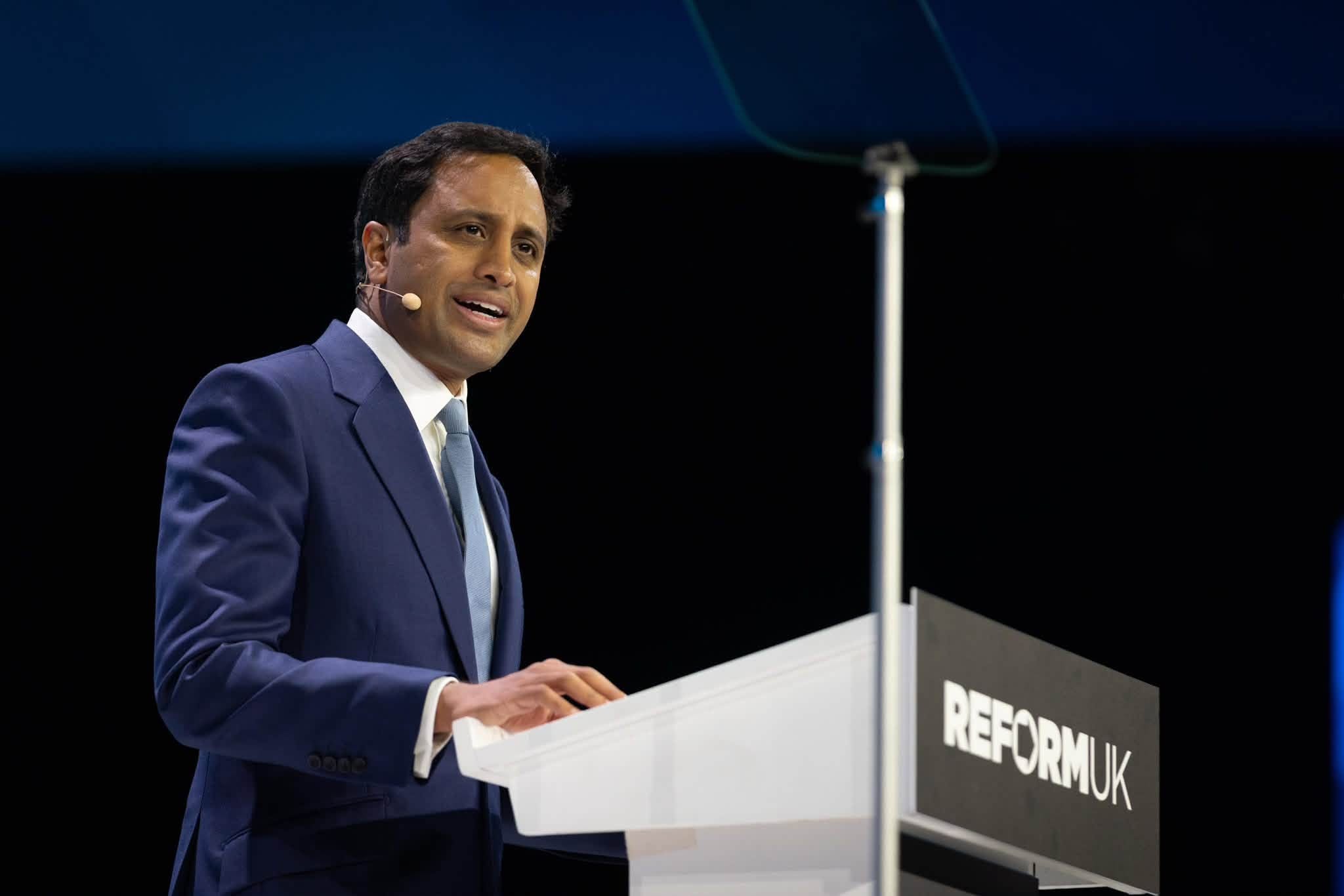
A day earlier, footage emerged from the Reform UK party conference of young female protesters being physically manhandled as they tried to interrupt proceedings. One woman had her face and hair grabbed and was hit by a walking stick as she attempted to draw attention to Nigel Farage’s donations during his keynote speech. Farage mocked the protester as she was forcibly removed, while Lee Anderson joked about buying a new cane for the man who assaulted her.
Meanwhile, across Europe, a terrifying breakthrough in Germany: the far-right Alternative for Germany (AfD) secured a historic victory in Saxony-Anhalt, and is now seeking support from other parties to govern. If successful, the party could potentially take control of education, culture and policing in the region.
The AfD — a party that advocates for remigration, hostility toward NATO and is openly ethnonationalist — is widely reported across British media as “far-right”, and rightly so. Nobody seems particularly troubled by the terminology when it comes to Germany. We can see the warning signs and recognise the history. But when something starts to look uncomfortably similar on our own streets, suddenly the vocabulary becomes contested.
The way the government has responded to the masked protestors in Dover, and now in Portsmouth, has been at best remarkably careful and at worst entirely complicit. Government ministers have been at pains to empathise with the vigilante mob — organised by Tommy Robinson’s right-hand man, Danny Tommo — that suddenly poured onto the streets, threatening our infrastructure and operating beyond the realms of our police and common law.
Secretary of State for Business, Jonathan Reynolds called the protestors “intimidating”, and accused them of “dressing up in costumes”. The policing minister Sarah Jones described the protesters – who pushed police officers off motorbikes and threw stones at them – as “thuggish”, only to then add that she did not want to “minimise” the “legitimate” concerns people had about small boat crossings. Crucially, the government, and indeed its spokesperson, have all stopped short of calling it what it is: far-right, fascist, hateful activity.
The most successful far-right movements of the modern era have understood that to be successful you do not necessarily have to persuade everyone to embrace your politics, but you must start by making people less shocked by them.
So you move the boundary little by little, so that something that would once have been regarded as beyond the pale becomes simply another legitimate position in the political debate.
Here in the UK, that process is well underway. Social media has hastened the spread of fascist ideas, aided by unregulated algorithms and abetted by shadowy actors. Gross misinformation is allowed to spread unchecked, and hate is normalised under the guise of free speech.
Think about how routinely we now hear politicians talk about “taking our country back”, or describe immigration as an “invasion”, or migrants as “fighting age men”. Three phrases once confined to the red-flag check list of the far-right have become almost entirely banal.
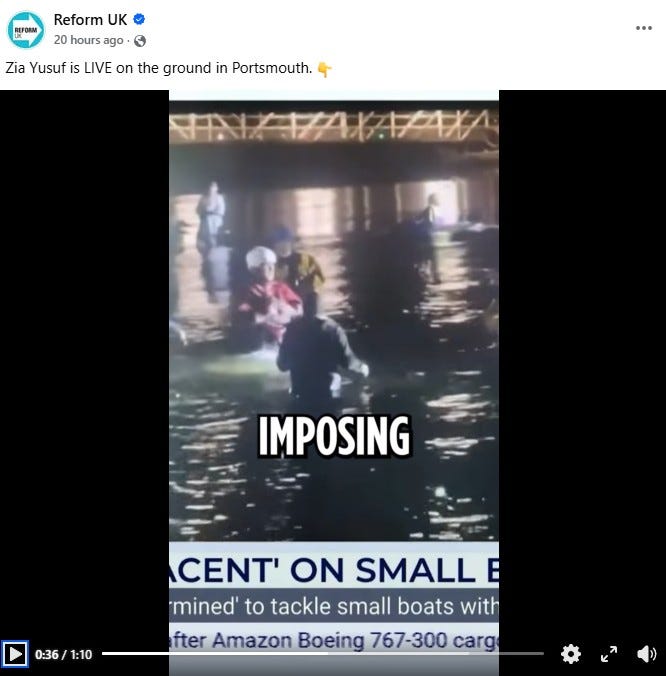
And once we accept the gradual demonisation of these groups; the implication that immigrants or people of colour are intrinsically a threat to our way of life, masked militias soon become a logical, even rational, response.
This is why the government must be decisive with how it responds to and defines the scenes at Dover and the behaviour at the Reform party conference.
Political movements are defined not only by the policies they put in a manifesto, but by the political culture they create around themselves: who they portray as the enemy, what behaviour they legitimise and what they persuade their supporters is normal.
But as it stands, Andy Burnham’s administration is failing its first real test to stand up to the far-right. While Reform present themselves as something else entirely — populist, anti-establishment, patriotic — ministers acquiesce, triangulating for fear of offending voters if they call a spade a spade. Reform has proven it will fight any such terminology vociferously: Richard Tice has previously threatened the BBC over its description of the party as "far-right.".
The party has fought hard against the label — no surprise — because the people most invested in moving the Overton window have an interest in pretending there is no window to move.
They understand that words matter. “Far-right” is delegitimising, as is “racist” and “fascist”. They carry the unfortunate weight of a political tradition most people do not want to associate themselves with. That is why there is such a relentless effort to make these words seem unreasonable or perhaps even hysterical.
But that does not mean we should be frightened of the word when it is warranted. Because there is something much bigger happening than a disagreement over terminology. The right is engaged in a long battle over what is considered acceptable, and it is not necessarily trying to make you wake up tomorrow and become an extremist.
Instead, it is trying to make you wake up tomorrow and think: well, perhaps that’s not so extreme after all. ■
About the author: Zoë Grünewald is Westminster Editor at The Lead and a freelance political journalist and broadcaster.
👫Agree with Zoë? Share this story with your friends, family and colleagues to help us reach more people with our independent journalism, always with a focus on people, policy and place.
We keep a watchful eye on Reform, and others, as we’ve unpacked how it’s the end of Reform as we know it, reported in-depth from the streets of Clacton during the sham by-election and dug into what’s next for Nigel Farage. The more supporters we have for The Lead, the more we can expose what Reform and co are up to.
The events are shocking and the response from the govt hugely disappointing to say the least. Compared to arresting pensioners for protesting against genocide, the police response has also been underwhelming. Wearing masks at a so called protest should be banned. Armies of thugs arriving in trucks is not something that should be tolerated.
Maybe if the government listened to the public dissatisfaction with all these undocumented males pouring into the country, and the police did the policing for the British people, then there would be no need for pissed off people to take to the streets